 Add to Chrome
 Add to Firefox
 Add to Edge
Bayesian Preference Elicitation: Human-In-The-Loop Optimization of An Active Prosthesis
Feb 26, 2026
Tuning active prostheses for people with amputation is time-consuming and relies on metrics that may not fully reflect user needs. We introduce a human-in-the-loop optimization (HILO) approach that leverages direct user preferences to personalize a standard four-parameter prosthesis controller efficiently. Our method employs preference-based Multiobjective Bayesian Optimization that uses a state-or-the-art acquisition function especially designed for preference learning, and includes two algorithmic variants: a discrete version (\textit{EUBO-LineCoSpar}), and a continuous version (\textit{BPE4Prost}). Simulation results on benchmark functions and real-application trials demonstrate efficient convergence, robust preference elicitation, and measurable biomechanical improvements, illustrating the potential of preference-driven tuning for user-centered prosthesis control.

Dual-Variable Force Characterisation method for Human-Robot Interaction in Wearable Robotics
Nov 18, 2025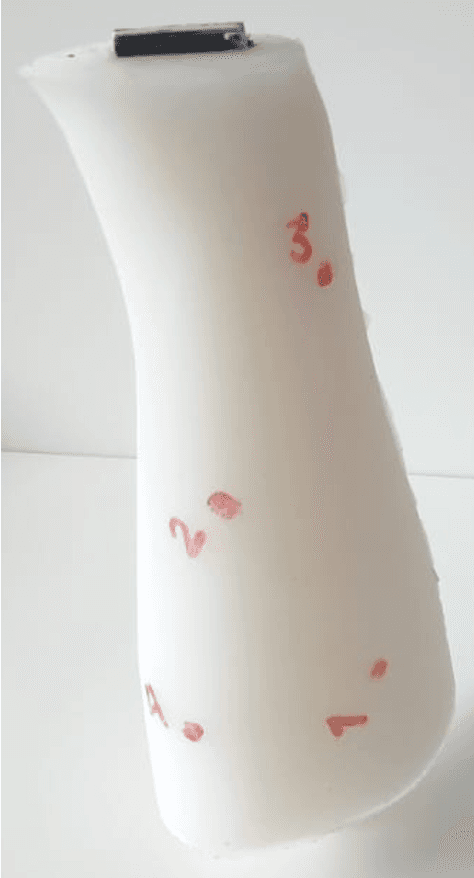
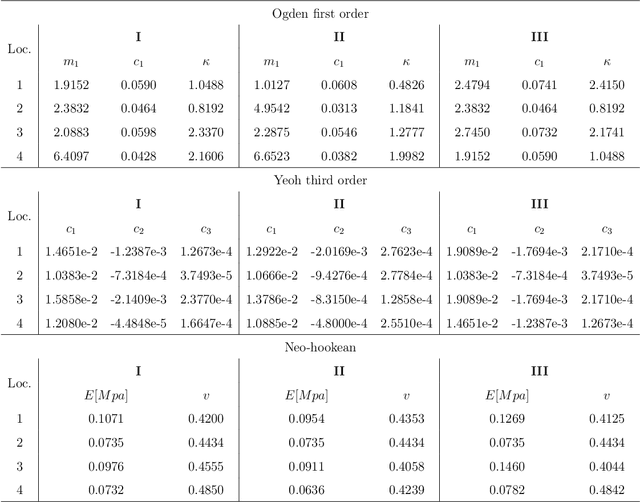
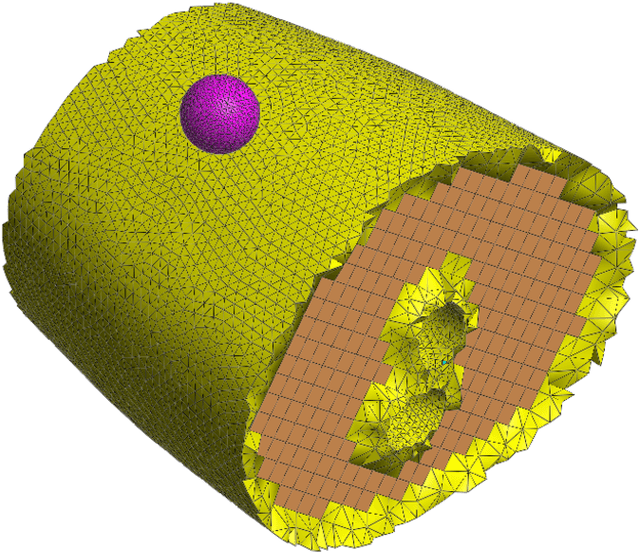

Understanding the physical interaction with wearable robots is essential to ensure safety and comfort. However, this interaction is complex in two key aspects: (1) the motion involved, and (2) the non-linear behaviour of soft tissues. Multiple approaches have been undertaken to better understand this interaction and to improve the quantitative metrics of physical interfaces or cuffs. As these two topics are closely interrelated, finite modelling and soft tissue characterisation offer valuable insights into pressure distribution and shear stress induced by the cuff. Nevertheless, current characterisation methods typically rely on a single fitting variable along one degree of freedom, which limits their applicability, given that interactions with wearable robots often involve multiple degrees of freedom. To address this limitation, this work introduces a dual-variable characterisation method, involving normal and tangential forces, aimed at identifying reliable material parameters and evaluating the impact of single-variable fitting on force and torque responses. This method demonstrates the importance of incorporating two variables into the characterisation process by analysing the normalized mean square error (NMSE) across different scenarios and material models, providing a foundation for simulation at the closest possible level, with a focus on the cuff and the human limb involved in the physical interaction between the user and the wearable robot.