 Add to Chrome
 Add to Firefox
 Add to Edge
A Social Welfare Optimal Sequential Allocation Procedure
Apr 23, 2013
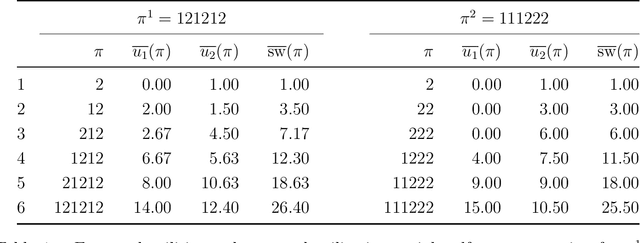
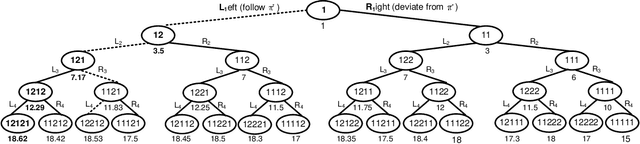
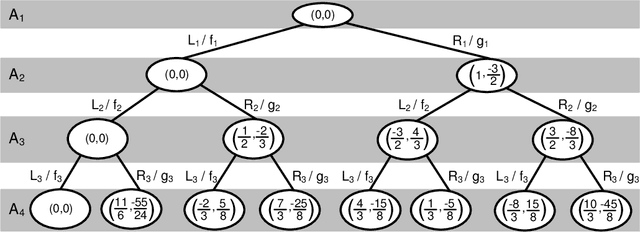
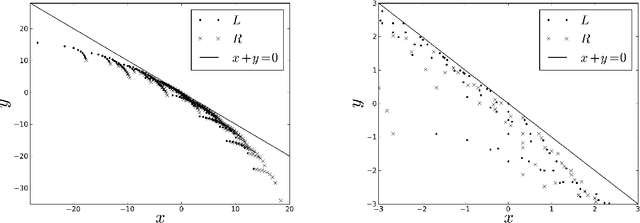
We consider a simple sequential allocation procedure for sharing indivisible items between agents in which agents take turns to pick items. Supposing additive utilities and independence between the agents, we show that the expected utility of each agent is computable in polynomial time. Using this result, we prove that the expected utilitarian social welfare is maximized when agents take alternate turns. We also argue that this mechanism remains optimal when agents behave strategically

Three Generalizations of the FOCUS Constraint
Apr 22, 2013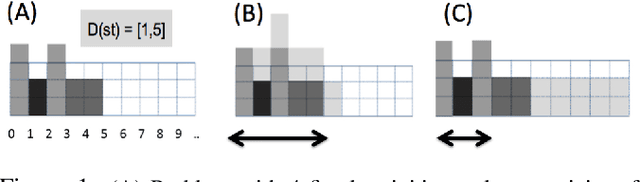
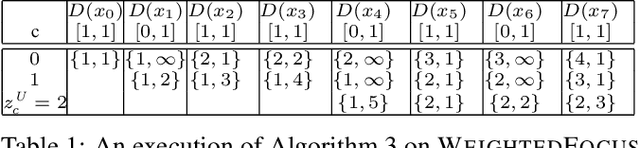
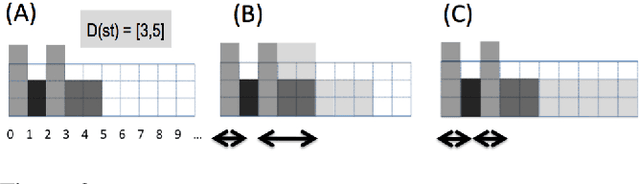
The FOCUS constraint expresses the notion that solutions are concentrated. In practice, this constraint suffers from the rigidity of its semantics. To tackle this issue, we propose three generalizations of the FOCUS constraint. We provide for each one a complete filtering algorithm as well as discussing decompositions.
Coalitional Manipulation for Schulze's Rule
Apr 03, 2013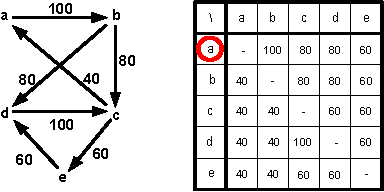
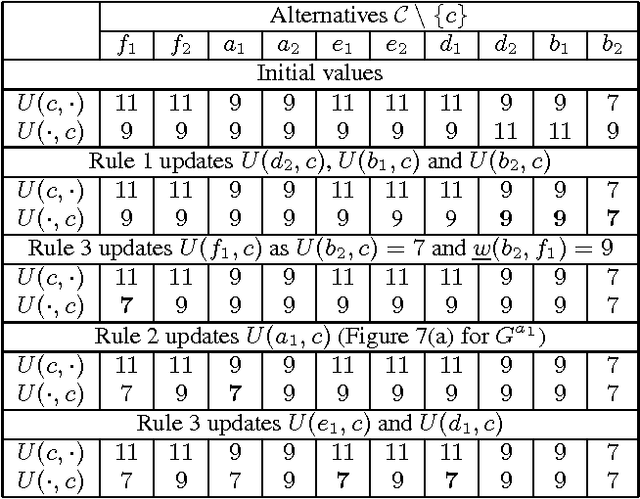
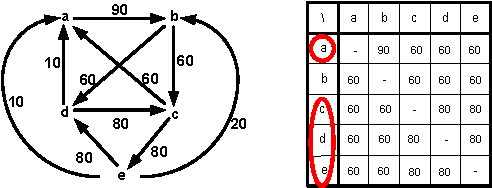
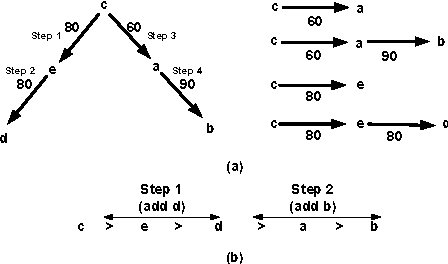
Schulze's rule is used in the elections of a large number of organizations including Wikimedia and Debian. Part of the reason for its popularity is the large number of axiomatic properties, like monotonicity and Condorcet consistency, which it satisfies. We identify a potential shortcoming of Schulze's rule: it is computationally vulnerable to manipulation. In particular, we prove that computing an unweighted coalitional manipulation (UCM) is polynomial for any number of manipulators. This result holds for both the unique winner and the co-winner versions of UCM. This resolves an open question stated by Parkes and Xia (2012). We also prove that computing a weighted coalitional manipulation (WCM) is polynomial for a bounded number of candidates. Finally, we discuss the relation between the unique winner UCM problem and the co-winner UCM problem and argue that they have substantially different necessary and sufficient conditions for the existence of a successful manipulation.
Restricted Manipulation in Iterative Voting: Convergence and Condorcet Efficiency
Mar 04, 2013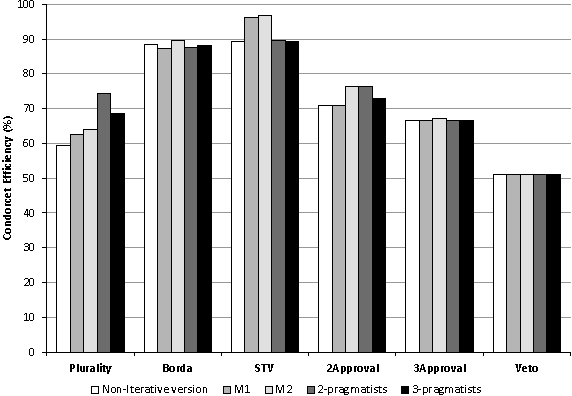
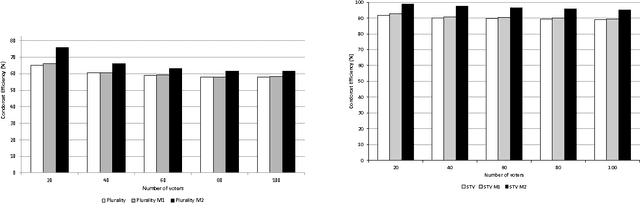
In collective decision making, where a voting rule is used to take a collective decision among a group of agents, manipulation by one or more agents is usually considered negative behavior to be avoided, or at least to be made computationally difficult for the agents to perform. However, there are scenarios in which a restricted form of manipulation can instead be beneficial. In this paper we consider the iterative version of several voting rules, where at each step one agent is allowed to manipulate by modifying his ballot according to a set of restricted manipulation moves which are computationally easy and require little information to be performed. We prove convergence of iterative voting rules when restricted manipulation is allowed, and we present experiments showing that most iterative voting rules have a higher Condorcet efficiency than their non-iterative version.
* In Proceedings SR 2013, arXiv:1303.0071
Possible and Necessary Winner Problem in Social Polls
Feb 07, 2013
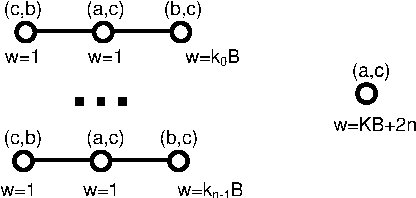
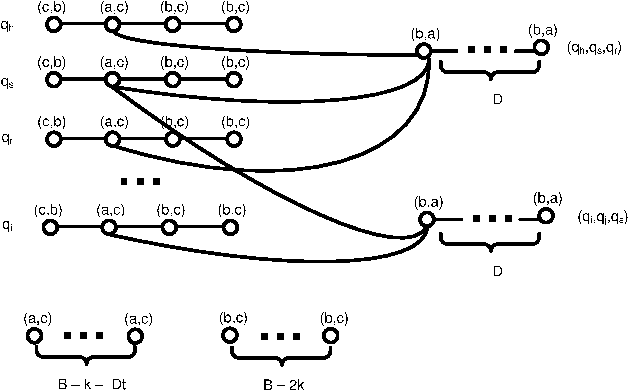
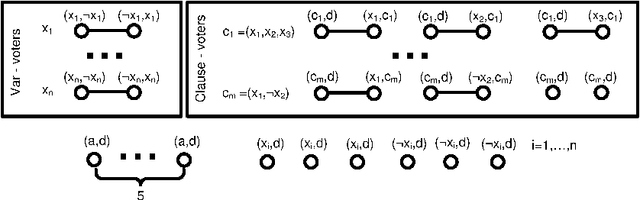
Social networks are increasingly being used to conduct polls. We introduce a simple model of such social polling. We suppose agents vote sequentially, but the order in which agents choose to vote is not necessarily fixed. We also suppose that an agent's vote is influenced by the votes of their friends who have already voted. Despite its simplicity, this model provides useful insights into a number of areas including social polling, sequential voting, and manipulation. We prove that the number of candidates and the network structure affect the computational complexity of computing which candidate necessarily or possibly can win in such a social poll. For social networks with bounded treewidth and a bounded number of candidates, we provide polynomial algorithms for both problems. In other cases, we prove that computing which candidates necessarily or possibly win are computationally intractable.
The SeqBin Constraint Revisited
Jul 07, 2012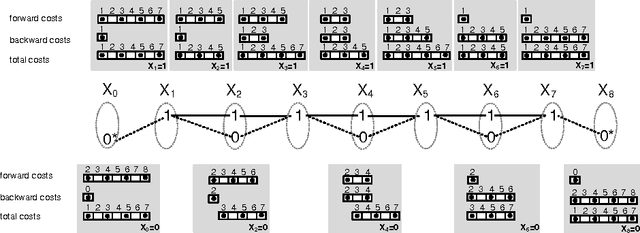
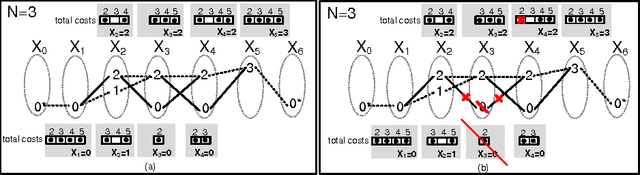
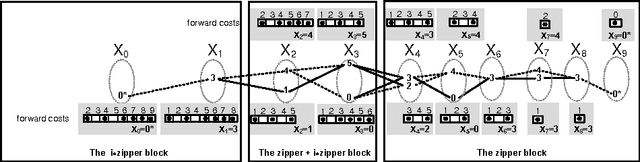
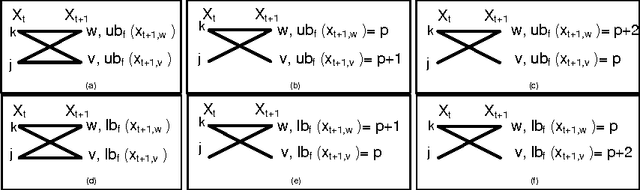
We revisit the SeqBin constraint. This meta-constraint subsumes a number of important global constraints like Change, Smooth and IncreasingNValue. We show that the previously proposed filtering algorithm for SeqBin has two drawbacks even under strong restrictions: it does not detect bounds disentailment and it is not idempotent. We identify the cause for these problems, and propose a new propagator that overcomes both issues. Our algorithm is based on a connection to the problem of finding a path of a given cost in a restricted $n$-partite graph. Our propagator enforces domain consistency in O(nd^2) and, for special cases of SeqBin that include Change, Smooth and IncreasingNValue, in O(nd) time.
Eliminating the Weakest Link: Making Manipulation Intractable?
Apr 17, 2012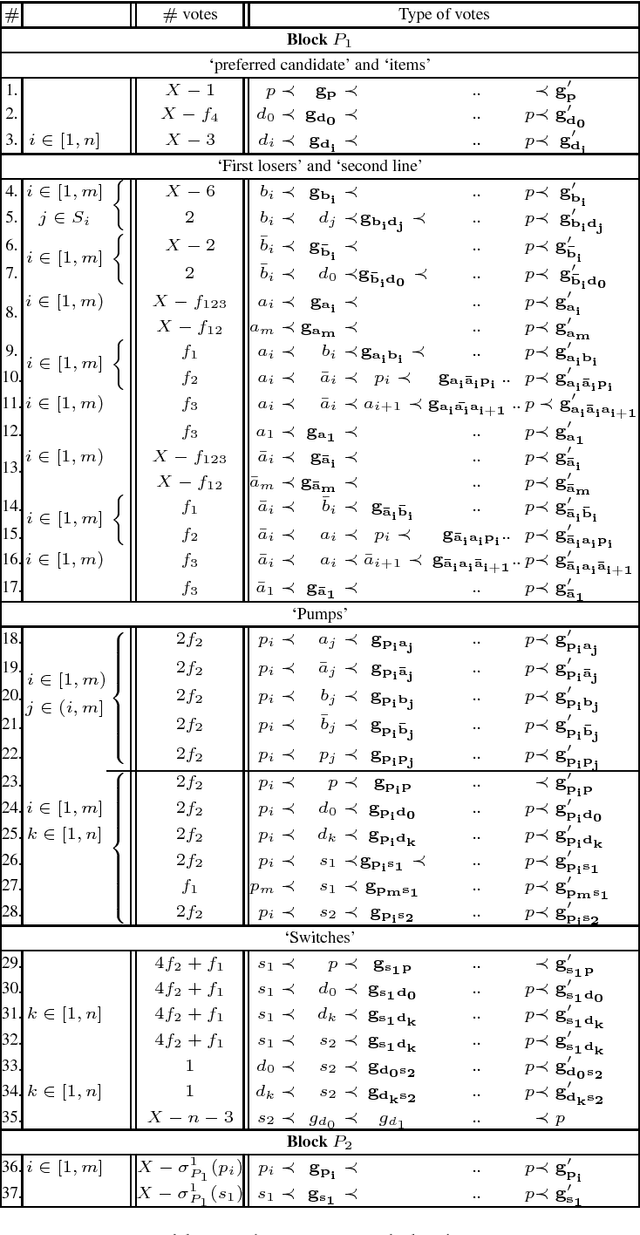
Successive elimination of candidates is often a route to making manipulation intractable to compute. We prove that eliminating candidates does not necessarily increase the computational complexity of manipulation. However, for many voting rules used in practice, the computational complexity increases. For example, it is already known that it is NP-hard to compute how a single voter can manipulate the result of single transferable voting (the elimination version of plurality voting). We show here that it is NP-hard to compute how a single voter can manipulate the result of the elimination version of veto voting, of the closely related Coombs' rule, and of the elimination versions of a general class of scoring rules.
Symmetry Breaking Constraints: Recent Results
Apr 16, 2012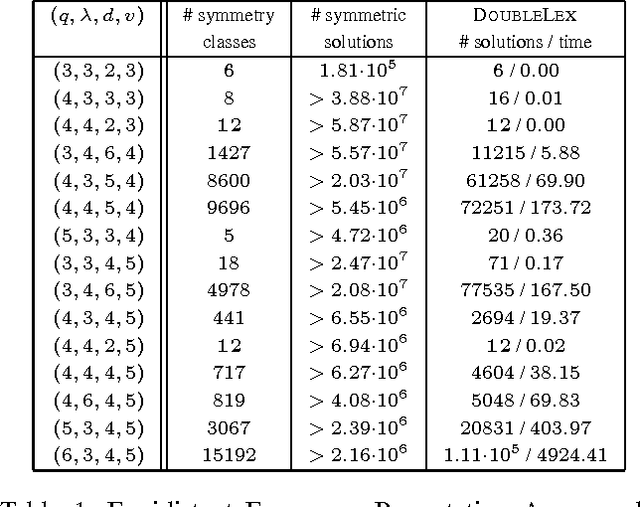
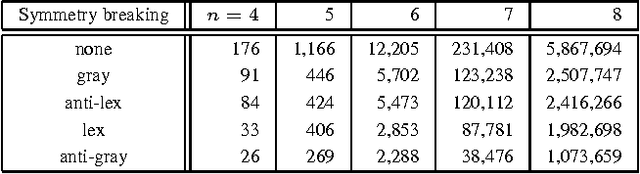
Symmetry is an important problem in many combinatorial problems. One way of dealing with symmetry is to add constraints that eliminate symmetric solutions. We survey recent results in this area, focusing especially on two common and useful cases: symmetry breaking constraints for row and column symmetry, and symmetry breaking constraints for eliminating value symmetry
Combining Voting Rules Together
Mar 14, 2012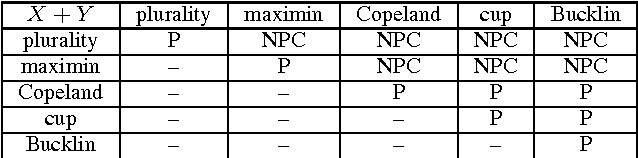
We propose a simple method for combining together voting rules that performs a run-off between the different winners of each voting rule. We prove that this combinator has several good properties. For instance, even if just one of the base voting rules has a desirable property like Condorcet consistency, the combination inherits this property. In addition, we prove that combining voting rules together in this way can make finding a manipulation more computationally difficult. Finally, we study the impact of this combinator on approximation methods that find close to optimal manipulations.
The RegularGcc Matrix Constraint
Jan 03, 2012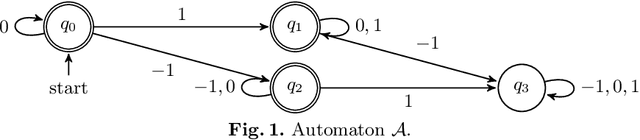
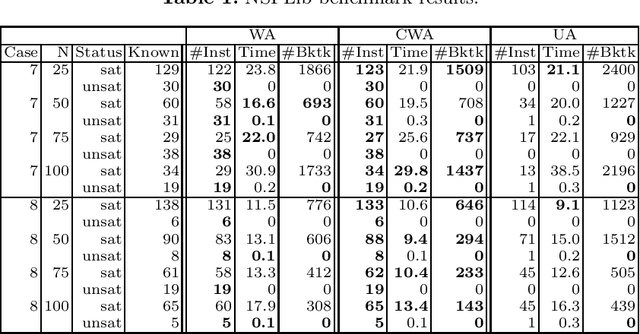
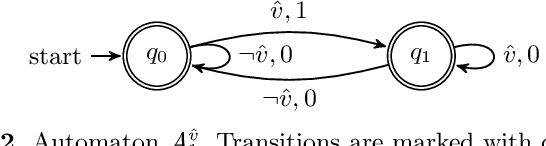
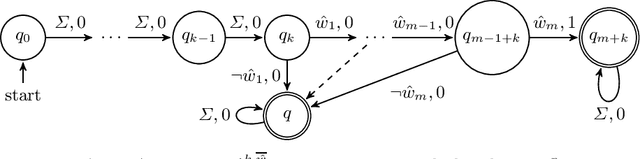
We study propagation of the RegularGcc global constraint. This ensures that each row of a matrix of decision variables satisfies a Regular constraint, and each column satisfies a Gcc constraint. On the negative side, we prove that propagation is NP-hard even under some strong restrictions (e.g. just 3 values, just 4 states in the automaton, or just 5 columns to the matrix). On the positive side, we identify two cases where propagation is fixed parameter tractable. In addition, we show how to improve propagation over a simple decomposition into separate Regular and Gcc constraints by identifying some necessary but insufficient conditions for a solution. We enforce these conditions with some additional weighted row automata. Experimental results demonstrate the potential of these methods on some standard benchmark problems.