 Add to Chrome
 Add to Firefox
 Add to Edge
From Signal to Turn: Interactional Friction in Modular Speech-to-Speech Pipelines
Dec 17, 2025
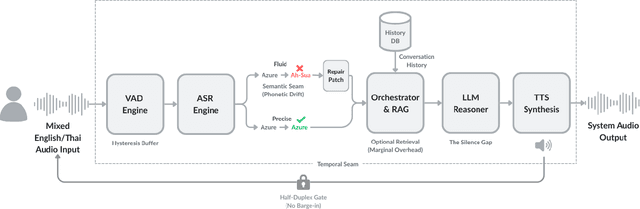
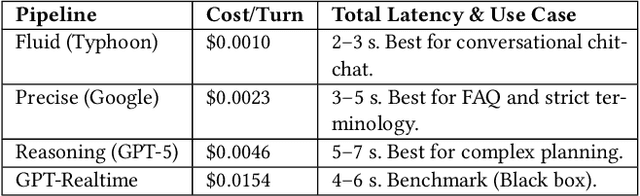
While voice-based AI systems have achieved remarkable generative capabilities, their interactions often feel conversationally broken. This paper examines the interactional friction that emerges in modular Speech-to-Speech Retrieval-Augmented Generation (S2S-RAG) pipelines. By analyzing a representative production system, we move beyond simple latency metrics to identify three recurring patterns of conversational breakdown: (1) Temporal Misalignment, where system delays violate user expectations of conversational rhythm; (2) Expressive Flattening, where the loss of paralinguistic cues leads to literal, inappropriate responses; and (3) Repair Rigidity, where architectural gating prevents users from correcting errors in real-time. Through system-level analysis, we demonstrate that these friction points should not be understood as defects or failures, but as structural consequences of a modular design that prioritizes control over fluidity. We conclude that building natural spoken AI is an infrastructure design challenge, requiring a shift from optimizing isolated components to carefully choreographing the seams between them.

When Pigs Get Sick: Multi-Agent AI for Swine Disease Detection
Mar 19, 2025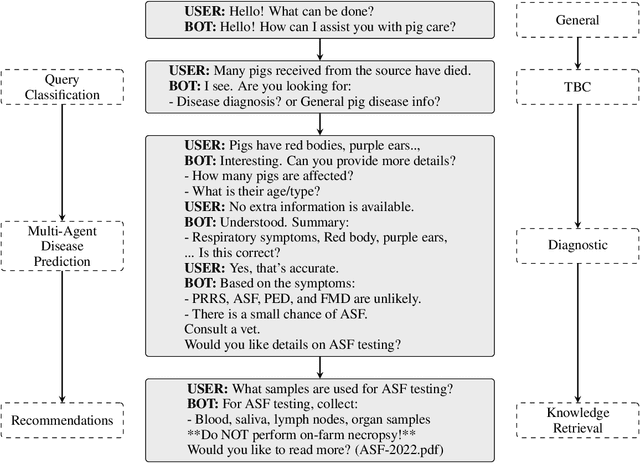
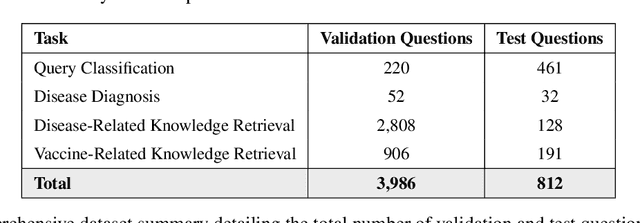
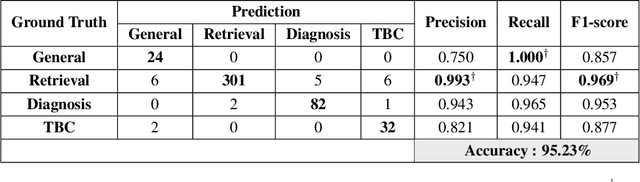
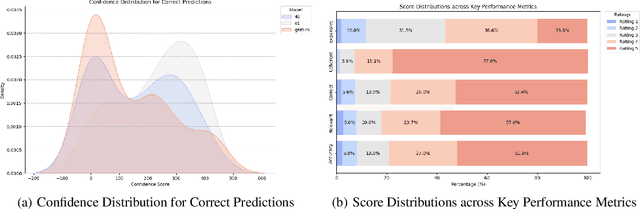
Swine disease surveillance is critical to the sustainability of global agriculture, yet its effectiveness is frequently undermined by limited veterinary resources, delayed identification of cases, and variability in diagnostic accuracy. To overcome these barriers, we introduce a novel AI-powered, multi-agent diagnostic system that leverages Retrieval-Augmented Generation (RAG) to deliver timely, evidence-based disease detection and clinical guidance. By automatically classifying user inputs into either Knowledge Retrieval Queries or Symptom-Based Diagnostic Queries, the system ensures targeted information retrieval and facilitates precise diagnostic reasoning. An adaptive questioning protocol systematically collects relevant clinical signs, while a confidence-weighted decision fusion mechanism integrates multiple diagnostic hypotheses to generate robust disease predictions and treatment recommendations. Comprehensive evaluations encompassing query classification, disease diagnosis, and knowledge retrieval demonstrate that the system achieves high accuracy, rapid response times, and consistent reliability. By providing a scalable, AI-driven diagnostic framework, this approach enhances veterinary decision-making, advances sustainable livestock management practices, and contributes substantively to the realization of global food security.