 Add to Chrome
 Add to Firefox
 Add to Edge
PhysMetrics.Weather: An Evaluation Framework for Physical Consistency in ML Weather Models
Jun 09, 2026
Machine learning weather prediction (MLWP) models have achieved impressive forecasting performance at a small fraction of the computational costs required for traditional physics-based methods. However, they are primarily (1) data-driven and (2) evaluated using pixel-wide error metrics (e.g., RMSE), so there are no guarantees that their forecasts are consistent with known physical laws. We introduce PhysMetrics.Weather, an evaluation framework that assesses the physical realism of MLWP models across three types of metrics: conservation, spectral, and dynamical. By quantifying physical realism, this tool guides the development of physics-informed architectures and helps evaluate whether MLWP models are reliable for operational use. Our framework is available on Github at https://github.com/Emmakast/PhysMetrics.Weather.

PlasmoFAB: A Benchmark to Foster Machine Learning for Plasmodium falciparum Protein Antigen Candidate Prediction
Jan 16, 2023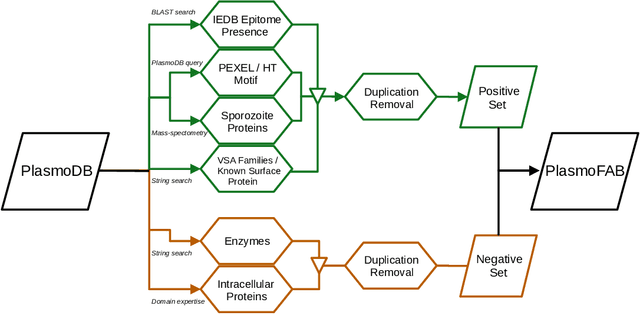

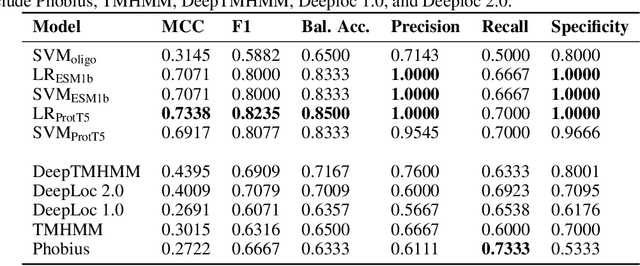
Motivation: Machine learning methods can be used to support scientific discovery in healthcare-related research fields. However, these methods can only be reliably used if they can be trained on high-quality and curated datasets. Currently, no such dataset for the exploration of Plasmodium falciparum protein antigen candidates exists. The parasite Plasmodium falciparum causes the infectious disease malaria. Thus, identifying potential antigens is of utmost importance for the development of antimalarial drugs and vaccines. Since exploring antigen candidates experimentally is an expensive and time-consuming process, applying machine learning methods to support this process has the potential to accelerate the development of drugs and vaccines which are needed for fighting and controlling malaria. Results: We developed PlasmoFAB, a curated benchmark that can be used to train machine learning methods for the exploration of Plasmodium falciparum protein antigen candidates. We combined an extensive literature search with domain expertise to create high-quality labels for Plasmodium falciparum specific proteins that distinguish between antigen candidates and intracellular proteins. Additionally, we used our benchmark to compare different well-known prediction models and available protein localization prediction services on the task of identifying protein antigen candidates. We show that available general-purpose services are unable to provide sufficient performance on identifying protein antigen candidates and are outperformed by models that were trained on specialized data.