 Add to Chrome
 Add to Firefox
 Add to Edge
High Speed High Signal-to-Noise Ratio Antenna Measurements -- Demonstration for UAV-Based Near-Field Measurements of Modulated Terrestrial Navigation Signals
Jun 22, 2026
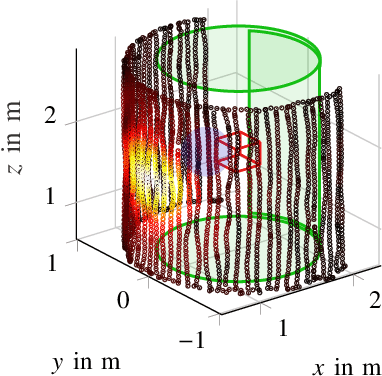
Antenna measurements with high signal-to-noise ratio (SNR) require long measurement or integration times of the receiver and can, thus, lead to a very long duration of the measurements, especially if many frequency and spatial samples need to be collected. In order to speed up such measurements, an approach is presented, which collects all measurement samples with short measurement times, performs a Fourier transform of the measurement samples, bandpass filters the desired measurement signals with a small bandwidth, and obtains high-SNR measurement samples according to the short measurement times by inverse Fourier transform. This approach can be utilized with single-frequency continuous wave (CW) transmit signals, but also with transmit signals containing several discrete frequency components, as, e.g., found for periodically modulated CW carriers. The approach is first worked out and demonstrated for simulated test data. Next, it is utilized for the processing of modulated near-field (NF) measurement data collected via an uninhabited aerial vehicle (UAV) at a Doppler high-frequency omnidirectional radio range (DVOR) and at the localizer of an instrument landing system (ILS). The extracted CW NF data is transformed into the far field (FF) and diagnostic information is obtained from the underlying inverse source solutions.

An Indoor Localization Technique Utilizing Passive Tags and 3-D Microwave Passive Radar Imaging
Jun 10, 2026A privacy-compliant indoor localization approach utilizing a 3-D near-field (NF) passive radar imaging technique is presented. This technique leverages ubiquitously radiated electromagnetic fields for imaging, with passive tags introduced to enhance the strength of scattering fields, thereby enabling precise localization at the imaging level. The method also supports localization in non-ideal imaging scenarios, such as for limited bandwidth or in highly-reflective environments. Based on their geometrical properties the simple and low-cost passive tags enable intuitive differentiation between individuals or objects. Associated privacy protection mechanisms are discussed, where the frequency-varying properties of the passive tags provide additional flexibility and potential applications under privacy and ethical considerations. Several forms of passive tags are presented, where both simulation and experimental results validate the effectiveness of the proposed passive tag designs.
* This paper is published in Progress In Electromagnetics Research (PIER), Vol.181, pp.89--98, 2024. This is the author's version which has not been fully edited and content may change prior to final publication. This repository copy is provided to comply with open-access requirements
Polarization-Aware Ray-Tracing Enhanced Back-Projection Algorithm for Microwave Imaging in Complex Multipath Environments
May 11, 2026A ray-tracing (RT) enhanced back-projection algorithm (RT-BPA) for microwave imaging in multipath environments is presented. By tightly incorporating the concept of ray-tracing into a generalized version of traditional BPA, this method ensures improved image quality by addressing two important issues. First, when the line-of-sight (LOS) path is obstructed, reflected paths, if available, enable imaging of hidden targets, which extends the applicability of the standard BPA beyond its normal use case. Second, the consideration of reflected ray-paths is equivalent to virtually increasing the aperture size, thus, improving image resolution without requiring new measurements. A key factor in achieving these advancements is the consideration of the vector nature of electromagnetic waves with polarization-dependent phase compensation, which is often ignored when employing a scalar-wave based formulation of the electromagnetic vector field. In addition, the presented method employs a shooting and bouncing rays (SBR) framework, offering better flexibility compared to manual path evaluation in existing RT-BPAs.
Phase-Corrected Near-Field Microwave Imaging via Inverse Source Reconstruction with Modulated Signals
May 05, 2026An inverse source reconstruction (ISR) based 3-D near-field (NF) passive radar microwave imaging method utilizing modulated signals is presented. The modulated signals from a non-cooperative transmitter are scattered by the targets of interest and captured by a fixed reference antenna together with an NF scanning probe at different positions. By normalizing with the reference signals, spatial coherence of the NF observations is obtained, and a single-frequency inverse source solver is subsequently utilized for ISR and image generation. A corresponding phase correction method is proposed for the coherent superposition of multi-frequency images and verified through simulations. In addition, it is shown that for realistic narrowband signals, an incoherent imaging approach is sufficient. The presented technical scheme is validated using a planar scanning system in a typical office room, where software-defined radios are employed for the transmitting and receiving of narrowband orthogonal frequency-division multiplexing signals at Wi-Fi operating frequencies. With the aid of background subtraction and reference signals, images of a mannequin placed in the office room are successfully obtained.
Multipath Exploitation in Highly Reflective Environments for Enhanced Microwave Imaging via Inverse Source Reconstruction
May 05, 2026Multipath effects significantly influence the quality of microwave imaging in highly reflective environments, while the physical measurement aperture size constrains resolution. It is shown that by exploiting multipath reflections, improved resolution can be achieved while maintaining acceptable artifact levels. Based on image theory, strong scattered fields from an ideal reflection plane can be represented by virtual image sources. Using a single-frequency inverse source solver, the spatially distributed original and image sources are reconstructed and separated, which allows separate application of the imaging algorithm for both of them. The coherent combination of both sets of sources together with appropriate phase correction results in an effective aperture expansion that yields superior resolution. Furthermore, this separation strategy significantly mitigates interference artifacts. Simulation results, supported by theoretical analysis and comparison with a ray-tracing enhanced backprojection algorithm are presented to verify the effectiveness of the proposed approach.
3-D Near-Field Passive Radar Imaging Using Multiple Illumination Sources
Mar 09, 2026Near-field (NF) passive radar imaging depends on the illumination of the imaging scene by a non-cooperative transmitter (Tx). It is demonstrated that combining imaging results obtained with Tx antennas at different positions can enhance the performance of passive radar imaging. On the one hand, multiple Tx antennas provide diverse illumination perspectives, reducing the likelihood of unilluminated regions on the targets of interest (TOIs). On the other hand, the coherent summation of imaging results obtained for different illuminations helps to suppress potential artifacts. This approach is in particular advantageous for imaging complex objects with concave structures such as dihedral arrangements, where the ghosts due to multiple reflections are highly configuration-dependent. For each illuminating configuration, a single-frequency inverse source solver is utilized to reconstruct the equivalent sources of the TOIs and the resulting single-frequency images are then superimposed coherently with corresponding phase and magnitude correction methods. The obtained multi-frequency images are finally coherently combined to enhance the imaging quality. Both simulation and measurement results are presented to validate the effectiveness of the approach.
On the Solution of Linearized Inverse Scattering Problems in Near-Field Microwave Imaging by Operator Inversion and Matched Filtering
Oct 09, 2024Microwave imaging is commonly based on the solution of linearized inverse scattering problems by matched-filtering algorithms, i.e., by applying the adjoint of the forward scattering operator to the observation data. A more rigorous approach is the explicit inversion of the forward scattering operator, which is performed in this work for quasi-monostatic imaging scenarios based on a planar plane-wave representation according to the Weyl-identity and hierarchical acceleration algorithms. The inversion is achieved by a regularized iterative linear system of equations solver, where irregular observations as well as full probe correction are supported. In the spatial image generation low-pass filtering can be considered in order to reduce imaging artifacts. A corresponding spectral back-projection algorithm and a spatial back-projection algorithm together with improved focusing operators are also introduced and the resulting image generation algorithms are analyzed and compared for a variety of examples, comprising both simulated and measured observation data.
Reliable Linearized Phase Retrieval for Near-Field Antenna Measurements with Truncated Measurement Surfaces
Sep 20, 2021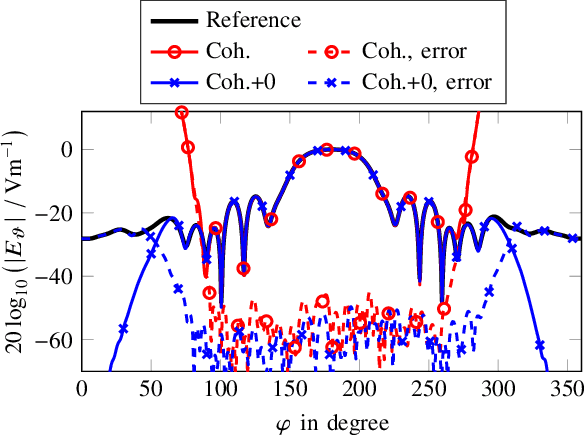
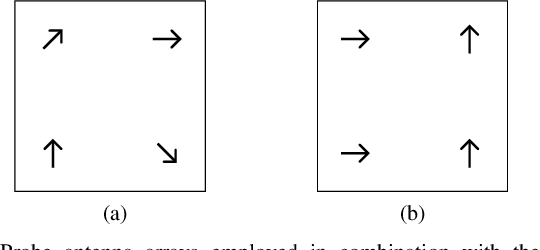
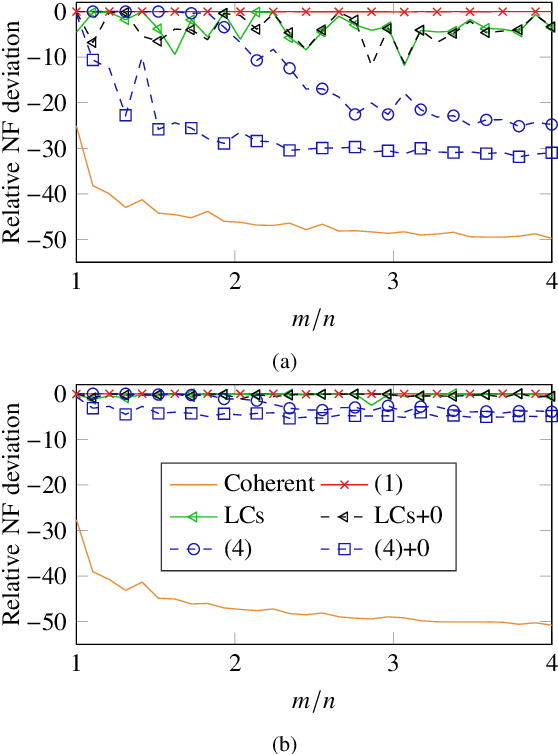
Most methods tackling the phase retrieval problem of magnitude-only antenna measurements suffer from unrealistic sampling requirements, from unfeasible computational complexities, and, most severely, from the lacking reliability of nonlinear and nonconvex formulations. As an alternative, we propose a partially coherent (PC) multi-probe measurement technique and an associated linear reconstruction method which mitigate all these issues. Hence, reliable and accurate phase retrieval can be achieved in near-field far-field transformations (NFFFTs). In particular, we resolve the issues related to open measurement surfaces (as they may emerge in drone-based measurement setups) and we highlight the importance of considering the measurement setup and the phaseless NFFFT simultaneously. Specifically, the influence of special multi-probe arrangements on the reconstruction quality of PC solvers is shown.
Multi-Frequency Phase Retrieval for Antenna Measurements
May 20, 2021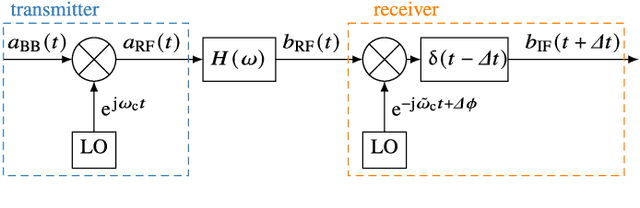
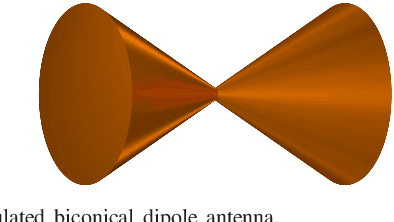
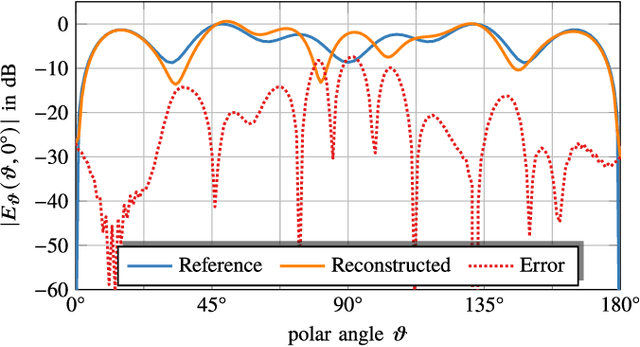
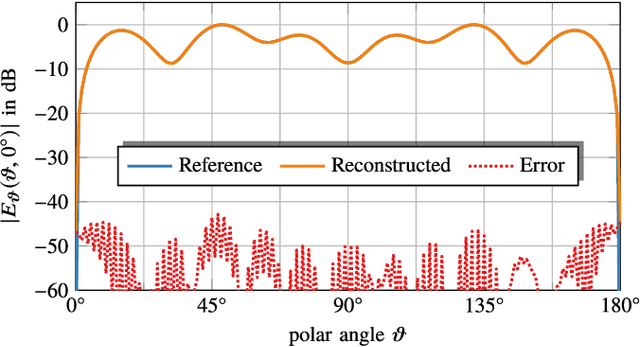
Phase retrieval problems in antenna measurements arise when a reference phase cannot be provided to all measurement locations. Phase retrieval algorithms require sufficiently many independent measurement samples of the radiated fields to be successful. Larger amounts of independent data may improve the reconstruction of the phase information from magnitude-only measurements. We show how the knowledge of relative phases among the spectral components of a modulated signal at the individual measurement locations may be employed to reconstruct the relative phases between different measurement locations at all frequencies. Projection matrices map the estimated phases onto the space of fields possibly generated by equivalent antenna under test (AUT) sources at all frequencies. In this way, the phase of the reconstructed solution is not only restricted by the measurement samples at one frequency, but by the samples at allfrequencies simultaneously. The proposed method can increase the amount of independent phase information even if all probes are located in the far field of the AUT.
* 14 pages, 29 figures, 1 table, published in IEEE Transactions on Antennas and Propagation
Compact Uniform Circular Quarter-Wavelength Monopole Antenna Arrays with Wideband Decoupling and Matching Networks
May 19, 2021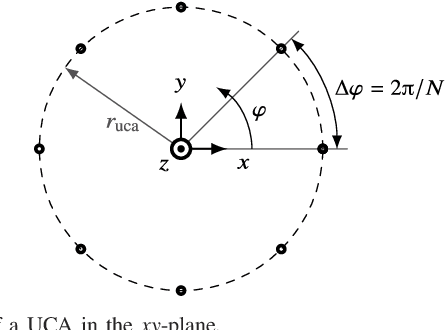
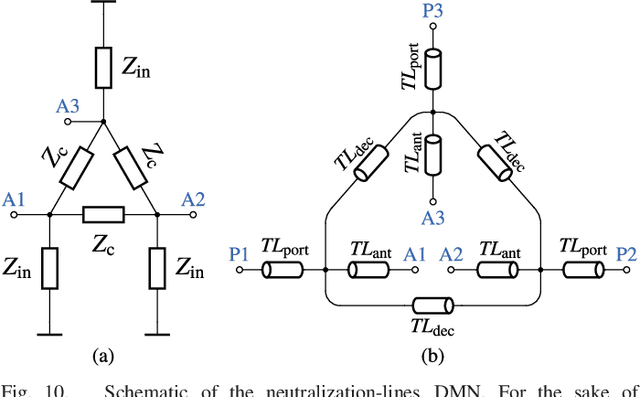
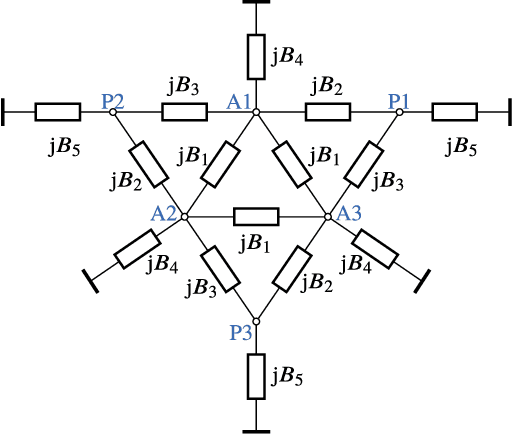
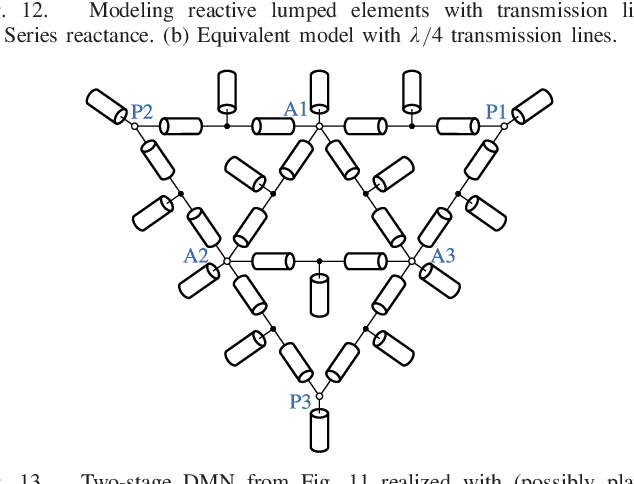
Two novel decoupling and matching networks (DMNs) in microstrip technology for three-element uniform circular arrays (UCAs) are investigated and compared to a more conventional DMN approach with simple neutralization lines. The array elements are coaxially-fed quarter-wavelength monopole antennas over a finite groundplane. Three-element arrays are considered since UCAs with an odd number of elements are able to provide an almost constant maximum array factor over the whole azimuthal angular range. The new designs are explained from a theoretical point of view and their implementations are compared to four- and three-elements UCAs without DMN in terms of decoupling and matching bandwidth as well as beamforming capabilities. In addition to excellent decoupling and matching below -16 dB, a broader bandwidth is obtained by the two DMNs. The reasons for the enhanced bandwidth are similar in both cases: By introducing several circuit elements offering additional degrees of freedom, matching of the monopole input impedances at different frequencies becomes feasible. One of the presented designs offers a larger bandwidth, while the other design is able to provide a better total efficiency. Scattering parameters, radiation patterns, beamforming capabilities, and enhanced gain are all verified by measurements over the operating bandwidth.
* 15 pages, 28 figures, 1 table, published in IEEE Transactions on Antennas and Propagation