 Add to Chrome
 Add to Firefox
 Add to Edge
Multi-Sensor Integrated Sensing and Communication for Critical Infrastructure Protection
Jun 29, 2026
Integrated Sensing and Communications (ISAC) will become a service in future mobile communication networks. It enables the detection and recognition of passive objects and environments using radar-like sensing. One promising first application is the protection of critical infrastructure (CI), for example by monitoring the lower airspace above sensitive sites or facilities to prevent unauthorized drone overflights. Our proposal is based on the concept of a distributed multi-sensor (MS)-ISAC. We assume deploying three or more additional passive sniffing sensors near the protected site (PS) of a CI. The sniffers are connected via Downlink (DL) / Uplink (UL) to the distant illumination base station (BS). Multistatic range-Doppler estimation, including synchronization, is performed according to the Cooperative Passive Coherent Location (CPCL) principle. The multistatic architecture has several advantages over the often considered quasi-monostatic architecture where one sniffer is located close to the base station. We discuss the advantages and disadvantages of both approaches and compare their performance for the considered use case in terms of coverage and geometric dilution of precision (GDoP)

Temporal Graph Neural Network for ISAC Target Detection and Tracking
Apr 09, 2026Integrated sensing and communication (ISAC) is a key enabler of 6G, supporting environment-aware services. A fundamental sensing task in this setting is reliable multi-target detection and tracking. This paper proposes a temporal graph neural network (TGNN)-based tracking method that exploits delay and Doppler information from the wireless channel. The delay-Doppler map is modeled as a sequence of graphs, and tracking is formulated as a temporal node classification problem, enabling joint clustering and data association of dynamic targets. Using ray-tracing-based channel outputs as ground truth, the method is evaluated across multiple scenes with varying target positions, velocities, and trajectories and is compared with a Kalman filter baseline. Results demonstrate reduced normalized mean squared error (NMSE) in delay and Doppler, leading to more accurate multi-target tracking.
Synchronization and Localization in Ad-Hoc ICAS Networks Using a Two-Stage Kuramoto Method
Jan 26, 2026To enable Integrated Communications and Sensing (ICAS) in a peer-to-peer vehicular network, precise synchronization in frequency and phase among the communicating entities is required. In addition, self-driving cars need accurate position estimates of the surrounding vehicles. In this work, we propose a joint, distributed synchronization and localization scheme for a network of communicating entities. Our proposed scheme is mostly signal-agnostic and therefore can be applied to a wide range of possible ICAS signals. We also mitigate the effect of finite sampling frequencies, which otherwise would degrade the synchronization and localization performance severely.
Generative Adversarial Synthesis of Radar Point Cloud Scenes
Oct 17, 2024

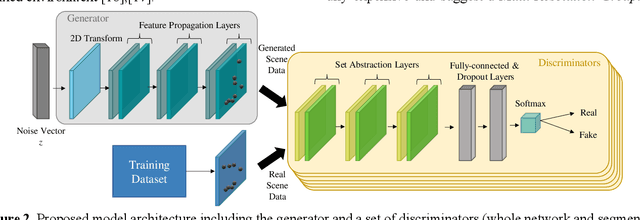

For the validation and verification of automotive radars, datasets of realistic traffic scenarios are required, which, how ever, are laborious to acquire. In this paper, we introduce radar scene synthesis using GANs as an alternative to the real dataset acquisition and simulation-based approaches. We train a PointNet++ based GAN model to generate realistic radar point cloud scenes and use a binary classifier to evaluate the performance of scenes generated using this model against a test set of real scenes. We demonstrate that our GAN model achieves similar performance (~87%) to the real scenes test set.
An Extended Kuramoto Model for Frequency and Phase Synchronization in Delay-Free Networks with Finite Number of Agents
Mar 20, 2024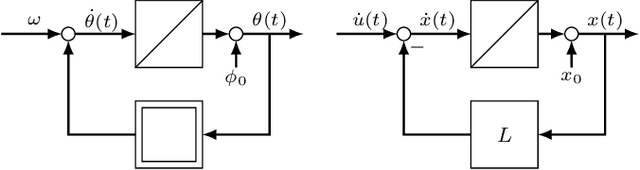
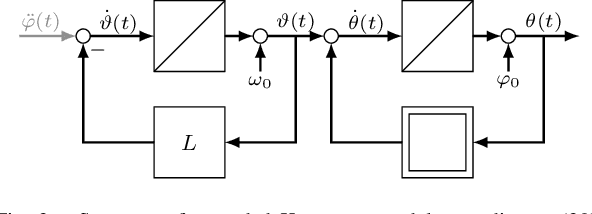
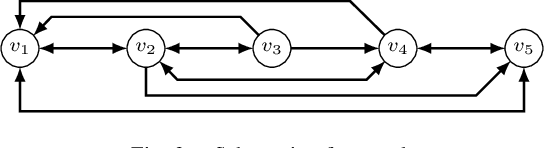
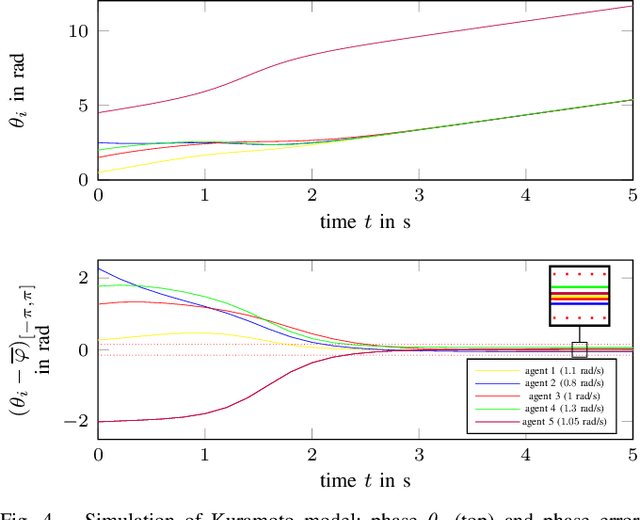
Due to its description of a synchronization between oscillators, the Kuramoto model is an ideal choice for a synchronisation algorithm in networked systems. This requires to achieve not only a frequency synchronization but also a phase synchronization - something the standard Kuramoto model can not provide for a finite number of agents. In this case, a remaining phase difference is necessary to offset differences of the natural frequencies. Setting the Kuramoto model into the context of dynamic consensus and making use of the $n$th order discrete average consensus algorithm, this paper extends the standard Kuramoto model in such a way that frequency and phase synchronization are separated. This in turn leads to an algorithm achieve the required frequency and phase synchronization also for a finite number of agents. Simulations show the viability of this extended Kuramoto model.