 Add to Chrome
 Add to Firefox
 Add to Edge
OpenLanguageModel: Readable and Composable Small-Language-Model Pretraining for Education and Research
Jul 18, 2026
OpenLanguageModel (OLM) is an open-source PyTorch library for building and pretraining small language models while keeping their machinery visible. In OLM, model code reads like the architecture: components are ordinary modules, while Block, Residual, Repeat, and Parallel describe how they are wired. The resulting model can move unchanged from a teaching notebook to a complete pretraining run or a research ablation. OLM connects this readable model layer to tokenizers, local and streaming datasets, optimization, mixed precision, callbacks, checkpoints, and hardware-aware CPU, single-GPU, and single-node multi-GPU execution. We demonstrate the full path by tracing GPT-2 from diagram to code, launching a FineWeb-Edu training script, replacing one attention component, and letting AutoTrainer configure the available machine. The package includes 27 presets across nine familiar model families and documentation that progresses from LM fundamentals to architecture research. Validation shows close agreement with independent reference implementations, 90.6% four-GPU weak-scaling efficiency for a 348M-parameter workload, compact architecture edits, and positive early usability results. OLM is MIT-licensed and available through PyPI, GitHub, and its documentation site.

MIRAGE: Multimodal Identification and Recognition of Annotations in Indian General Prescriptions
Oct 13, 2024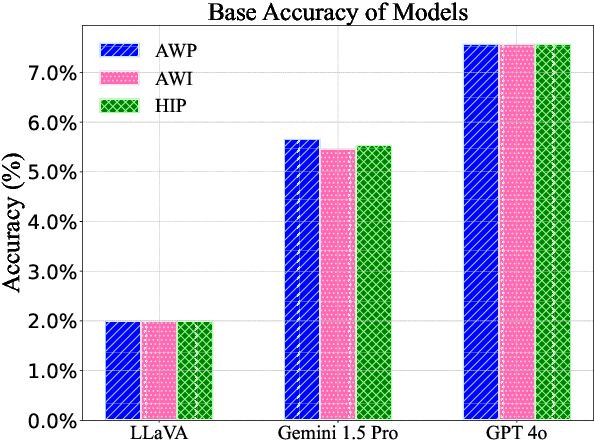
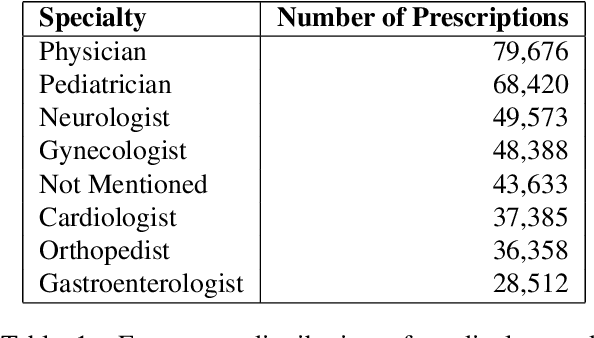
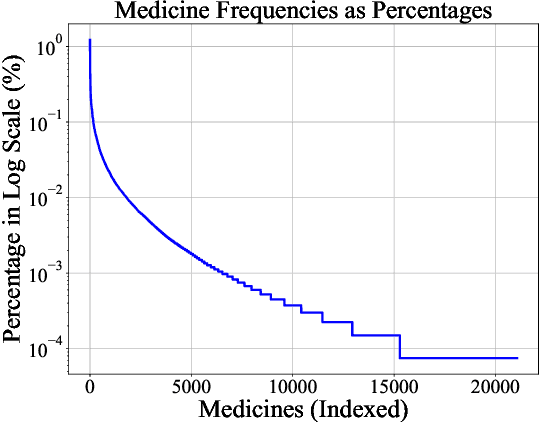
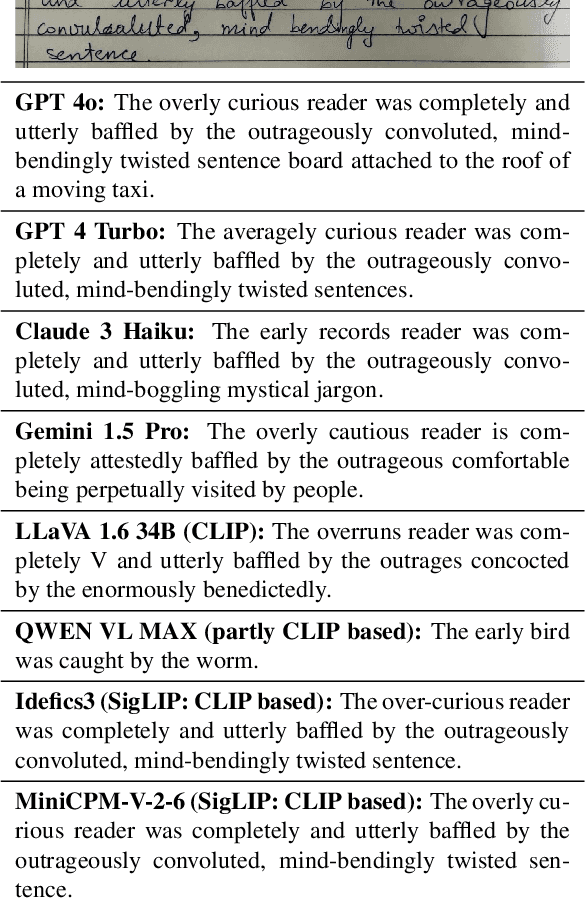
Hospitals generate thousands of handwritten prescriptions, a practice that remains prevalent despite the availability of Electronic Medical Records (EMR). This method of record-keeping hinders the examination of long-term medication effects, impedes statistical analysis, and makes the retrieval of records challenging. Handwritten prescriptions pose a unique challenge, requiring specialized data for training models to recognize medications and their patterns of recommendation. While current handwriting recognition approaches typically employ 2-D LSTMs, recent studies have explored the use of Large Language Models (LLMs) for Optical Character Recognition (OCR). Building on this approach, we focus on extracting medication names from medical records. Our methodology MIRAGE (Multimodal Identification and Recognition of Annotations in indian GEneral prescriptions) involves fine-tuning the LLaVA 1.6 and Idefics2 models. Our research utilizes a dataset provided by Medyug Technology, consisting of 743,118 fully annotated high-resolution simulated medical records from 1,133 doctors across India. We demonstrate that our methodology exhibits 82% accuracy in medication name and dosage extraction. We provide a detailed account of our research methodology and results, notes about HWR with Multimodal LLMs, and release a small dataset of 100 medical records with labels.