 Add to Chrome
 Add to Firefox
 Add to Edge
Limitations of Synthetic Data Generation in Specialized Data-Scarce Domains
Aug 13, 2026
Advances in diffusion-based generative models have motivated the use of synthetic image generation to alleviate data scarcity in vision tasks. While this strategy has shown promise in natural image benchmarks such as ImageNet, its effectiveness in sparse, high-variance real-world domains remains unclear. In this work, we focus on domains where images differ substantially from common image datasets and additional data are expensive to obtain. Against non-generative data augmentation baselines, we evaluate the downstream classifier performance improvements yielded by two schools of generative sparse data extension: distribution modeling and sample perturbation. Across five trauma classification tasks using subject-wise train--validation splits, no generative approach consistently outperforms a strong non-generative baseline. Feature-space analysis reveals recurring failure modes: memorization or collapse, distributional drift, and generation of visually plausible but simplified canonical instances that are easier to classify than real data.

Rapid point-of-care Hemoglobin measurement through low-cost optics and Convolutional Neural Network based validation
Dec 01, 2017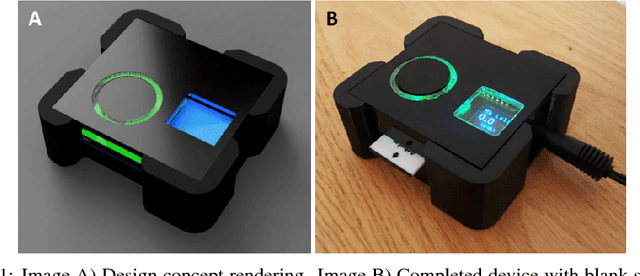
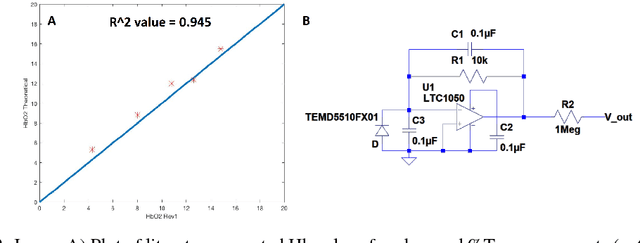
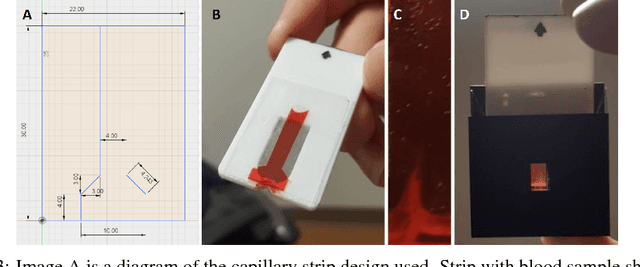
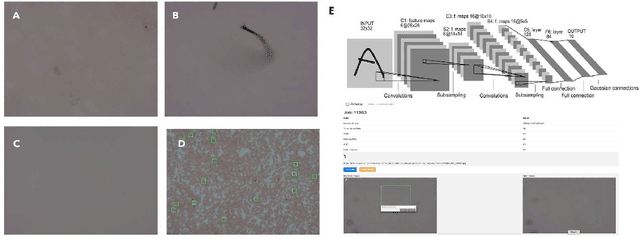
A low-cost, robust, and simple mechanism to measure hemoglobin would play a critical role in the modern health infrastructure. Consistent sample acquisition has been a long-standing technical hurdle for photometer-based portable hemoglobin detectors which rely on micro cuvettes and dry chemistry. Any particulates (e.g. intact red blood cells (RBCs), microbubbles, etc.) in a cuvette's sensing area drastically impact optical absorption profile, and commercial hemoglobinometers lack the ability to automatically detect faulty samples. We present the ground-up development of a portable, low-cost and open platform with equivalent accuracy to medical-grade devices, with the addition of CNN-based image processing for rapid sample viability prechecks. The developed platform has demonstrated precision to the nearest $0.18[g/dL]$ of hemoglobin, an R^2 = 0.945 correlation to hemoglobin absorption curves reported in literature, and a 97% detection accuracy of poorly-prepared samples. We see the developed hemoglobin device/ML platform having massive implications in rural medicine, and consider it an excellent springboard for robust deep learning optical spectroscopy: a currently untapped source of data for detection of countless analytes.