 Add to Chrome
 Add to Firefox
 Add to Edge
Understanding Deterioration Random Effects for Causal Discovery in Infrastructure Management
May 19, 2026
Infrastructure deterioration poses significant challenges for asset management, yet existing approaches rely on population-averaged models that overlook equipment-specific heterogeneity. We present a novel framework that combines Bayesian hierarchical hazard modeling with causal discovery to identify operational patterns that drive heterogeneous deterioration rates in pump equipment. Our approach first estimates pump-specific random effects $u_i$ using GPU-accelerated No-U-Turn Sampling (NUTS), achieving 3--5$\times$ speedup over CPU implementations. We then employ DirectLiNGAM to discover causal relationships between 22 engineered time-series features and deterioration rates, stratified by positive ($u_i > 0$, faster deterioration) versus negative ($u_i \leq 0$, slower deterioration) random effects. Analyzing 112 pumps with 92,861 observations over 650 days, we uncover striking heterogeneity: the negative group exhibits causal effects 400$\times$ larger than the positive group, with standard deviation (std) showing a strong positive causal effect ($+1.515$) on deterioration rates in low-risk equipment. We validate linearity assumptions through NonlinearLiNGAM comparison and demonstrate practical scalability through GPU acceleration. Our findings enable targeted maintenance strategies by revealing that different operational regimes require fundamentally distinct management approaches, advancing predictive maintenance from population-averaged to heterogeneity-aware decision making.

Heterogeneous Variational Inference for Markov Degradation Hazard Models: Discretized Mixture with Interpretable Clusters
Apr 27, 2026Bayesian finite mixture models can identify discrete risk clusters (low-risk vs. high-risk equipment), but face three critical bottlenecks: (1) insufficient degradation signals from coarse state discretization, (2) unstable cluster identification when data inherently supports fewer clusters than explored, and (3) computational infeasibility of Markov Chain Monte Carlo (MCMC) methods for production deployment (7+ hours per model). We propose a practical framework combining (1) 8-state global percentile discretization that amplifies degradation events, (2) 30-dimensional feature engineering integrating statistical trends (22 features), continuous health indicators, and text embeddings (PCA-compressed to 3 dimensions), (3) interpretable model selection rules enforcing minimum cluster share and separation alongside WAIC, and (4) Automatic Differentiation Variational Inference (ADVI) with full-rank covariance for stable, fast estimation. Applied to 280 industrial pump equipment with 104,703 inspection records, we demonstrate: (1) Random effect models (baseline) show ADVI and NUTS produce nearly identical estimates with 15$\times$ speedup, validating ADVI accuracy. (2) Finite mixture models identify optimal number of clusters with interpretability constraints. (3) NUTS exhibits severe convergence issues and label switching, while ADVI provides stable results in 84$\times$ less time. We contributed that (1) First demonstration that fine-grained state discretization (8-state) is essential for mixture model stability in survival analysis.(2) Comprehensive feature engineering strategy combining statistical, continuous, and semantic signals. (3) Practical interpretability rules preventing overfitting in automated model selection. (4) Empirical evidence that ADVI outperforms NUTS for finite mixture models in terms of convergence, stability, and computational efficiency.
Bridge-Centered Metapath Classification Using R-GCN-VGAE for Disaster-Resilient Maintenance Decisions
Apr 20, 2026Daily infrastructure management in preparation for disasters is critical for urban resilience. When bridges remain resilient against disaster-induced external forces, access to hospitals, shops, and residences via metapaths can be sustained, maintaining essential urban functions. However, prioritizing bridge maintenance under limited budgets requires quantifying the multi-dimensional roles that bridges play in disaster scenarios -- a challenge that existing single-indicator approaches fail to address. We focus on metapaths from national highways through bridges to buildings (hospitals, shops, residences), constructing a heterogeneous graph with road, bridge, and building layers. A Relation-centric Graph Convolutional Network Variational Autoencoder (R-GCN-VGAE) learns metapath-based feature representations, enabling classification of bridges into disaster-preparedness categories: Supply Chain (commercial logistics), Medical Access (emergency healthcare), and Residential Protection (preventing isolation). Using OSMnx and open data, we validate our methodology on three diverse cities in Ibaraki Prefecture, Japan: Mito (697 bridges), Chikusei (258 bridges), and Moriya (148 bridges), totaling 1,103 bridges. The heterogeneous graph construction from open data enables redefining bridge roles for disaster scenarios, supporting maintenance budget decision-making. We contributed that (1) Open-data methodology for constructing urban heterogeneous graphs. (2) Redefinition of bridge roles for disaster scenarios via metapath-based classification. (3) Establishment of maintenance budget decision support methodology. (4) k-NN tuning strategy validated across diverse city scales. (5) Empirical demonstration of UMAP superiority over t-SNE/PCA for multi-role bridge visualization.
Quantized Vision-Language Models for Damage Assessment: A Comparative Study of LLaVA-1.5-7B Quantization Levels
Mar 24, 2026Bridge infrastructure inspection is a critical but labor-intensive task requiring expert assessment of structural damage such as rebar exposure, cracking, and corrosion. This paper presents a comprehensive study of quantized Vision-Language Models (VLMs) for automated bridge damage assessment, focusing on the trade-offs between description quality, inference speed, and resource requirements. We develop an end-to-end pipeline combining LLaVA-1.5-7B for visual damage analysis, structured JSON extraction, and rule-based priority scoring. To enable deployment on consumer-grade GPUs, we conduct a systematic comparison of three quantization levels: Q4_K_M, Q5_K_M, and Q8\_0 across 254 rebar exposure images. We introduce a 5-point quality evaluation framework assessing damage type recognition, severity classification. Our results demonstrate that Q5_K_M achieves the optimal balance: quality score 3.18$\pm$1.35/5.0, inference time 5.67s/image, and 0.56 quality/sec efficiency -- 8.5% higher quality than Q4_K_M with only 4.5% speed reduction, while matching Q8_0's quality with 25% faster inference. Statistical analysis reveals Q5_K_M exhibits the weakest text-quality correlation (-0.148), indicating consistent performance regardless of description length.
Adapting Methods for Domain-Specific Japanese Small LMs: Scale, Architecture, and Quantization
Mar 12, 2026This paper presents a systematic methodology for building domain-specific Japanese small language models using QLoRA fine-tuning. We address three core questions: optimal training scale, base-model selection, and architecture-aware quantization. Stage 1 (Training scale): Scale-learning experiments (1k--5k samples) identify n=4,000 as optimal, where test-set NLL reaches minimum (1.127) before overfitting at 5k samples. Stage 2 (Compare finetuned SLMs): Comparing four Japanese LLMs shows that Llama-3 models with Japanese continual pre-training (Swallow-8B, ELYZA-JP-8B) outperform multilingual models (Qwen2.5-7B). Stage 3 (Quantization): Llama-3 architectures improve under Q4_K_M quantization, while GQA architectures degrade severely (Qwen2.5: -0.280 points). Production recommendation: Swallow-8B Q4_K_M achieves 2.830/3 score, 8.9 s/question, 4.9 GB size. The methodology generalizes to low-resource technical domains and provides actionable guidance for compact Japanese specialist LMs on consumer hardware.
FedAvg-Based CTMC Hazard Model for Federated Bridge Deterioration Assessment
Feb 22, 2026Bridge periodic inspection records contain sensitive information about public infrastructure, making cross-organizational data sharing impractical under existing data governance constraints. We propose a federated framework for estimating a Continuous-Time Markov Chain (CTMC) hazard model of bridge deterioration, enabling municipalities to collaboratively train a shared benchmark model without transferring raw inspection records. Each User holds local inspection data and trains a log-linear hazard model over three deterioration-direction transitions -- Good$\to$Minor, Good$\to$Severe, and Minor$\to$Severe -- with covariates for bridge age, coastline distance, and deck area. Local optimization is performed via mini-batch stochastic gradient descent on the CTMC log-likelihood, and only a 12-dimensional pseudo-gradient vector is uploaded to a central server per communication round. The server aggregates User updates using sample-weighted Federated Averaging (FedAvg) with momentum and gradient clipping. All experiments in this paper are conducted on fully synthetic data generated from a known ground-truth parameter set with region-specific heterogeneity, enabling controlled evaluation of federated convergence behaviour. Simulation results across heterogeneous Users show consistent convergence of the average negative log-likelihood, with the aggregated gradient norm decreasing as User scale increases. Furthermore, the federated update mechanism provides a natural participation incentive: Users who register their local inspection datasets on a shared technical-standard platform receive in return the periodically updated global benchmark parameters -- information that cannot be obtained from local data alone -- thereby enabling evidence-based life-cycle planning without surrendering data sovereignty.
Hybrid Feature Learning with Time Series Embeddings for Equipment Anomaly Prediction
Feb 16, 2026In predictive maintenance of equipment, deep learning-based time series anomaly detection has garnered significant attention; however, pure deep learning approaches often fail to achieve sufficient accuracy on real-world data. This study proposes a hybrid approach that integrates 64-dimensional time series embeddings from Granite TinyTimeMixer with 28-dimensional statistical features based on domain knowledge for HVAC equipment anomaly prediction tasks. Specifically, we combine time series embeddings extracted from a Granite TinyTimeMixer encoder fine-tuned with LoRA (Low-Rank Adaptation) and 28 types of statistical features including trend, volatility, and drawdown indicators, which are then learned using a LightGBM gradient boosting classifier. In experiments using 64 equipment units and 51,564 samples, we achieved Precision of 91--95\% and ROC-AUC of 0.995 for anomaly prediction at 30-day, 60-day, and 90-day horizons. Furthermore, we achieved production-ready performance with a false positive rate of 1.1\% or less and a detection rate of 88--94\%, demonstrating the effectiveness of the system for predictive maintenance applications. This work demonstrates that practical anomaly detection systems can be realized by leveraging the complementary strengths between deep learning's representation learning capabilities and statistical feature engineering.
Multi-stage Bridge Inspection System: Integrating Foundation Models with Location Anonymization
Jan 24, 2026In Japan, civil infrastructure condition monitoring is mandated through visual inspection every five years. Field-captured damage images frequently contain concrete cracks and rebar exposure, often accompanied by construction signs revealing regional information. To enable safe infrastructure use without causing public anxiety, it is essential to protect regional information while accurately extracting damage features and visualizing key indicators for repair decision-making. This paper presents an open-source bridge damage detection system with regional privacy protection capabilities. We employ Segment Anything Model (SAM) 3 for rebar corrosion detection and utilize DBSCAN for automatic completion of missed regions. Construction sign regions are detected and protected through Gaussian blur. Four preprocessing methods improve OCR accuracy, and GPU optimization enables 1.7-second processing per image. The technology stack includes SAM3, PyTorch, OpenCV, pytesseract, and scikit-learn, achieving efficient bridge inspection with regional information protection.
Cell Culture Assistive Application for Precipitation Image Diagnosis
Jul 29, 2024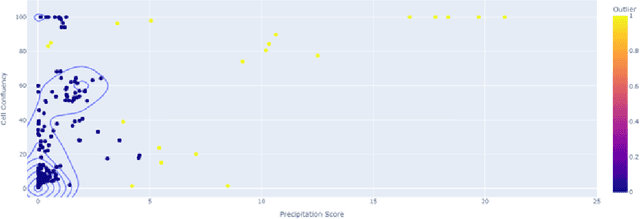
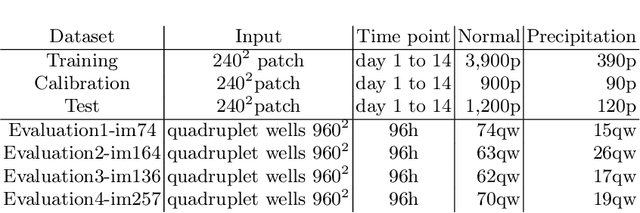
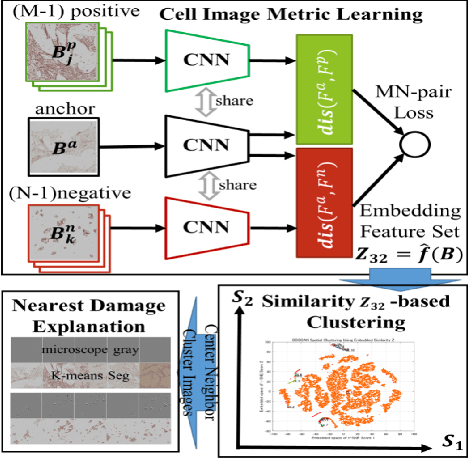
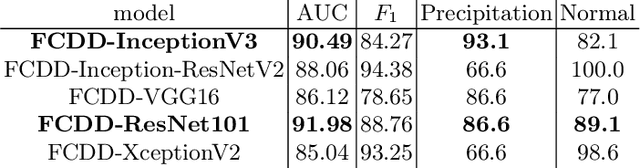
In regenerative medicine research, we experimentally design the composition of chemical medium. We add different components to 384-well plates and culture the biological cells. We monitor the condition of the cells and take time-lapse bioimages for morphological assay. In particular, precipitation can appear as artefacts in the image and contaminate the noise in the imaging assay. Inspecting precipitates is a tedious task for the observer, and differences in experience can lead to variations in judgement from person to person. The machine learning approach will remove the burden of human inspection and provide consistent inspection. In addition, precipitation features are as small as 10-20 {\mu}m. A 1200 pixel square well image resized under a resolution of 2.82 {\mu}m/pixel will result in a reduction in precipitation features. Dividing the well images into 240-pixel squares and learning without resizing preserves the resolution of the original image. In this study, we developed an application to automatically detect precipitation on 384-well plates utilising optical microscope images. We apply MN-pair contrastive clustering to extract precipitation classes from approximately 20,000 patch images. To detect precipitation features, we compare deeper FCDDs detectors with optional backbones and build a machine learning pipeline to detect precipitation from the maximum score of quadruplet well images using isolation Forest algorithm, where the anomaly score is ranged from zero to one. Furthermore, using this application we can visualise precipitation situ heatmap on a 384-well plate.
Damage Vision Mining Opportunity for Imbalanced Anomaly Detection
Aug 08, 2023In past decade, previous balanced datasets have been used to advance algorithms for classification, object detection, semantic segmentation, and anomaly detection in industrial applications. Specifically, for condition-based maintenance, automating visual inspection is crucial to ensure high quality. Deterioration prognostic attempts to optimize the fine decision process for predictive maintenance and proactive repair. In civil infrastructure and living environment, damage data mining cannot avoid the imbalanced data issue because of rare unseen events and high quality status by improved operations. For visual inspection, deteriorated class acquired from the surface of concrete and steel components are occasionally imbalanced. From numerous related surveys, we summarize that imbalanced data problems can be categorized into four types; 1) missing range of target and label valuables, 2) majority-minority class imbalance, 3) foreground-background of spatial imbalance, 4) long-tailed class of pixel-wise imbalance. Since 2015, there has been many imbalanced studies using deep learning approaches that includes regression, image classification, object detection, semantic segmentation. However, anomaly detection for imbalanced data is not yet well known. In the study, we highlight one-class anomaly detection application whether anomalous class or not, and demonstrate clear examples on imbalanced vision datasets: blood smear, lung infection, hazardous driving, wooden, concrete deterioration, river sludge, and disaster damage. Illustrated in Fig.1, we provide key results on damage vision mining advantage, hypothesizing that the more effective range of positive ratio, the higher accuracy gain of anomaly detection application. In our imbalanced studies, compared with the balanced case of positive ratio 1/1, we find that there is applicable positive ratio, where the accuracy are consistently high.