 Add to Chrome
 Add to Firefox
 Add to Edge
Training-Free Inference-Time Self-Reflection and Cost-Bounded Early Stopping for Large Language Models
Aug 19, 2026
Reinforcement-learning training of reasoning LLMs (e.g., GRPO) is expensive and requires a controllable environment, committing every contribution to a full training pipeline. We present EvoResearcher, a training-free, inference-time protocol that adds cost-bounded self-reflection to a single frozen LLM backbone. The protocol iterates generate -> self-critique -> revise until a maximum depth D is reached or the critique returns the CONFIRMED sentinel, an implicit early stop that lets the backbone self-verify its answer under a strict compute budget. Four self-reflective meta-reward components (correctness, efficiency, reflection depth, tool-call diversity) act as design principles instantiated as prompt-level mechanisms, so their benefits accrue with zero gradient updates. We validate the protocol on Big-Bench Hard (100 questions) and establish cross-domain behavior on GSM8K (500) and MATH (500) on the same frozen backbone, with cross-model replication on Qwen2.5-72B. All experiments use pure-reasoning benchmarks; the tool-call diversity component is validated in prompt-level form, and the environment-level and multi-agent extensions are design blueprints left to future work. On clean BBH the protocol does not raise accuracy beyond the 95% Wilson interval; its value is cost-bounded self-verification, with the CONFIRMED early stop terminating 82-88% of items at equal accuracy (about 2.1 generations per question).

A Research Prototype for Closed-Loop Generative Design of Customized Foot Orthoses via Semantic-Physics Alignment
Jul 18, 2026Translating unstructured clinical prescriptions into patient-specific foot orthoses (FOs) is hindered by a semantic-physical misalignment: high-level clinical intent is not mapped deterministically onto the 3D geometric parameters of the orthosis, and existing design workflows remain dependent on manual expertise with no instantaneous biomechanical validation. We present TANS-FO, a research prototype-a modular pipeline with closed-loop feedback for computational design automation of customized FOs, not a clinically validated therapeutic device. A Text-Aligned Neural Surrogate (TANS) uses cross-attention to project clinical-text embeddings onto a continuous lattice-density field, while a Graph Neural Network (GNN) surrogate predicts plantar stress in real time as a substitute for Finite Element Analysis (FEA). The framework is anchored on the open-access PicoFoot-5K anthropometric database (5,230 subjects; 30+ anatomical parameters). Under standardized quasi-static loading, the GNN surrogate agrees with an Abaqus reference solver (R^2 = 0.94), and the full pipeline synthesizes manufacturing-ready lattice insoles within minutes. On the Male 18-40 cohort, the proposed system attains a surrogate-predicted peak-pressure reduction of 34.7% over parametric CAD, with a fit error of 0.42 mm. Separately, an exploratory feasibility observation (n = 12; 2-week follow-up; no control group) using VAS pain reporting indicates short-term comfort improvement (VAS 6.4 -> 2.1), but this data is explicitly classified as preliminary observational evidence only-not evidence of clinical efficacy.
GRAFT: Biological Graph and Hypergraph Benchmarks for Linked Gene Expression and Phenotypic Trait Prediction in Arabidopsis thaliana
Jun 25, 2026Understanding which genes control which traits in an organism remains one of the central challenges in biology. Despite significant advances in data collection technology, our ability to map genes to traits is still limited. This genome-to-phenome (G2P) challenge spans several problem domains, including plant breeding, and requires methods capable of reasoning over high-dimensional, heterogeneous, and biologically structured data. Current datasets and data repositories, however, are not well-equipped for this task. Current studies do not link gene expression and trait data, and most focus on very specific traits, limiting the breadth of possible correlations. To address this gap, we present the novel Gene-Graph Regression for Arabidopsis Functional Traits (GRAFT) dataset, a curated multi-modal dataset linking gene expression profiles with phenotypic trait measurements in Arabidopsis thaliana, a model organism in plant biology. GRAFT supports tasks such as phenotype prediction and interpretable graph learning. In addition, we benchmark conventional regression and explanatory baselines, including a biologically-informed hypergraph baseline, to validate gene-trait associations. To the best of our knowledge, this is the first dataset to provide multimodal gene information and heterogeneous trait or phenotype data for the same Arabidopsis thaliana specimens. With GRAFT, we aim to foster research to accurately understand the relationship between genotypes and phenotypes using gene information, higher-order gene pairings, and trait data from multiple sources.
MetaResearcher: Scaling Deep Research via Self-Reflective Reinforcement Learning in Adversarial Virtual Environments
Jun 18, 2026Deep research agents have demonstrated remarkable capabilities in autonomous information gathering and synthesis, yet their training remains constrained by the static nature of simulated environments, the limits of fact-retrieval-only task designs, and the inefficiency of outcome-based reinforcement learning. In this work, we propose MetaResearcher, a novel framework that scales deep research agent training across four synergistic dimensions. First, we introduce an Evolving Virtual World that injects temporal dynamics and adversarial misinformation into the training environment, forcing agents to develop source credibility assessment and temporal conflict resolution skills. Second, we design Discovery-Oriented Tasks -- including hypothesis generation and contradiction resolution -- that transcend simple fact retrieval and push agents toward genuine research behaviors. Third, we propose a Self-Reflective Meta-Reward mechanism within the GRPO framework that jointly optimizes for answer correctness, search path efficiency, reflection depth, and tool call diversity, directly addressing the repetitive action loop problem observed in prior work. Fourth, we introduce a Heterogeneous Multi-Agent Swarm architecture comprising specialized Scout, Filter, and Synthesizer models that learn collaborative research strategies through coordinated reinforcement learning. Built upon the LiteResearcher infrastructure, MetaResearcher requires zero marginal API cost for training while targeting substantial improvements in both benchmark performance (GAIA, Xbench-DS) and epistemic robustness under adversarial conditions. We present the complete framework design, training methodology, and planned experimental validation.
GAFR-Net: A Graph Attention and Fuzzy-Rule Network for Interpretable Breast Cancer Image Classification
Feb 10, 2026Accurate classification of breast cancer histopathology images is pivotal for early oncological diagnosis and therapeutic intervention.However, conventional deep learning architectures often encounter performance degradation under limited annotations and suffer from a "blackbox" nature, hindering their clinical integration. To mitigate these limitations, we propose GAFRNet, a robust and interpretable Graph Attention and FuzzyRule Network specifically engineered for histopathology image classification with scarce supervision. GAFRNet constructs a similarity-driven graph representation to model intersample relationships and employs a multihead graph attention mechanism to capture complex relational features across heterogeneous tissue structures.Concurrently, a differentiable fuzzy-rule module encodes intrinsic topological descriptorsincluding node degree, clustering coefficient, and label consistencyinto explicit, human-understandable diagnostic logic. This design establishes transparent "IF-THEN" mappings that mimic the heuristic deduction process of medical experts, providing clear reasoning behind each prediction without relying on post-hoc attribution methods. Extensive evaluations on three benchmark datasets (BreakHis, Mini-DDSM, and ICIAR2018) demonstrate that GAFR-Net consistently outperforms various state-of-the-art methods across multiple magnifications and classification tasks. These results validate the superior generalization and practical utility of GAFR-Net as a reliable decision-support tool for weakly supervised medical image analysis.
AGP: A Novel Arabidopsis thaliana Genomics-Phenomics Dataset and its HyperGraph Baseline Benchmarking
Aug 19, 2025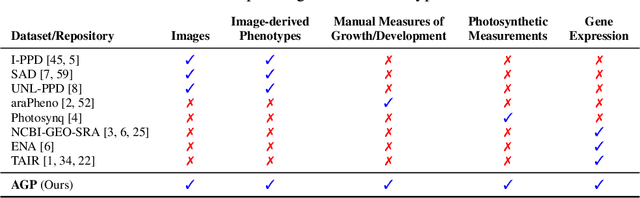
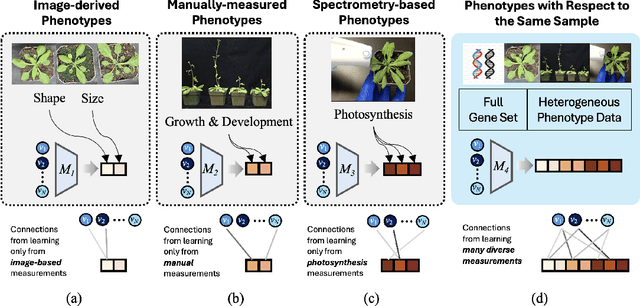
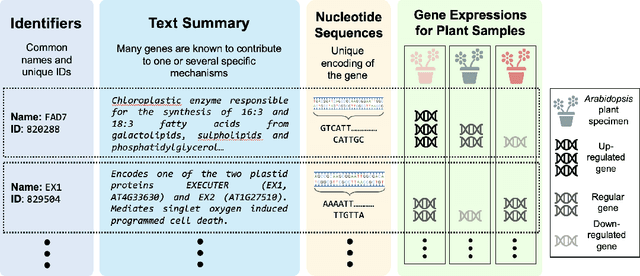

Understanding which genes control which traits in an organism remains one of the central challenges in biology. Despite significant advances in data collection technology, our ability to map genes to traits is still limited. This genome-to-phenome (G2P) challenge spans several problem domains, including plant breeding, and requires models capable of reasoning over high-dimensional, heterogeneous, and biologically structured data. Currently, however, many datasets solely capture genetic information or solely capture phenotype information. Additionally, phenotype data is very heterogeneous, which many datasets do not fully capture. The critical drawback is that these datasets are not integrated, that is, they do not link with each other to describe the same biological specimens. This limits machine learning models' ability to be informed on the various aspects of these specimens, impacting the breadth of correlations learned, and therefore their ability to make more accurate predictions. To address this gap, we present the Arabidopsis Genomics-Phenomics (AGP) Dataset, a curated multi-modal dataset linking gene expression profiles with phenotypic trait measurements in Arabidopsis thaliana, a model organism in plant biology. AGP supports tasks such as phenotype prediction and interpretable graph learning. In addition, we benchmark conventional regression and explanatory baselines, including a biologically-informed hypergraph baseline, to validate gene-trait associations. To the best of our knowledge, this is the first dataset that provides multi-modal gene information and heterogeneous trait or phenotype data for the same Arabidopsis thaliana specimens. With AGP, we aim to foster the research community towards accurately understanding the connection between genotypes and phenotypes using gene information, higher-order gene pairings, and trait data from several sources.
Enhancing Breast Cancer Classification Using Transfer ResNet with Lightweight Attention Mechanism
Aug 25, 2023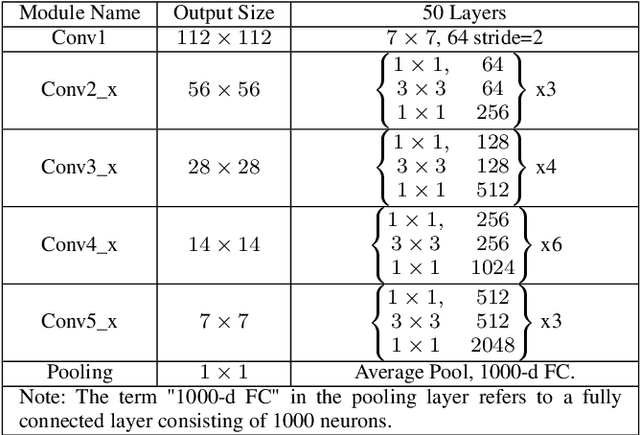
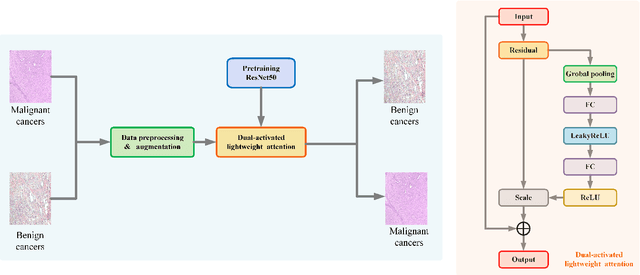
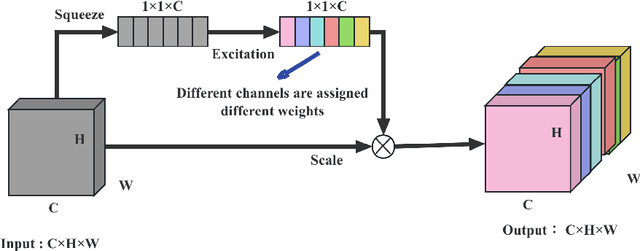

Deep learning models have revolutionized image classification by learning complex feature hierarchies in raw pixel data. This paper introduces an image classification method based on the ResNet model, and introduces a lightweight attention mechanism framework to improve performance. The framework optimizes feature representation, enhances classification capabilities, and improves feature discriminativeness. We verified the effectiveness of the algorithm on the Breakhis dataset, showing its superior performance in many aspects. Not only in terms of conventional models, our method also shows advantages on state-of-the-art methods such as contemporary visual transformers. Significant improvements have been achieved in metrics such as precision, accuracy, recall, F1-score, and G-means, while also performing well in terms of convergence time. These results strengthen the performance of the algorithm and solidify its application prospects in practical image classification tasks. Keywords: ResNet model, Lightweight attention mechanism