 Add to Chrome
 Add to Firefox
 Add to Edge
Diagnosing Korean-Language LLM Political Bias via Census-Grounded Agent Simulation
May 18, 2026
Large language models (LLMs) exhibit systematic political biases in voter simulations, but their underlying mechanisms and cross-lingual generalizations remain poorly understood. We introduce Dynamo-K, a census-grounded simulation framework evaluating Korean-language LLM political behavior across four models on six Korean elections (2017-2025). Using this framework, we identify three systematic failure modes: (1) progressive bias in moderate agents, where explicit mitigation reduces Mean Absolute Error (MAE) by 5.2 times; (2) model-dependent third-party salience collapse, distinguishing between salience failure and decision bias; and (3) regional polarization collapse, where models bidirectionally under-predict historical party strongholds. To address these failures, we demonstrate that scenario reframing recovers 62% of 2017 MAE by restoring third-party visibility. Furthermore, we introduce a learned reweighting adapter that successfully calibrates opposing-valence models without relying on candidate names at train or test time. Validating our diagnostic framework, Dynamo-K accurately predicts 3/3 presidential winners - including a 2.1%p MAE on the highly contested 0.73%p-margin 2022 race - and correctly identifies the dominant party in a held-out local election. The pipeline is open-source and provides a scalable, cost-effective method for diagnosing LLM political behavior.

STAG-CN: Spatio-Temporal Apiary Graph Convolutional Network for Disease Onset Prediction in Beehive Sensor Networks
Mar 15, 2026Honey bee colony losses threaten global pollination services, yet current monitoring systems treat each hive as an isolated unit, ignoring the spatial pathways through which diseases spread across apiaries. This paper introduces the Spatio-Temporal Apiary Graph Convolutional Network (STAG-CN), a graph neural network that models inter-hive relationships for disease onset prediction. STAG-CN operates on a dual adjacency graph combining physical co-location and climatic sensor correlation among hive sessions, and processes multivariate IoT sensor streams through a temporal--spatial--temporal sandwich architecture built on causal dilated convolutions and Chebyshev spectral graph convolutions. Evaluated on the Korean AI Hub apiculture dataset (dataset \#71488) with expanding-window temporal cross-validation, STAG-CN achieves an F1 score of 0.607 at a three-day forecast horizon. An ablation study reveals that the climatic adjacency matrix alone matches full-model performance (F1\,=\,0.607), while the physical adjacency alone yields F1\,=\,0.274, indicating that shared environmental response patterns carry stronger predictive signal than spatial proximity for disease onset. These results establish a proof-of-concept for graph-based biosecurity monitoring in precision apiculture, demonstrating that inter-hive sensor correlations encode disease-relevant information invisible to single-hive approaches.
Learning Structural Hardness for Combinatorial Auctions: Instance-Dependent Algorithm Selection via Graph Neural Networks
Feb 16, 2026The Winner Determination Problem (WDP) in combinatorial auctions is NP-hard, and no existing method reliably predicts which instances will defeat fast greedy heuristics. The ML-for-combinatorial-optimization community has focused on learning to \emph{replace} solvers, yet recent evidence shows that graph neural networks (GNNs) rarely outperform well-tuned classical methods on standard benchmarks. We pursue a different objective: learning to predict \emph{when} a given instance is hard for greedy allocation, enabling instance-dependent algorithm selection. We design a 20-dimensional structural feature vector and train a lightweight MLP hardness classifier that predicts the greedy optimality gap with mean absolute error 0.033, Pearson correlation 0.937, and binary classification accuracy 94.7\% across three random seeds. For instances identified as hard -- those exhibiting ``whale-fish'' trap structure where greedy provably fails -- we deploy a heterogeneous GNN specialist that achieves ${\approx}0\%$ optimality gap on all six adversarial configurations tested (vs.\ 3.75--59.24\% for greedy). A hybrid allocator combining the hardness classifier with GNN and greedy solvers achieves 0.51\% overall gap on mixed distributions. Our honest evaluation on CATS benchmarks confirms that GNNs do not outperform Gurobi (0.45--0.71 vs.\ 0.20 gap), motivating the algorithm selection framing. Learning \emph{when} to deploy expensive solvers is more tractable than learning to replace them.
When Does Multi-Task Learning Fail? Quantifying Data Imbalance and Task Independence in Metal Alloy Property Prediction
Dec 28, 2025Multi-task learning (MTL) assumes related material properties share underlying physics that can be leveraged for better predictions. We test this by simultaneously predicting electrical resistivity, Vickers hardness, and amorphous-forming ability using 54,028 alloy samples. We compare single-task models against standard and structured MTL. Results reveal a striking dichotomy: MTL significantly degrades regression performance (resistivity $R^2$: 0.897 $\to$ 0.844; hardness $R^2$: 0.832 $\to$ 0.694, $p < 0.01$) but improves classification (amorphous F1: 0.703 $\to$ 0.744, $p < 0.05$; recall +17%). Analysis shows near-zero inter-task weights, indicating property independence. Regression failure is attributed to negative transfer caused by severe data imbalance (52k vs. 800 samples). We recommend independent models for precise regression, while reserving MTL for classification tasks where recall is critical.
The Color-Clinical Decoupling: Why Perceptual Calibration Fails Clinical Biomarkers in Smartphone Dermatology
Dec 26, 2025Smartphone-based tele-dermatology assumes that colorimetric calibration ensures clinical reliability, yet this remains untested for underrepresented skin phototypes. We investigated whether standard calibration translates to reliable clinical biomarkers using 43,425 images from 965 Korean subjects (Fitzpatrick III-IV) across DSLR, tablet, and smartphone devices. While Linear Color Correction Matrix (CCM) normalization reduced color error by 67-77% -- achieving near-clinical accuracy (Delta E < 2.3) -- this success did not translate to biomarker reliability. We identify a phenomenon termed "color-clinical decoupling": despite perceptual accuracy, the Individual Typology Angle (ITA) showed poor inter-device agreement (ICC = 0.40), while the Melanin Index achieved good agreement (ICC = 0.77). This decoupling is driven by the ITA formula's sensitivity to b* channel noise and is further compounded by anatomical variance. Facial region accounts for 25.2% of color variance -- 3.6x greater than device effects (7.0%) -- challenging the efficacy of single-patch calibration. Our results demonstrate that current colorimetric standards are insufficient for clinical-grade biomarker extraction, necessitating region-aware protocols for mobile dermatology.
Deep Stock: training and trading scheme using deep learning
Apr 28, 2023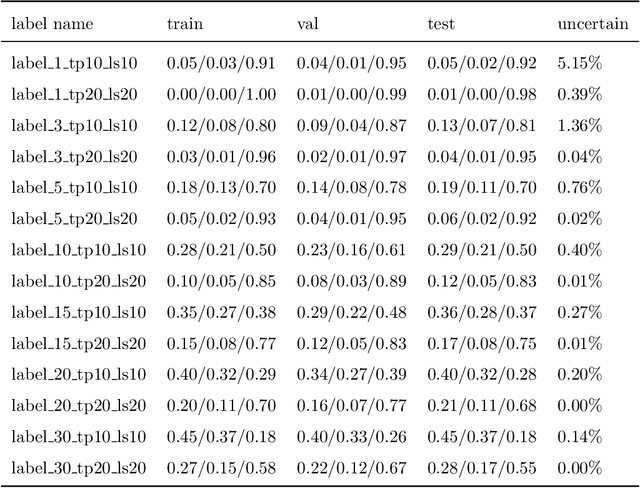
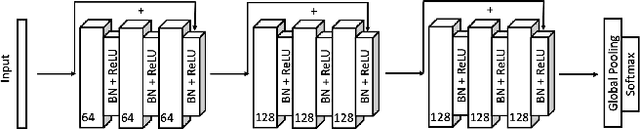
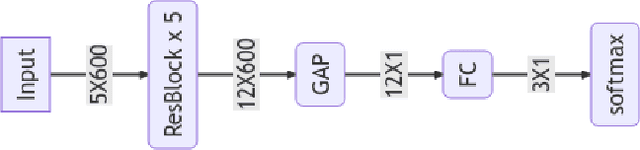
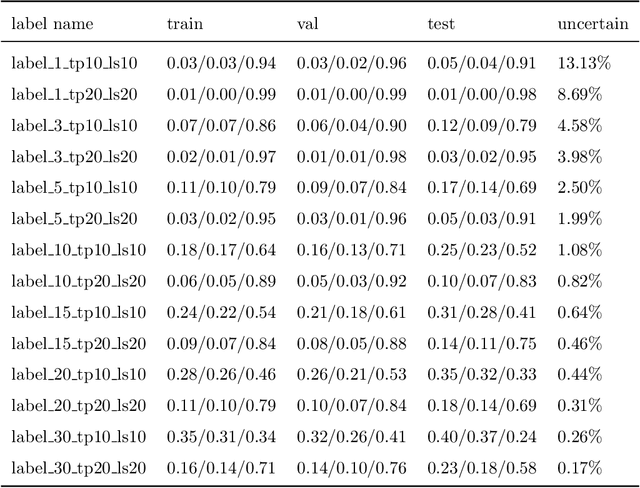
Despite the efficient market hypothesis, many studies suggest the existence of inefficiencies in the stock market, leading to the development of techniques to gain above-market returns, known as alpha. Systematic trading has undergone significant advances in recent decades, with deep learning emerging as a powerful tool for analyzing and predicting market behavior. In this paper, we propose a model inspired by professional traders that look at stock prices of the previous 600 days and predicts whether the stock price rises or falls by a certain percentage within the next D days. Our model, called DeepStock, uses Resnet's skip connections and logits to increase the probability of a model in a trading scheme. We test our model on both the Korean and US stock markets and achieve a profit of N\% on Korea market, which is M\% above the market return, and profit of A\% on US market, which is B\% above the market return.