 Add to Chrome
 Add to Firefox
 Add to Edge
Dissect and Prune: Enhancing Robustness in AI-Generated Image Detection
Jun 09, 2026
While existing AI-generated image detectors report high performance, we identify that this is largely driven by a critical prediction asymmetry: a bias toward the real class that severely limits sensitivity to generated content, especially under standard post-processing operations such as compression and resizing. We hypothesize that this stems from the model's reliance on spurious features, distracting signals that obscure true generative artifacts. To address this, we propose DEAR (Dissect and Prune), which leverages inpainted images to identify and prune these interfering components. Specifically, we find that features strongly aligned to either inpainted or non-inpainted regions are less robust to post-processing. By measuring the alignment between channel activations and inpaint masks, DEAR removes features at both extremes, retaining only those that capture genuine generative artifacts. Experimental results demonstrate that our approach significantly enhances robustness against unseen generators and post-processing, effectively mitigating the prediction asymmetry. Our code is available at https://github.com/dahyedahye/dear.

Multi-Agent Deep Reinforcement Learning using Attentive Graph Neural Architectures for Real-Time Strategy Games
May 21, 2021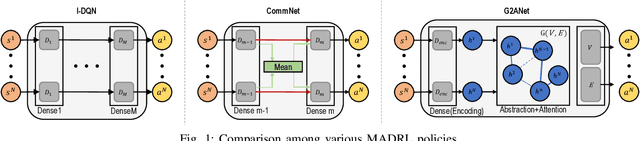
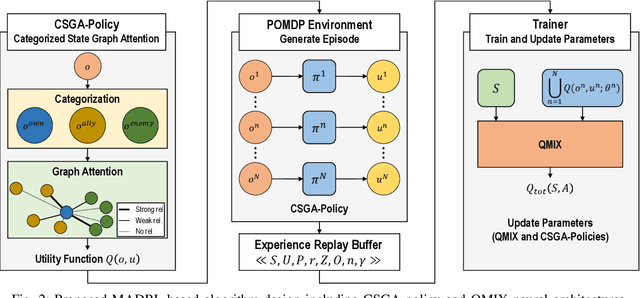
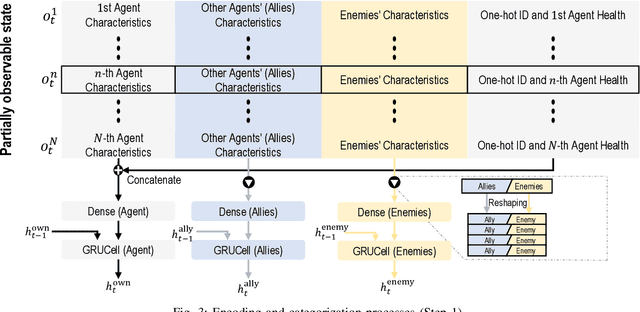
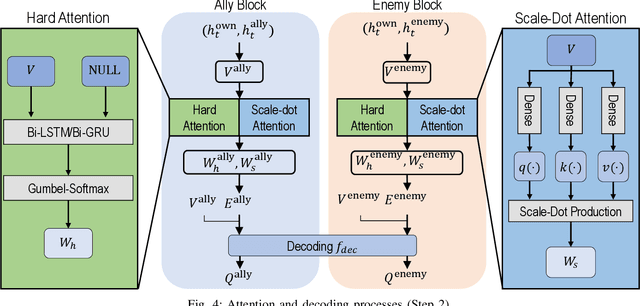
In real-time strategy (RTS) game artificial intelligence research, various multi-agent deep reinforcement learning (MADRL) algorithms are widely and actively used nowadays. Most of the research is based on StarCraft II environment because it is the most well-known RTS games in world-wide. In our proposed MADRL-based algorithm, distributed MADRL is fundamentally used that is called QMIX. In addition to QMIX-based distributed computation, we consider state categorization which can reduce computational complexity significantly. Furthermore, self-attention mechanisms are used for identifying the relationship among agents in the form of graphs. Based on these approaches, we propose a categorized state graph attention policy (CSGA-policy). As observed in the performance evaluation of our proposed CSGA-policy with the most well-known StarCraft II simulation environment, our proposed algorithm works well in various settings, as expected.