 Add to Chrome
 Add to Firefox
 Add to Edge
Digital Fragmentation and Generative AI Use Across 103 Million Application Events
Jul 07, 2026
Knowledge workers switch between applications thousands of times per day, spending nearly a tenth of the work year transitioning between digital applications in a process called digital fragmentation. Whether this fragmentation reflects who an employee is, where they work, or what kind of day they are having, has remained an open question. We analyzed 103 million application events recorded second-by-second from 1,017 employees across eight organizations that largely employ knowledge workers (e.g., law, financial services). Day-to-day variation in fragmentation within individual employees accounted for 44.6% of the variation in digital fragmentation, slightly exceeding stable individual differences between employees (35.8%), and far exceeding variation between organizations (19.6%). Fragmentation rose over the work week and reset after weekends and holidays. Higher-than-typical use of communication applications coincided with more fragmented work. Generative AI use also occurred on more fragmented days, but the period following AI use was marked by narrower, longer, and more predictable application use. These findings identify the workday as a key level for understanding and intervening on digital fragmentation and suggest that AI may help structure fragmented work rather than merely intensify it.

Toward an AI-Powered Computational Testbed for Workforce Policy
May 18, 2026Workforce transformations are difficult to forecast and costly to mismanage. In particular, the integration of artificial intelligence into knowledge work currently affects a substantial share of the global workforce, yet this transition proceeds without tools to forecast how individual employees will respond psychologically and behaviorally. We combine recent advances in LLM-powered generative agents with foundational management science and organizational behavior research to propose dynamic employee agents. Among consenting populations, these agents can be seeded with HR records, validated psychometric measures, and digital activity data to simulate employees' cognitive, emotional, and behavioral trajectories across successive workdays during planned organizational changes. In this article, we detail the computational architecture required to construct this simulation platform and define the privacy, accuracy, and representativeness safeguards necessary for responsible deployment. We argue that establishing this prospective forecasting infrastructure is a critical technical requirement for managing the current global workforce realignment around AI.
Social Media Use is Predictable from App Sequences: Using LSTM and Transformer Neural Networks to Model Habitual Behavior
Apr 20, 2024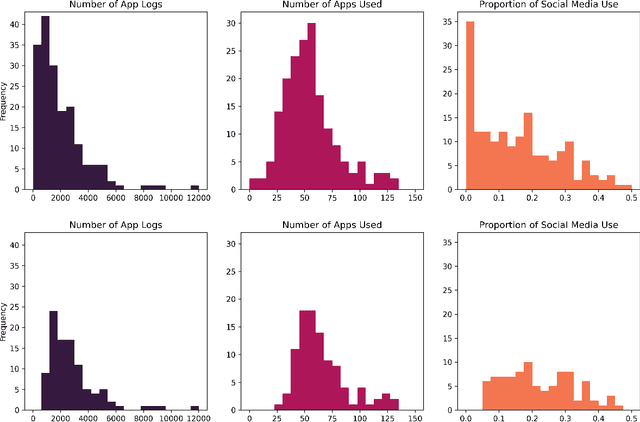
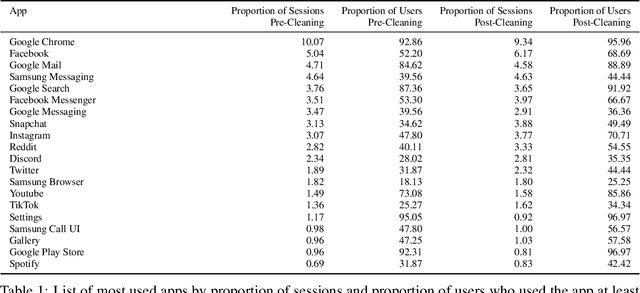
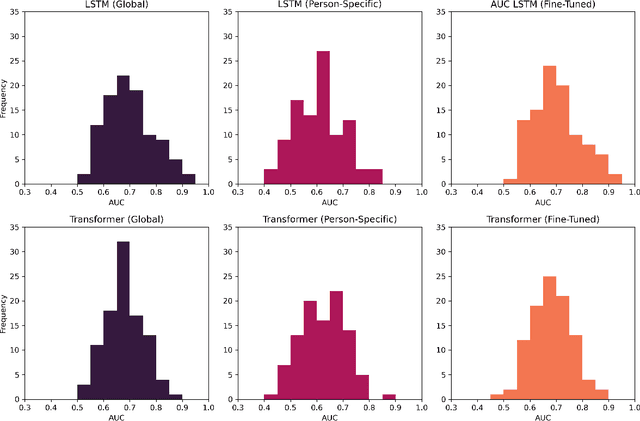
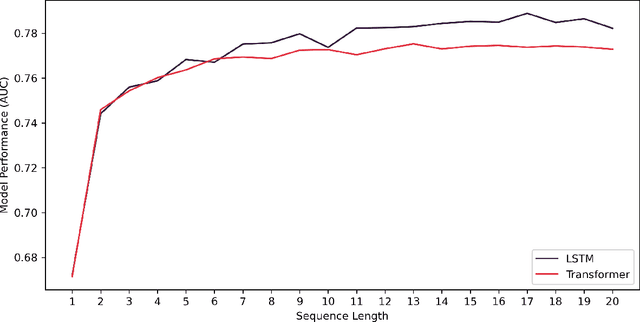
The present paper introduces a novel approach to studying social media habits through predictive modeling of sequential smartphone user behaviors. While much of the literature on media and technology habits has relied on self-report questionnaires and simple behavioral frequency measures, we examine an important yet understudied aspect of media and technology habits: their embeddedness in repetitive behavioral sequences. Leveraging Long Short-Term Memory (LSTM) and transformer neural networks, we show that (i) social media use is predictable at the within and between-person level and that (ii) there are robust individual differences in the predictability of social media use. We examine the performance of several modeling approaches, including (i) global models trained on the pooled data from all participants, (ii) idiographic person-specific models, and (iii) global models fine-tuned on person-specific data. Neither person-specific modeling nor fine-tuning on person-specific data substantially outperformed the global models, indicating that the global models were able to represent a variety of idiosyncratic behavioral patterns. Additionally, our analyses reveal that the person-level predictability of social media use is not substantially related to the frequency of smartphone use in general or the frequency of social media use, indicating that our approach captures an aspect of habits that is distinct from behavioral frequency. Implications for habit modeling and theoretical development are discussed.