 Add to Chrome
 Add to Firefox
 Add to Edge
From Prompt to Protocol: Fast Charging Batteries with Large Language Models
Jan 14, 2026
Efficiently optimizing battery charging protocols is challenging because each evaluation is slow, costly, and non-differentiable. Many existing approaches address this difficulty by heavily constraining the protocol search space, which limits the diversity of protocols that can be explored, preventing the discovery of higher-performing solutions. We introduce two gradient-free, LLM-driven closed-loop methods: Prompt-to-Optimizer (P2O), which uses an LLM to propose the code for small neural-network-based protocols, which are then trained by an inner loop, and Prompt-to-Protocol (P2P), which simply writes an explicit function for the current and its scalar parameters. Across our case studies, LLM-guided P2O outperforms neural networks designed by Bayesian optimization, evolutionary algorithms, and random search. In a realistic fast charging scenario, both P2O and P2P yield around a 4.2 percent improvement in state of health (capacity retention based health metric under fast charging cycling) over a state-of-the-art multi-step constant current (CC) baseline, with P2P achieving this under matched evaluation budgets (same number of protocol evaluations). These results demonstrate that LLMs can expand the space of protocol functional forms, incorporate language-based constraints, and enable efficient optimization in high cost experimental settings.

Five Degree-of-Freedom Property Interpolation of Arbitrary Grain Boundaries via Voronoi Fundamental Zone Octonion Framework
Apr 14, 2021


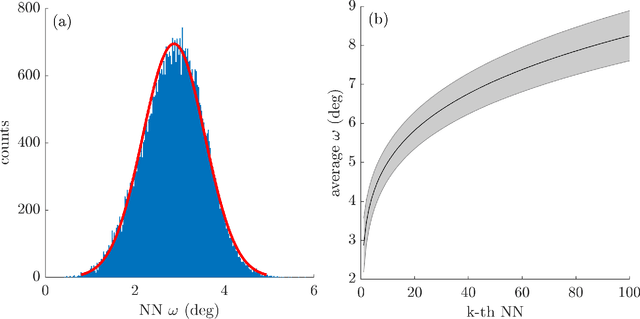
We introduce the Voronoi fundamental zone octonion interpolation framework for grain boundary (GB) structure-property models and surrogates. The VFZO framework offers an advantage over other five degree-of-freedom based property interpolation methods because it is constructed as a point set in a manifold. This means that directly computed Euclidean distances approximate the original octonion distance with significantly reduced computation runtime (~7 CPU minutes vs. 153 CPU days for a 50000x50000 pairwise-distance matrix). This increased efficiency facilitates lower interpolation error through the use of significantly more input data. We demonstrate grain boundary energy interpolation results for a non-smooth validation function and simulated bi-crystal datasets for Fe and Ni using four interpolation methods: barycentric interpolation, Gaussian process regression (GPR), inverse-distance weighting, and nearest-neighbor interpolation. These are evaluated for 50000 random input GBs and 10 000 random prediction GBs. The best performance was achieved with GPR, which resulted in a reduction of the root mean square error (RMSE) by 83.0% relative to RMSE of a constant, average model. Likewise, interpolation on a large, noisy, molecular statics Fe simulation dataset improves performance by 34.4% compared to 21.2% in prior work. Interpolation on a small, low-noise MS Ni simulation dataset is similar to interpolation results for the original octonion metric (57.6% vs. 56.4%). A vectorized, parallelized, MATLAB interpolation function (interp5DOF.m) and related routines are available in our VFZO repository (github.com/sgbaird-5dof/interp) which can be applied to other crystallographic point groups. The VFZO framework offers advantages for computing distances between GBs, estimating property values for arbitrary GBs, and modeling surrogates of computationally expensive 5DOF functions and simulations.