 Add to Chrome
 Add to Firefox
 Add to Edge
Multi-Method Validation of Large Language Model Medical Translation Across High- and Low-Resource Languages
Mar 23, 2026
Language barriers affect 27.3 million U.S. residents with non-English language preference, yet professional medical translation remains costly and often unavailable. We evaluated four frontier large language models (GPT-5.1, Claude Opus 4.5, Gemini 3 Pro, Kimi K2) translating 22 medical documents into 8 languages spanning high-resource (Spanish, Chinese, Russian, Vietnamese), medium-resource (Korean, Arabic), and low-resource (Tagalog, Haitian Creole) categories using a five-layer validation framework. Across 704 translation pairs, all models achieved high semantic preservation (LaBSE greater than 0.92), with no significant difference between high- and low-resource languages (p = 0.066). Cross-model back-translation confirmed results were not driven by same-model circularity (delta = -0.0009). Inter-model concordance across four independently trained models was high (LaBSE: 0.946), and lexical borrowing analysis showed no correlation between English term retention and fidelity scores in low-resource languages (rho = +0.018, p = 0.82). These converging results suggest frontier LLMs preserve medical meaning across resource levels, with implications for language access in healthcare.

SHACL-SKOS Based Knowledge Representation of Material Safety Data Sheet (SDS) for the Pharmaceutical Industry
Feb 11, 2025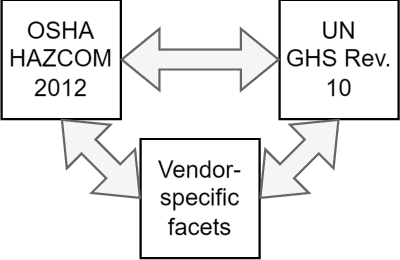
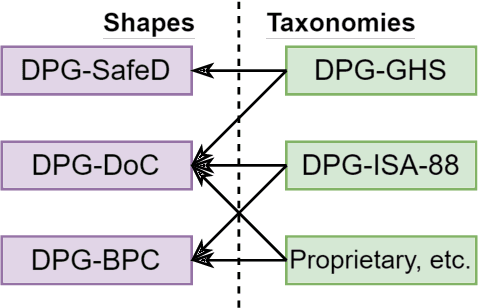
We report the development of a knowledge representation and reasoning (KRR) system built on hybrid SHACL-SKOS ontologies for globally harmonized system (GHS) material Safety Data Sheets (SDS) to enhance chemical safety communication and regulatory compliance. SDS are comprehensive documents containing safety and handling information for chemical substances. Thus, they are an essential part of workplace safety and risk management. However, the vast number of Safety Data Sheets from multiple organizations, manufacturers, and suppliers that produce and distribute chemicals makes it challenging to centralize and access SDS documents through a single repository. To accomplish the underlying issues of data exchange related to chemical shipping and handling, we construct SDS related controlled vocabulary and conditions validated by SHACL, and knowledge systems of similar domains linked via SKOS. The resulting hybrid ontologies aim to provide standardized yet adaptable representations of SDS information, facilitating better data sharing, retrieval, and integration across various platforms. This paper outlines our SHACL-SKOS system architectural design and showcases our implementation for an industrial application streamlining the generation of a composite shipping cover sheet.