 Add to Chrome
 Add to Firefox
 Add to Edge
From Big Data to Fast Data: Towards High-Quality Datasets for Machine Learning Applications from Closed-Loop Data Collection
Mar 31, 2026
The increasing capabilities of machine learning models, such as vision-language and multimodal language models, are placing growing demands on data in automotive systems engineering, making the quality and relevance of collected data enablers for the development and validation of such systems. Traditional Big Data approaches focus on large-scale data collection and offline processing, while Smart Data approaches improve data selection strategies but still rely on centralized and offline post-processing. This paper introduces the concept of Fast Data for automotive systems engineering. The approach shifts data selection and recording onto the vehicle as the data source. By enabling real-time, context-aware decisions on whether and which data should be recorded, data collection can be directly aligned with data quality objectives and collection strategies within a closed-loop. This results in datasets with higher relevance, improved coverage of critical scenarios, and increased information density, while at the same time reducing irrelevant data and associated costs. The proposed approach provides a structured foundation for designing data collection strategies that are aligned with the needs of modern machine learning algorithms. It supports efficient data acquisition and contributes to scalable and cost-effective ML development processes in automotive systems engineering.

Exploring the Range of Possible Outcomes by means of Logical Scenario Analysis and Reduction for Testing Automated Driving Systems
Jun 22, 2023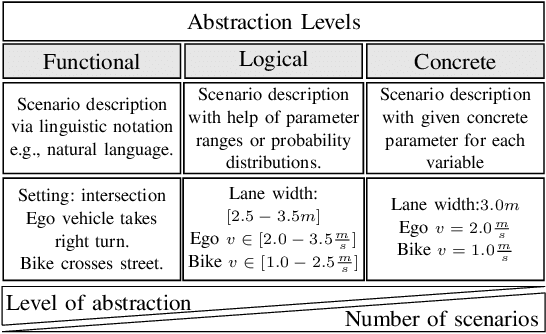
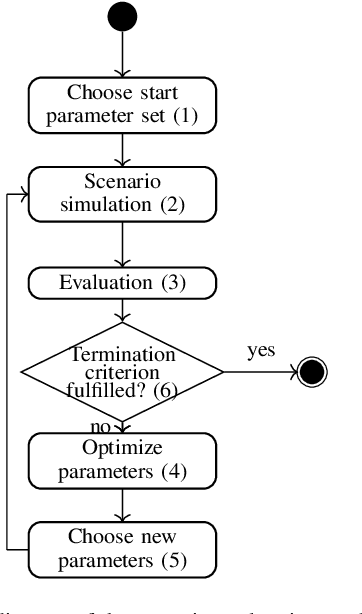
With the implementation of the new EU regulation 2022/1426 regarding the type-approval of the automated driving system (ADS) of fully automated vehicles, scenario-based testing has gained significant importance in evaluating the performance and safety of advanced driver assistance systems and automated driving systems. However, the exploration and generation of concrete scenarios from a single logical scenario can often lead to a number of similar or redundant scenarios, which may not contribute to the testing goals. This paper focuses on the the goal to reduce the scenario set by clustering concrete scenarios from a single logical scenario. By employing clustering techniques, redundant and uninteresting scenarios can be identified and eliminated, resulting in a representative scenario set. This reduction allows for a more focused and efficient testing process, enabling the allocation of resources to the most relevant and critical scenarios. Furthermore, the identified clusters can provide valuable insights into the scenario space, revealing patterns and potential problems with the system's behavior.