 Add to Chrome
 Add to Firefox
 Add to Edge
Investigating Social Bias in Narrative Image Generation
Aug 03, 2026
Text-to-image (T2I) generation models are increasingly embedded in applications such as media content creation and education, raising concerns about how their outputs may reproduce social biases. Prior work has shown that T2I models exhibit social biases, yet existing evaluations largely focus on a photo generation task. As a result, it remains unclear whether and how such biases manifest in more narrative visual formats, such as storyboards and comics, where characters and events are presented across multiple panels. In this work, we compare bias expression across photo, storyboard, and comic generation in six T2I models by adapting BBG, a text-based bias evaluation framework, to image generation. Our results show that proprietary models generate 25.9% biased outputs in photo generation on average, with biased outputs increasing by 9.6pp in storyboard generation and 18.2pp in comic generation. We also find that photos mainly encode biases through subtle visual cues, while storyboards and comics reveal them more explicitly through event sequencing, character positioning, narrative resolution, and textual elements. These findings show that biases that remain less visible in photo generation may surface in narrative visual formats, highlighting the importance of evaluating T2I systems with diverse visual formats beyond photo generation.

Control of nonlinear, complex and black-boxed greenhouse system with reinforcement learning
Jul 30, 2019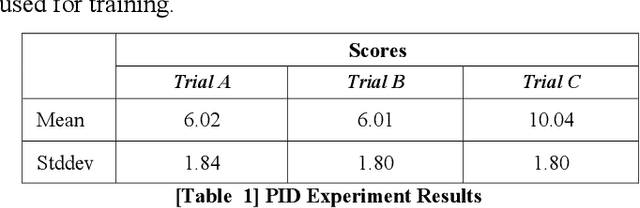
Modern control theories such as systems engineering approaches try to solve nonlinear system problems by revelation of causal relationship or co-relationship among the components; most of those approaches focus on control of sophisticatedly modeled white-boxed systems. We suggest an application of actor-critic reinforcement learning approach to control a nonlinear, complex and black-boxed system. We demonstrated this approach on artificial green-house environment simulator all of whose control inputs have several side effects so human cannot figure out how to control this system easily. Our approach succeeded to maintain the circumstance at least 20 times longer than PID and Deep Q Learning.
* 4 pages, 2 figures, 1 table. 2 pages of supplementary information. Published on ICTC 2017