 Add to Chrome
 Add to Firefox
 Add to Edge
Model-Free Reinforcement Learning Control for Resilient Cyber-Physical Systems
Jun 17, 2026
This paper compares the performance of model-free controllers on a nonlinear system under cyberattacks, including false data injection and denial-of-service attacks. Four RL reward types are analyzed for accuracy, cost, and resilience. Results show that the Lyapunov reward offers the best resilience with low tracking error. Exponential mode also provides good trade-offs with acceptable resilience under moderate training conditions. Progressive and linear rewards converge faster but are less robust. RL-MPCs show strong steady-state resilience but require longer training times; RL-PID controllers are faster with significantly less training time. Proximal Policy Optimization outperforms Deep Deterministic Policy Gradient with a significant reduction in KPI variance. This study serves to highlight how well-designed RL rewards can improve performance and resilience against cyber threats.

A semi-centralized multi-agent RL framework for efficient irrigation scheduling
Aug 15, 2024This paper proposes a Semi-Centralized Multi-Agent Reinforcement Learning (SCMARL) approach for irrigation scheduling in spatially variable agricultural fields, where management zones address spatial variability. The SCMARL framework is hierarchical in nature, with a centralized coordinator agent at the top level and decentralized local agents at the second level. The coordinator agent makes daily binary irrigation decisions based on field-wide conditions, which are communicated to the local agents. Local agents determine appropriate irrigation amounts for specific management zones using local conditions. The framework employs state augmentation approach to handle non-stationarity in the local agents' environments. An extensive evaluation on a large-scale field in Lethbridge, Canada, compares the SCMARL approach with a learning-based multi-agent model predictive control scheduling approach, highlighting its enhanced performance, resulting in water conservation and improved Irrigation Water Use Efficiency (IWUE). Notably, the proposed approach achieved a 4.0% savings in irrigation water while enhancing the IWUE by 6.3%.
Integrating machine learning paradigms and mixed-integer model predictive control for irrigation scheduling
Jun 14, 2023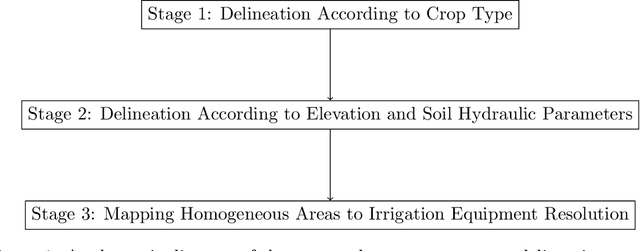
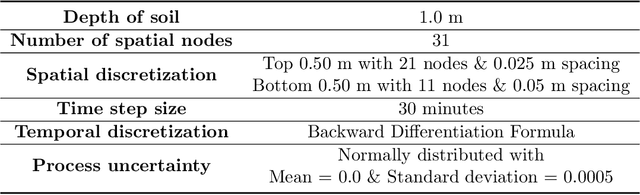
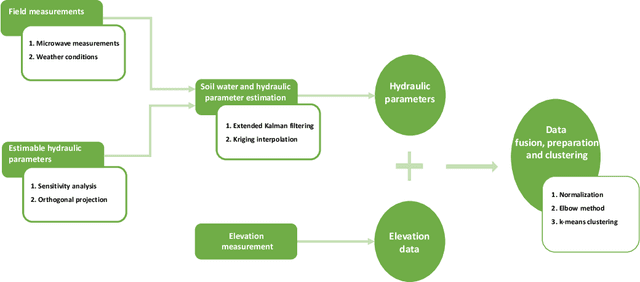
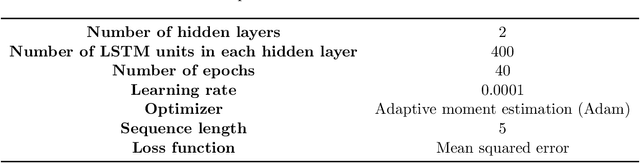
The agricultural sector currently faces significant challenges in water resource conservation and crop yield optimization, primarily due to concerns over freshwater scarcity. Traditional irrigation scheduling methods often prove inadequate in meeting the needs of large-scale irrigation systems. To address this issue, this paper proposes a predictive irrigation scheduler that leverages the three paradigms of machine learning to optimize irrigation schedules. The proposed scheduler employs the k-means clustering approach to divide the field into distinct irrigation management zones based on soil hydraulic parameters and topology information. Furthermore, a long short-term memory network is employed to develop dynamic models for each management zone, enabling accurate predictions of soil moisture dynamics. Formulated as a mixed-integer model predictive control problem, the scheduler aims to maximize water uptake while minimizing overall water consumption and irrigation costs. To tackle the mixed-integer optimization challenge, the proximal policy optimization algorithm is utilized to train a reinforcement learning agent responsible for making daily irrigation decisions. To evaluate the performance of the proposed scheduler, a 26.4-hectare field in Lethbridge, Canada, was chosen as a case study for the 2015 and 2022 growing seasons. The results demonstrate the superiority of the proposed scheduler compared to a traditional irrigation scheduling method in terms of water use efficiency and crop yield improvement for both growing seasons. Notably, the proposed scheduler achieved water savings ranging from 6.4% to 22.8%, along with yield increases ranging from 2.3% to 4.3%.