 Add to Chrome
 Add to Firefox
 Add to Edge
From Black-Box to Clinical Insight: A Multi-Stage Explainable Framework for Speech-Based Cognitive Impairment Detection
Jun 26, 2026
Speech-based cognitive impairment detection offers a noninvasive, accessible alternative to costly biomarker assays, yet transformer-based models remain clinically uninterpretable. We propose a multi-stage explainability framework that translates black-box transformer predictions into clinically grounded narratives by integrating SHapley Additive exPlanations (SHAP)-based token attribution, theory-informed linguistic features, and a four-stage LLM reasoning pipeline using LLaMA-3.1-70B-Instruct. Built on the SpeechCARE-Adaptive Gating Network multimodal screening model (F1 = 72.11% on the NIA PREPARE benchmark), the framework maps model outputs to four cognitive-linguistic dimensions, including lexical richness, syntactic complexity, and semantic coherence. Physician evaluation on 70 stratified English samples demonstrated strong alignment with patient-level cognitive profiles, and a System Usability Scale score of 82/100 indicated high potential for clinical workflow integration.

Improving Direct Persian-English Speech-to-Speech Translation with Discrete Units and Synthetic Parallel Data
Nov 16, 2025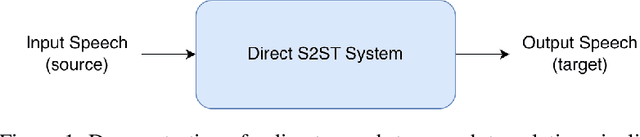
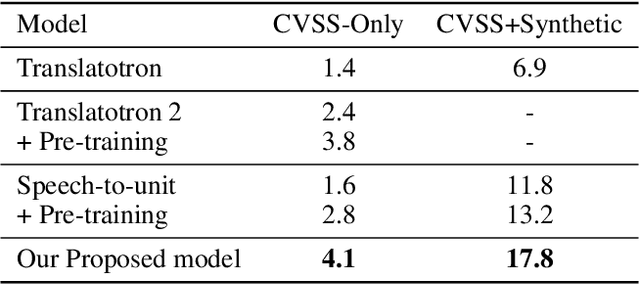
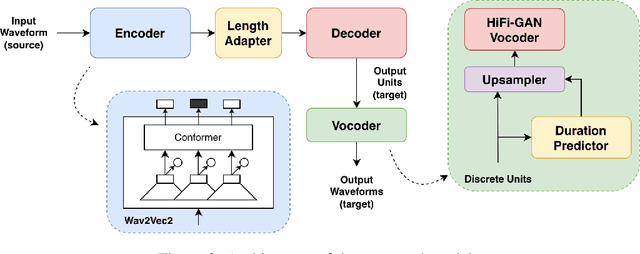
Direct speech-to-speech translation (S2ST), in which all components are trained jointly, is an attractive alternative to cascaded systems because it offers a simpler pipeline and lower inference latency. However, direct S2ST models require large amounts of parallel speech data in the source and target languages, which are rarely available for low-resource languages such as Persian. This paper presents a direct S2ST system for translating Persian speech into English speech, as well as a pipeline for synthetic parallel Persian-English speech generation. The model comprises three components: (1) a conformer-based encoder, initialized from self-supervised pre-training, maps source speech to high-level acoustic representations; (2) a causal transformer decoder with relative position multi-head attention translates these representations into discrete target speech units; (3) a unit-based neural vocoder generates waveforms from the predicted discrete units. To mitigate the data scarcity problem, we construct a new Persian-English parallel speech corpus by translating Persian speech transcriptions into English using a large language model and then synthesizing the corresponding English speech with a state-of-the-art zero-shot text-to-speech system. The resulting corpus increases the amount of available parallel speech by roughly a factor of six. On the Persian-English portion of the CVSS corpus, the proposed model achieves improvement of 4.6 ASR BLEU with the synthetic data over direct baselines. These results indicate that combining self-supervised pre-training, discrete speech units, and synthetic parallel data is effective for improving direct S2ST in low-resource language pairs such as Persian-English
National Institute on Aging PREPARE Challenge: Early Detection of Cognitive Impairment Using Speech -- The SpeechCARE Solution
Nov 13, 2025Alzheimer's disease and related dementias (ADRD) affect one in five adults over 60, yet more than half of individuals with cognitive decline remain undiagnosed. Speech-based assessments show promise for early detection, as phonetic motor planning deficits alter acoustic features (e.g., pitch, tone), while memory and language impairments lead to syntactic and semantic errors. However, conventional speech-processing pipelines with hand-crafted features or general-purpose audio classifiers often exhibit limited performance and generalizability. To address these limitations, we introduce SpeechCARE, a multimodal speech processing pipeline that leverages pretrained, multilingual acoustic and linguistic transformer models to capture subtle speech-related cues associated with cognitive impairment. Inspired by the Mixture of Experts (MoE) paradigm, SpeechCARE employs a dynamic fusion architecture that weights transformer-based acoustic, linguistic, and demographic inputs, allowing integration of additional modalities (e.g., social factors, imaging) and enhancing robustness across diverse tasks. Its robust preprocessing includes automatic transcription, large language model (LLM)-based anomaly detection, and task identification. A SHAP-based explainability module and LLM reasoning highlight each modality's contribution to decision-making. SpeechCARE achieved AUC = 0.88 and F1 = 0.72 for classifying cognitively healthy, MCI, and AD individuals, with AUC = 0.90 and F1 = 0.62 for MCI detection. Bias analysis showed minimal disparities, except for adults over 80. Mitigation techniques included oversampling and weighted loss. Future work includes deployment in real-world care settings (e.g., VNS Health, Columbia ADRC) and EHR-integrated explainability for underrepresented populations in New York City.