 Add to Chrome
 Add to Firefox
 Add to Edge
Bridging Classical and Quantum String Matching: A Computational Reformulation of Bit-Parallelism
Mar 07, 2025
String matching is a fundamental problem in computer science, with critical applications in text retrieval, bioinformatics, and data analysis. Among the numerous solutions that have emerged for this problem in recent decades, bit-parallelism has significantly enhanced their practical efficiency, leading to the development of several optimized approaches for both exact and approximate string matching. However, their potential in quantum computing remains largely unexplored. This paper presents a novel pathway that not only translates bit-parallel string matching algorithms into the quantum framework but also enhances their performance to achieve a quadratic speedup through Grover's search. By embedding quantum search within a bit-parallel model, we reduce the time complexity of string matching, establishing a structured pathway for transforming classical algorithms into quantum solutions with provable computational advantages. Beyond exact matching, this technique offers a foundation for tackling a wide range of non-standard string matching problems, opening new avenues for efficient text searching in the quantum era. To demonstrate the simplicity and adaptability of the technique presented in this paper, we apply this translation and adaptation process to two landmark bit-parallel algorithms: Shift-And for exact pattern matching and Shift-Add for approximate string matching with up to k errors.

Prior Polarity Lexical Resources for the Italian Language
Jul 01, 2015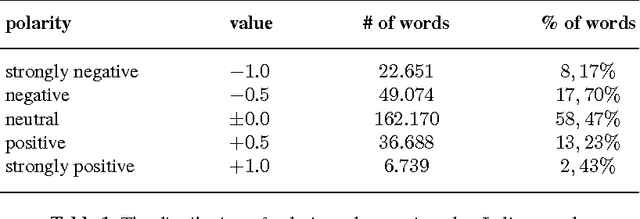
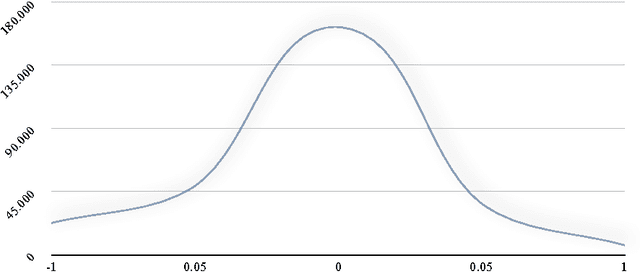
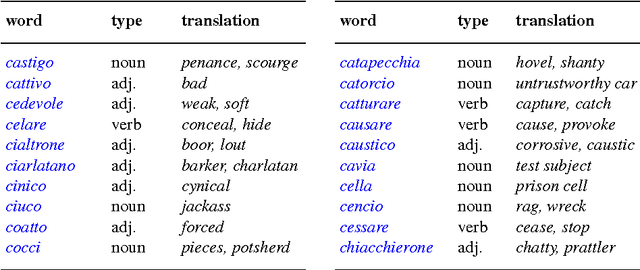
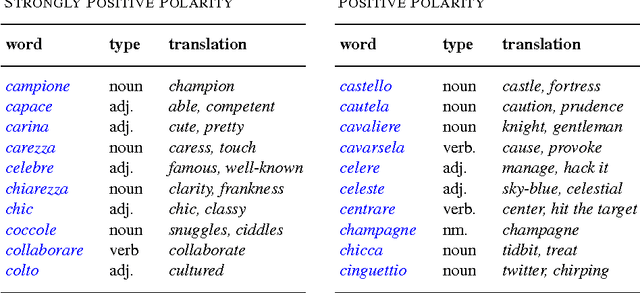
In this paper we present SABRINA (Sentiment Analysis: a Broad Resource for Italian Natural language Applications) a manually annotated prior polarity lexical resource for Italian natural language applications in the field of opinion mining and sentiment induction. The resource consists in two different sets, an Italian dictionary of more than 277.000 words tagged with their prior polarity value, and a set of polarity modifiers, containing more than 200 words, which can be used in combination with non neutral terms of the dictionary in order to induce the sentiment of Italian compound terms. To the best of our knowledge this is the first prior polarity manually annotated resource which has been developed for the Italian natural language.