 Add to Chrome
 Add to Firefox
 Add to Edge
FASE: Fast Adaptive Semantic Entropy for Code Quality
Jun 08, 2026
Multi-agent code generation offers a promising paradigm for autonomous software development by simulating the human software engineering lifecycle. However, system reliability remains hindered by LLM hallucinations and error propagation across interacting agents. While semantic entropy provides a principled way to quantify uncertainty without ground-truth answers, current methods often rely on costly LLM-driven equivalence checks. In this work, we introduce Fast Adaptive Semantic Entropy (FASE), a novel metric that approximates functional correctness based on the minimum spanning tree of structural and semantic dissimilarity graphs. Evaluations on HumanEval and BigCodeBench demonstrate that FASE outperforms state-of-the-art semantic entropy by LLM entailment, achieving a 25% average improvement in Spearman correlation and a 19% increase in ROCAUC score against Pass@1 from ground-truth test cases when using the Qwen3-Embedding-8B model. Furthermore, by eliminating costly LLM-driven equivalence evaluation, FASE incurs negligible computational overhead, requiring only approximately 0.3% of the runtime cost of traditional semantic entropy approaches. These results position FASE as a practical, cost-effective solution for optimizing uncertainty quantification in real-world multi-agent workflows.

FlaKat: A Machine Learning-Based Categorization Framework for Flaky Tests
Mar 01, 2024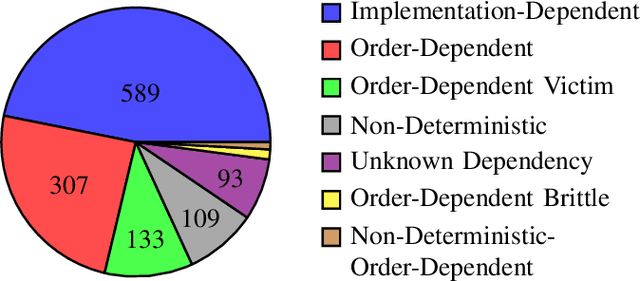
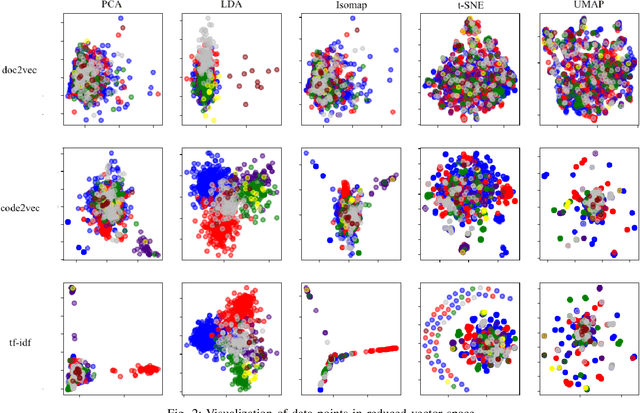
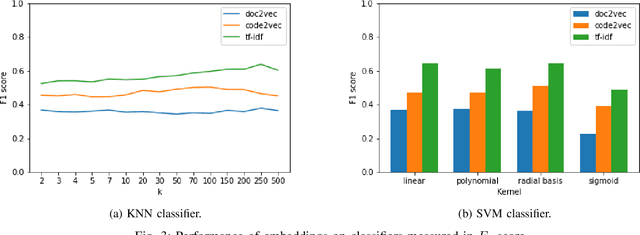
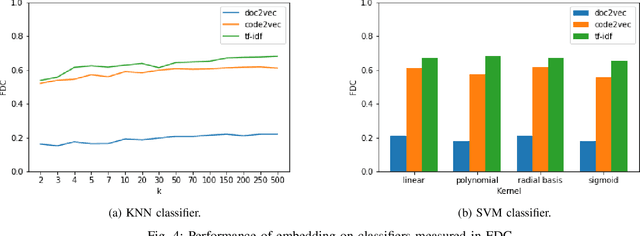
Flaky tests can pass or fail non-deterministically, without alterations to a software system. Such tests are frequently encountered by developers and hinder the credibility of test suites. State-of-the-art research incorporates machine learning solutions into flaky test detection and achieves reasonably good accuracy. Moreover, the majority of automated flaky test repair solutions are designed for specific types of flaky tests. This research work proposes a novel categorization framework, called FlaKat, which uses machine-learning classifiers for fast and accurate prediction of the category of a given flaky test that reflects its root cause. Sampling techniques are applied to address the imbalance between flaky test categories in the International Dataset of Flaky Test (IDoFT). A new evaluation metric, called Flakiness Detection Capacity (FDC), is proposed for measuring the accuracy of classifiers from the perspective of information theory and provides proof for its effectiveness. The final FDC results are also in agreement with F1 score regarding which classifier yields the best flakiness classification.