 Add to Chrome
 Add to Firefox
 Add to Edge
An Investigation of Denial of Service Attacks on Autonomous Driving Software and Hardware in Operation
Sep 02, 2024
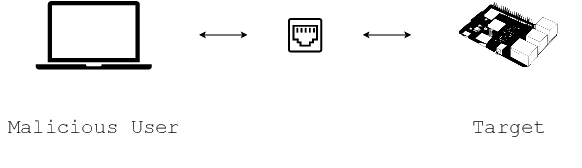
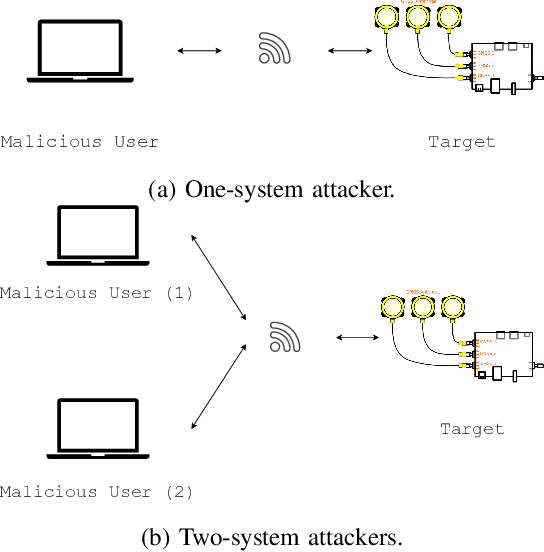


This research investigates the impact of Denial of Service (DoS) attacks, specifically Internet Control Message Protocol (ICMP) flood attacks, on Autonomous Driving (AD) systems, focusing on their control modules. Two experimental setups were created: the first involved an ICMP flood attack on a Raspberry Pi running an AD software stack, and the second examined the effects of single and double ICMP flood attacks on a Global Navigation Satellite System Real-Time Kinematic (GNSS-RTK) device for high-accuracy localization of an autonomous vehicle that is available on the market. The results indicate a moderate impact of DoS attacks on the AD stack, where the increase in median computation time was marginal, suggesting a degree of resilience to these types of attacks. In contrast, the GNSS device demonstrated significant vulnerability: during DoS attacks, the sample rate dropped drastically to approximately 50% and 5% of the nominal rate for single and double attacker configurations, respectively. Additionally, the longest observed time increments were in the range of seconds during the attacks. These results underscore the vulnerability of AD systems to DoS attacks and the critical need for robust cybersecurity measures. This work provides valuable insights into the design requirements of AD software stacks and highlights that external hardware and modules can be significant attack surfaces.

Strengths and Weaknesses of 3D Pose Estimation and Inertial Motion Capture System for Movement Therapy
Jun 01, 2023
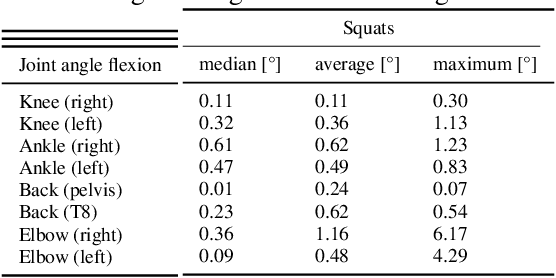
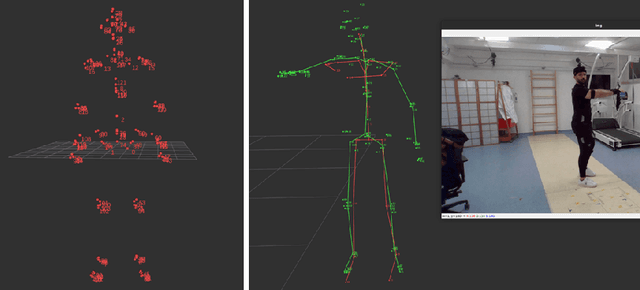
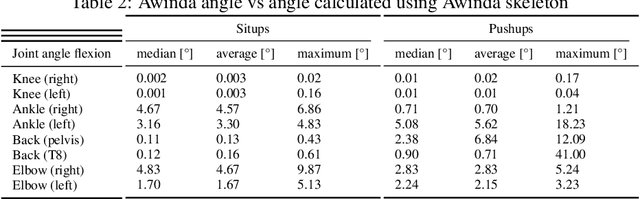
3D pose estimation offers the opportunity for fast, non-invasive, and accurate motion analysis. This is of special interest also for clinical use. Currently, motion capture systems are used, as they offer robust and precise data acquisition, which is essential in the case of clinical applications. In this study, we investigate the accuracy of the state-of-the-art 3D position estimation approach MeTrabs, compared to the established inertial sensor system MTw Awinda for specific motion exercises. The study uses and provides an evaluation dataset of parallel recordings from 10 subjects during various movement therapy exercises. The information from the Awinda system and the frames for monocular pose estimation are synchronized. For the comparison, clinically relevant parameters for joint angles of ankle, knee, back, and elbow flexion-extension were estimated and evaluated using mean, median, and maximum deviation between the calculated joint angles for the different exercises, camera positions, and clothing items. The results of the analysis indicate that the mean and median deviations can be kept below 5{\deg} for some of the studied angles. These joints could be considered for medical applications even considering the maximum deviations of 15{\deg}. However, caution should be applied to certain particularly problematic joints. In particular, elbow flexions, which showed high maximum deviations of up to 50{\deg} in our analysis. Furthermore, the type of exercise plays a crucial role in the reliable and safe application of the 3D position estimation method. For example, all joint angles showed a significant deterioration in performance during exercises near the ground.