 Add to Chrome
 Add to Firefox
 Add to Edge
Measures of classification bias derived from sample size analysis
Jan 06, 2026
We propose the use of a simple intuitive principle for measuring algorithmic classification bias: the significance of the differences in a classifier's error rates across the various demographics is inversely commensurate with the sample size required to statistically detect them. That is, if large sample sizes are required to statistically establish biased behavior, the algorithm is less biased, and vice versa. In a simple setting, we assume two distinct demographics, and non-parametric estimates of the error rates on them, e1 and e2, respectively. We use a well-known approximate formula for the sample size of the chi-squared test, and verify some basic desirable properties of the proposed measure. Next, we compare the proposed measure with two other commonly used statistics, the difference e2-e1 and the ratio e2/e1 of the error rates. We establish that the proposed measure is essentially different in that it can rank algorithms for bias differently, and we discuss some of its advantages over the other two measures. Finally, we briefly discuss how some of the desirable properties of the proposed measure emanate from fundamental characteristics of the method, rather than the approximate sample size formula we used, and thus, are expected to hold in more complex settings with more than two demographics.

Zero-failure testing of binary classifiers
Jul 04, 2024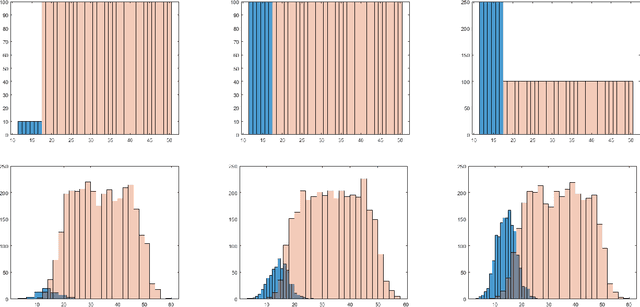

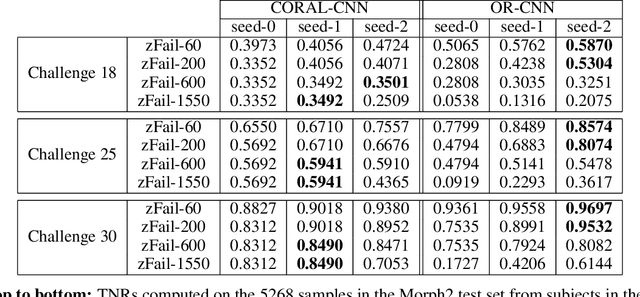

We propose using performance metrics derived from zero-failure testing to assess binary classifiers. The principal characteristic of the proposed approach is the asymmetric treatment of the two types of error. In particular, we construct a test set consisting of positive and negative samples, set the operating point of the binary classifier at the lowest value that will result to correct classifications of all positive samples, and use the algorithm's success rate on the negative samples as a performance measure. A property of the proposed approach, setting it apart from other commonly used testing methods, is that it allows the construction of a series of tests of increasing difficulty, corresponding to a nested sequence of positive sample test sets. We illustrate the proposed method on the problem of age estimation for determining whether a subject is above a legal age threshold, a problem that exemplifies the asymmetry of the two types of error. Indeed, misclassifying an under-aged subject is a legal and regulatory issue, while misclassifications of people above the legal age is an efficiency issue primarily concerning the commercial user of the age estimation system.