 Add to Chrome
 Add to Firefox
 Add to Edge
PDFInspect: A Unified Feature Extraction Framework for Malicious Document Detection
Jan 19, 2026
The increasing prevalence of malicious Portable Document Format (PDF) files necessitates robust and comprehensive feature extraction techniques for effective detection and analysis. This work presents a unified framework that integrates graph-based, structural, and metadata-driven analysis to generate a rich feature representation for each PDF document. The system extracts text from PDF pages and constructs undirected graphs based on pairwise word relationships, enabling the computation of graph-theoretic features such as node count, edge density, and clustering coefficient. Simultaneously, the framework parses embedded metadata to quantify character distributions, entropy patterns, and inconsistencies across fields such as author, title, and producer. Temporal features are derived from creation and modification timestamps to capture behavioral signatures, while structural elements including, object streams, fonts, and embedded images, are quantified to reflect document complexity. Boolean flags for potentially malicious PDF constructs (e.g., JavaScript, launch actions) are also extracted. Together, these features form a high-dimensional vector representation (170 dimensions) that is well-suited for downstream tasks such as malware classification, anomaly detection, and forensic analysis. The proposed approach is scalable, extensible, and designed to support real-world PDF threat intelligence workflows.6

Obfuscated Memory Malware Detection
Aug 23, 2024

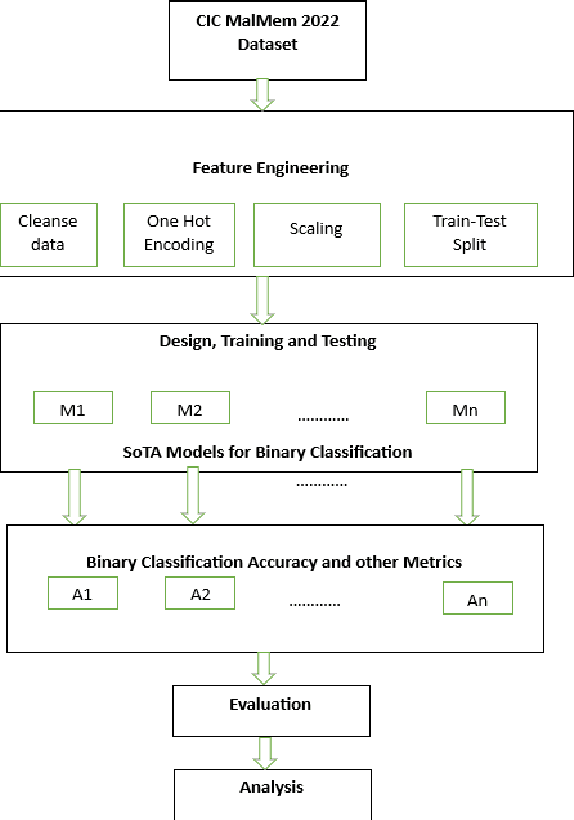
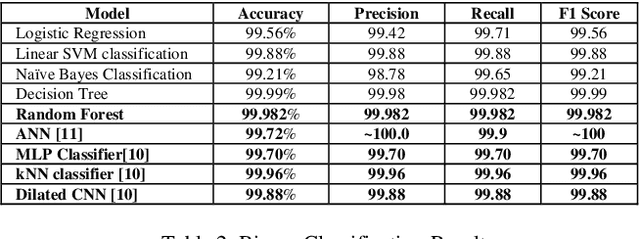
Providing security for information is highly critical in the current era with devices enabled with smart technology, where assuming a day without the internet is highly impossible. Fast internet at a cheaper price, not only made communication easy for legitimate users but also for cybercriminals to induce attacks in various dimensions to breach privacy and security. Cybercriminals gain illegal access and breach the privacy of users to harm them in multiple ways. Malware is one such tool used by hackers to execute their malicious intent. Development in AI technology is utilized by malware developers to cause social harm. In this work, we intend to show how Artificial Intelligence and Machine learning can be used to detect and mitigate these cyber-attacks induced by malware in specific obfuscated malware. We conducted experiments with memory feature engineering on memory analysis of malware samples. Binary classification can identify whether a given sample is malware or not, but identifying the type of malware will only guide what next step to be taken for that malware, to stop it from proceeding with its further action. Hence, we propose a multi-class classification model to detect the three types of obfuscated malware with an accuracy of 89.07% using the Classic Random Forest algorithm. To the best of our knowledge, there is very little amount of work done in classifying multiple obfuscated malware by a single model. We also compared our model with a few state-of-the-art models and found it comparatively better.