 Add to Chrome
 Add to Firefox
 Add to Edge
Moral Sycophancy in Vision Language Models
Feb 09, 2026
Sycophancy in Vision-Language Models (VLMs) refers to their tendency to align with user opinions, often at the expense of moral or factual accuracy. While prior studies have explored sycophantic behavior in general contexts, its impact on morally grounded visual decision-making remains insufficiently understood. To address this gap, we present the first systematic study of moral sycophancy in VLMs, analyzing ten widely-used models on the Moralise and M^3oralBench datasets under explicit user disagreement. Our results reveal that VLMs frequently produce morally incorrect follow-up responses even when their initial judgments are correct, and exhibit a consistent asymmetry: models are more likely to shift from morally right to morally wrong judgments than the reverse when exposed to user-induced bias. Follow-up prompts generally degrade performance on Moralise, while yielding mixed or even improved accuracy on M^3oralBench, highlighting dataset-dependent differences in moral robustness. Evaluation using Error Introduction Rate (EIR) and Error Correction Rate (ECR) reveals a clear trade-off: models with stronger error-correction capabilities tend to introduce more reasoning errors, whereas more conservative models minimize errors but exhibit limited ability to self-correct. Finally, initial contexts with a morally right stance elicit stronger sycophantic behavior, emphasizing the vulnerability of VLMs to moral influence and the need for principled strategies to improve ethical consistency and robustness in multimodal AI systems.

Experimental Comparison of Light-Weight and Deep CNN Models Across Diverse Datasets
Jan 06, 2026Our results reveal that a well-regularized shallow architecture can serve as a highly competitive baseline across heterogeneous domains - from smart-city surveillance to agricultural variety classification - without requiring large GPUs or specialized pre-trained models. This work establishes a unified, reproducible benchmark for multiple Bangladeshi vision datasets and highlights the practical value of lightweight CNNs for real-world deployment in low-resource settings.
Preemptive Hallucination Reduction: An Input-Level Approach for Multimodal Language Model
May 29, 2025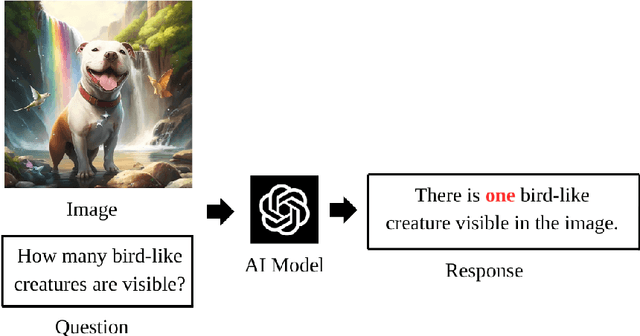
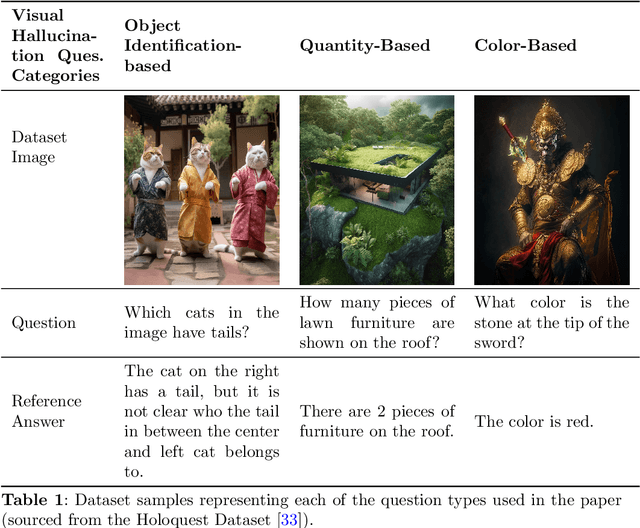
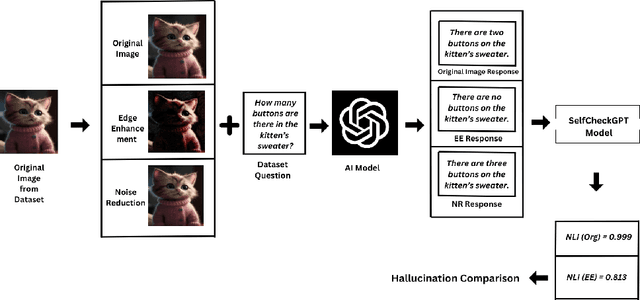
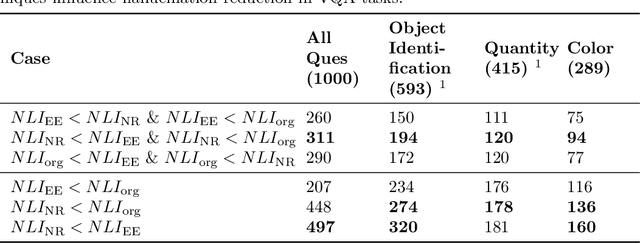
Visual hallucinations in Large Language Models (LLMs), where the model generates responses that are inconsistent with the visual input, pose a significant challenge to their reliability, particularly in contexts where precise and trustworthy outputs are critical. Current research largely emphasizes post-hoc correction or model-specific fine-tuning strategies, with limited exploration of preprocessing techniques to address hallucination issues at the input stage. This study presents a novel ensemble-based preprocessing framework that adaptively selects the most appropriate filtering approach -- noise reduced (NR), edge enhanced (EE), or unaltered input (org) based on the type of question posed, resulting into reduced hallucination without requiring any modifications to the underlying model architecture or training pipeline. Evaluated on the `HaloQuest' dataset -- a benchmark designed to test multimodal reasoning on visually complex inputs, our method achieves a 44.3% reduction in hallucination rates, as measured by Natural Language Inference (NLI) scores using SelfCheckGPT. This demonstrates that intelligent input conditioning alone can significantly enhance factual grounding in LLM responses. The findings highlight the importance of adaptive preprocessing techniques in mitigating hallucinations, paving the way for more reliable multimodal systems capable of addressing real-world challenges.