 Add to Chrome
 Add to Firefox
 Add to Edge
Boundary condition fidelity for bottom-hole pressure and CO2 plume prediction in geological carbon storage
Jun 25, 2026
Accurate prediction of bottom-hole pressure (BHP) and CO2 plume migration is essential for safe geological carbon storage, yet practical simulations often rely on truncated domains where artificial boundaries distort pressure diffusion and CO2 saturation footprints. In this study, we evaluate how boundary-condition fidelity affects BHP and CO2 plume prediction by comparing ten reduced-domain boundary treatments against full-domain reference simulations in homogeneous and heterogeneous reservoirs. We test uniform pore-volume multipliers, transmissibility modifiers, corner-adjusted pore-volume corrections, layered corrections, and gradual modifiers using BHP RMSE, NRMSE, peak pressure deviation, and plume Intersection over Union (IoU) as performance metrics. Our results show that conserving corner pore volume is the most important requirement for truncated-domain modeling. We find that uniform treatments which neglect corner storage generate large pressure errors, with BHP RMSE of 362 to 382 psi in the homogeneous model and 250 to 304 psi in the heterogeneous model, and yield plume IoU values near 0.80 to 0.84, indicating roughly 16 to 20% of the combined plume area is misrepresented. Corner-adjusted scenarios substantially reduce pressure errors and raise plume IoU above 0.94, but we observe that transmissibility correction is not universally beneficial. In homogeneous reservoirs, uniform transmissibility adjustment improves pressure fidelity; in heterogeneous reservoirs, it can over-restrict flow across variable-permeability boundary faces, increasing BHP error and contracting the predicted plume. We find the gradual modifier with transmissibility correction provides the most consistent performance, achieving BHP NRMSE below 3.7% and plume IoU above 0.97 in both reservoir types.

A Variational Auto-Encoder for Reservoir Monitoring
Oct 02, 2020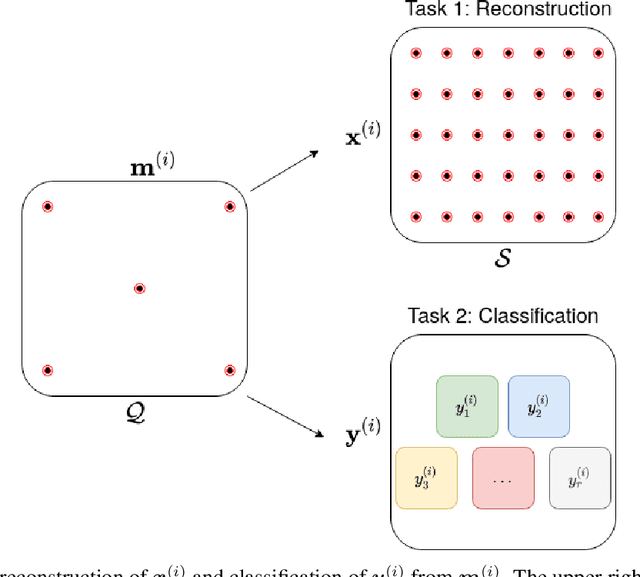
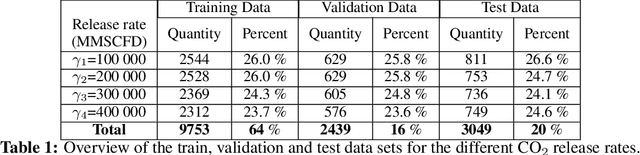
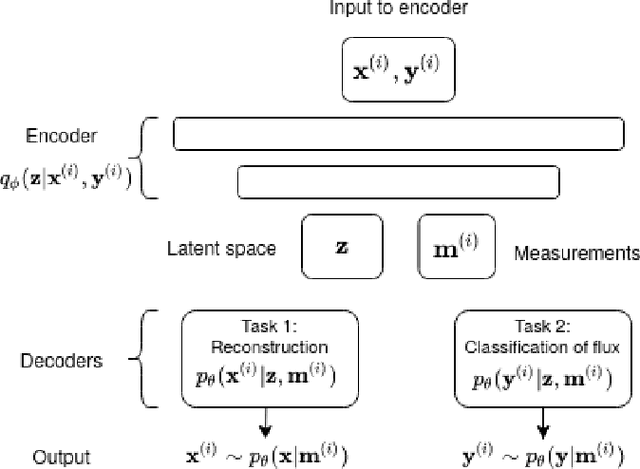
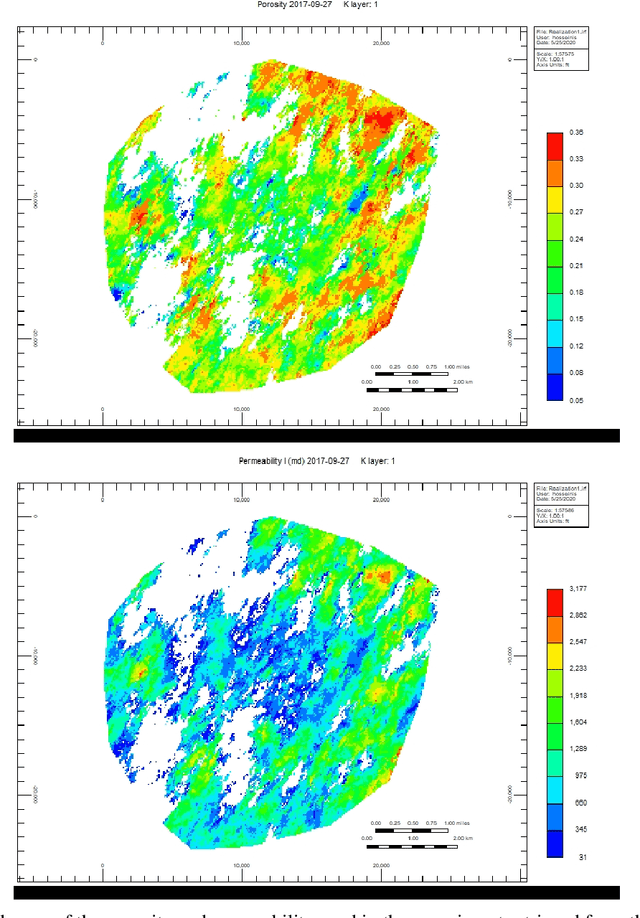
Carbon dioxide Capture and Storage (CCS) is an important strategy in mitigating anthropogenic CO$_2$ emissions. In order for CCS to be successful, large quantities of CO$_2$ must be stored and the storage site conformance must be monitored. Here we present a deep learning method to reconstruct pressure fields and classify the flux out of the storage formation based on the pressure data from Above Zone Monitoring Interval (AZMI) wells. The deep learning method is a version of a semi conditional variational auto-encoder tailored to solve two tasks: reconstruction of an incremental pressure field and leakage rate classification. The method, predictions and associated uncertainty estimates are illustrated on the synthetic data from a high-fidelity heterogeneous 2D numerical reservoir model, which was used to simulate subsurface CO$_2$ movement and pressure changes in the AZMI due to a CO$_2$ leakage.