 Add to Chrome
 Add to Firefox
 Add to Edge
Deep Learning-Based Metamodeling of Nonlinear Stochastic Dynamic Systems under Parametric and Predictive Uncertainty
Mar 12, 2026
Modeling high-dimensional, nonlinear dynamic structural systems under natural hazards presents formidable computational challenges, especially when simultaneously accounting for uncertainties in external loads and structural parameters. Studies have successfully incorporated uncertainties related to external loads from natural hazards, but few have simultaneously addressed loading and parameter uncertainties within structural systems while accounting for prediction uncertainty of neural networks. To address these gaps, three metamodeling frameworks were formulated, each coupling a feature-extraction module implemented through a multi-layer perceptron (MLP), a message-passing neural network (MPNN), or an autoencoder (AE) with a long short-term memory (LSTM) network using Monte Carlo dropout and a negative log-likelihood loss. The resulting architectures (MLP-LSTM, MPNN-LSTM, and AE-LSTM) were validated on two case studies: a multi-degree-of-freedom Bouc-Wen system and a 37-story fiber-discretized nonlinear steel moment-resisting frame, both subjected to stochastic seismic excitation and structural parameter uncertainty. All three approaches achieved low prediction errors: the MLP-LSTM yielded the most accurate results for the lower-dimensional Bouc-Wen system, whereas the MPNN-LSTM and AE-LSTM provided superior performance on the more complex steel-frame model. Moreover, a consistent correlation between predictive variance and actual error confirms the suitability of these frameworks for active-learning strategies and for assessing model confidence in structural response predictions.

Adaptive Machine Learning-Driven Multi-Fidelity Stratified Sampling for Failure Analysis of Nonlinear Stochastic Systems
Aug 01, 2025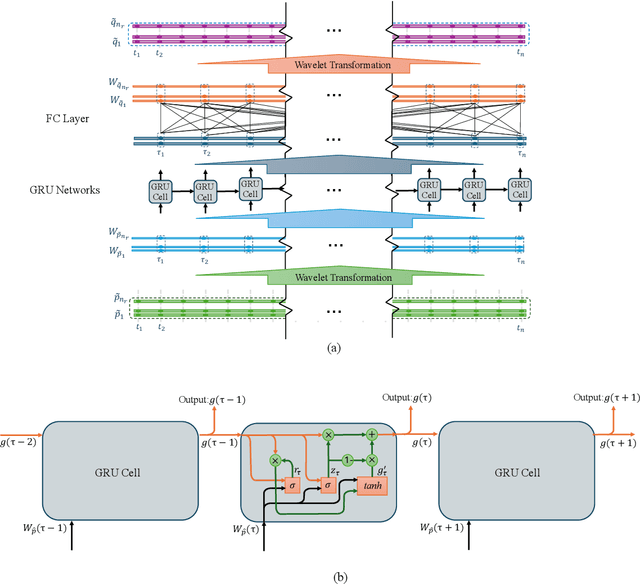
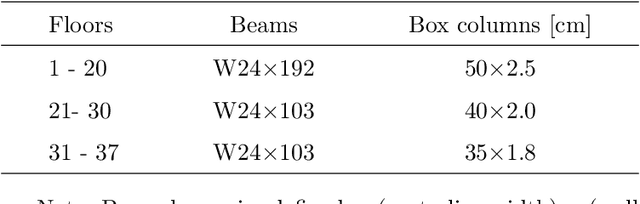
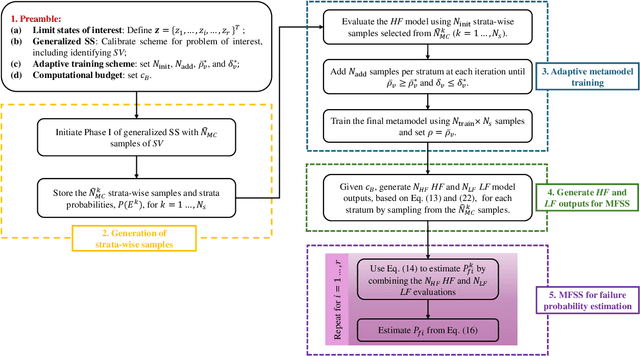
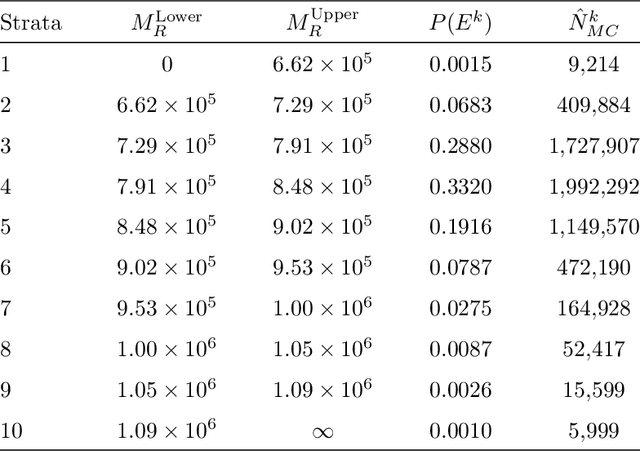
Existing variance reduction techniques used in stochastic simulations for rare event analysis still require a substantial number of model evaluations to estimate small failure probabilities. In the context of complex, nonlinear finite element modeling environments, this can become computationally challenging-particularly for systems subjected to stochastic excitation. To address this challenge, a multi-fidelity stratified sampling scheme with adaptive machine learning metamodels is introduced for efficiently propagating uncertainties and estimating small failure probabilities. In this approach, a high-fidelity dataset generated through stratified sampling is used to train a deep learning-based metamodel, which then serves as a cost-effective and highly correlated low-fidelity model. An adaptive training scheme is proposed to balance the trade-off between approximation quality and computational demand associated with the development of the low-fidelity model. By integrating the low-fidelity outputs with additional high-fidelity results, an unbiased estimate of the strata-wise failure probabilities is obtained using a multi-fidelity Monte Carlo framework. The overall probability of failure is then computed using the total probability theorem. Application to a full-scale high-rise steel building subjected to stochastic wind excitation demonstrates that the proposed scheme can accurately estimate exceedance probability curves for nonlinear responses of interest, while achieving significant computational savings compared to single-fidelity variance reduction approaches.