 Add to Chrome
 Add to Firefox
 Add to Edge
Deep Probabilistic Indoor Gas Source Localization via Physical Dependency-Guided Sequential Inference
Aug 17, 2026
Reliable gas source localization (GSL) is critical to safety in industrial and urban environments, yet remains challenging indoors because walls and obstacles interact with airflow to create complex gas dispersion. High-fidelity models such as computational fluid dynamics and filament models can capture these effects, but their computational cost limits online use. We propose a deep probabilistic framework that infers the source posterior from sparse and noisy measurements collected by a mobile robot. Unlike end-to-end models that directly infer source estimates from measurements, the proposed method incorporates physical dependencies of indoor gas transport, where wind and source location govern the concentration field. These dependencies are embedded through sequential conditional inference, in which inferred wind and concentration fields guide source posterior estimation. This structure improves localization under sparse and noisy observations. Evaluations show that the proposed method outperforms representative GSL baselines and enables accurate and efficient active GSL in simulations. Real-robot experiments demonstrate the feasibility of online operation on an embedded GPU.

From Days to Minutes: An Autonomous AI Agent Achieves Reliable Clinical Triage in Remote Patient Monitoring
Mar 10, 2026Background: Remote patient monitoring (RPM) generates vast data, yet landmark trials (Tele-HF, BEAT-HF) failed because data volume overwhelmed clinical staff. While TIM-HF2 showed 24/7 physician-led monitoring reduces mortality by 30%, this model remains prohibitively expensive and unscalable. Methods: We developed Sentinel, an autonomous AI agent using Model Context Protocol (MCP) for contextual triage of RPM vitals via 21 clinical tools and multi-step reasoning. Evaluation included: (1) self-consistency (100 readings x 5 runs); (2) comparison against rule-based thresholds; and (3) validation against 6 clinicians (3 physicians, 3 NPs) using a connected matrix design. A leave-one-out (LOO) analysis compared the agent against individual clinicians; severe overtriage cases underwent independent physician adjudication. Results: Against a human majority-vote standard (N=467), the agent achieved 95.8% emergency sensitivity and 88.5% sensitivity for all actionable alerts (85.7% specificity). Four-level exact accuracy was 69.4% (quadratic-weighted kappa=0.778); 95.9% of classifications were within one severity level. In LOO analysis, the agent outperformed every clinician in emergency sensitivity (97.5% vs. 60.0% aggregate) and actionable sensitivity (90.9% vs. 69.5%). While disagreements skewed toward overtriage (22.5%), independent adjudication of severe gaps (>=2 levels) validated agent escalation in 88-94% of cases; consensus resolution validated 100%. The agent showed near-perfect self-consistency (kappa=0.850). Median cost was $0.34/triage. Conclusions: Sentinel triages RPM vitals with sensitivity exceeding individual clinicians. By automating systematic context synthesis, Sentinel addresses the core limitation of prior RPM trials, offering a scalable path toward the intensive monitoring shown to reduce mortality while maintaining a clinically defensible overtriage profile.
Communication-Free Collective Navigation for a Swarm of UAVs via LiDAR-Based Deep Reinforcement Learning
Jan 20, 2026This paper presents a deep reinforcement learning (DRL) based controller for collective navigation of unmanned aerial vehicle (UAV) swarms in communication-denied environments, enabling robust operation in complex, obstacle-rich environments. Inspired by biological swarms where informed individuals guide groups without explicit communication, we employ an implicit leader-follower framework. In this paradigm, only the leader possesses goal information, while follower UAVs learn robust policies using only onboard LiDAR sensing, without requiring any inter-agent communication or leader identification. Our system utilizes LiDAR point clustering and an extended Kalman filter for stable neighbor tracking, providing reliable perception independent of external positioning systems. The core of our approach is a DRL controller, trained in GPU-accelerated Nvidia Isaac Sim, that enables followers to learn complex emergent behaviors - balancing flocking and obstacle avoidance - using only local perception. This allows the swarm to implicitly follow the leader while robustly addressing perceptual challenges such as occlusion and limited field-of-view. The robustness and sim-to-real transfer of our approach are confirmed through extensive simulations and challenging real-world experiments with a swarm of five UAVs, which successfully demonstrated collective navigation across diverse indoor and outdoor environments without any communication or external localization.
Neural Clustering for Prefractured Mesh Generation in Real-time Object Destruction
Feb 07, 2025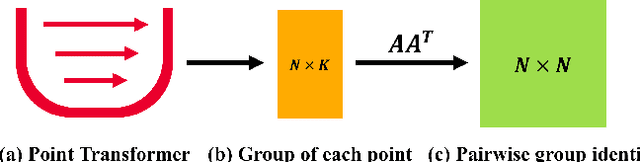
Prefracture method is a practical implementation for real-time object destruction that is hardly achievable within performance constraints, but can produce unrealistic results due to its heuristic nature. To mitigate it, we approach the clustering of prefractured mesh generation as an unordered segmentation on point cloud data, and propose leveraging the deep neural network trained on a physics-based dataset. Our novel paradigm successfully predicts the structural weakness of object that have been limited, exhibiting ready-to-use results with remarkable quality.
Enhancing Exploration Efficiency using Uncertainty-Aware Information Prediction
Dec 17, 2024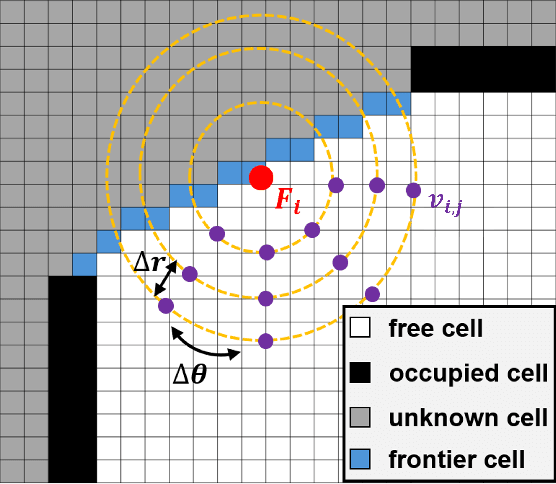
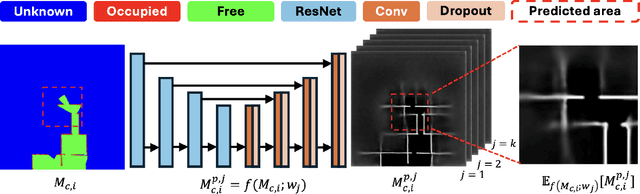
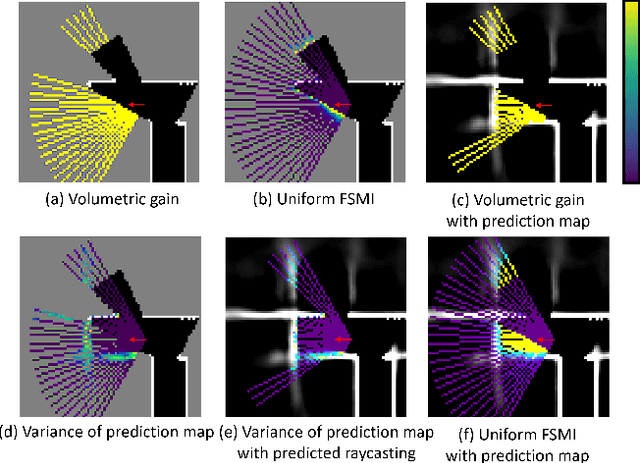
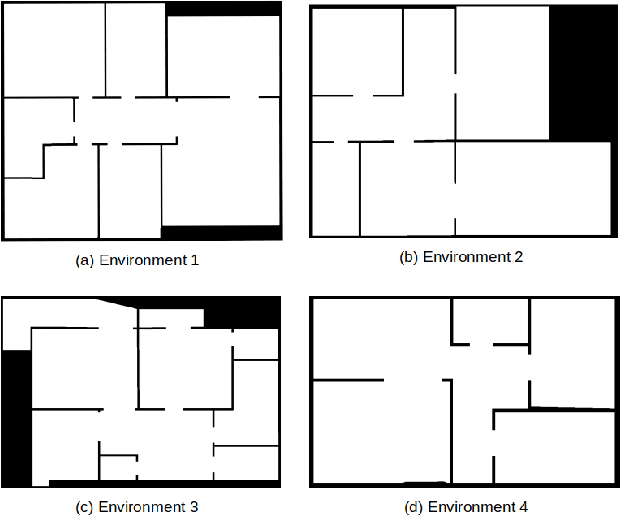
Autonomous exploration is a crucial aspect of robotics, enabling robots to explore unknown environments and generate maps without prior knowledge. This paper proposes a method to enhance exploration efficiency by integrating neural network-based occupancy grid map prediction with uncertainty-aware Bayesian neural network. Uncertainty from neural network-based occupancy grid map prediction is probabilistically integrated into mutual information for exploration. To demonstrate the effectiveness of the proposed method, we conducted comparative simulations within a frontier exploration framework in a realistic simulator environment against various information metrics. The proposed method showed superior performance in terms of exploration efficiency.
Design and Identification of Keypoint Patches in Unstructured Environments
Oct 01, 2024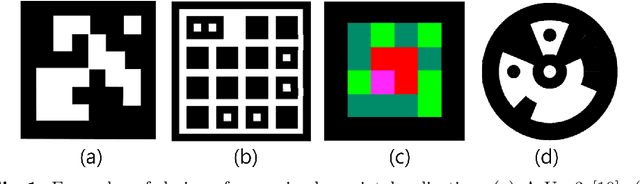
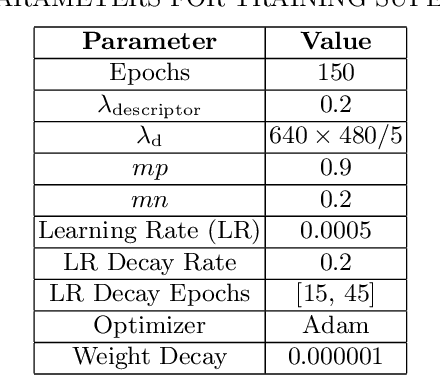
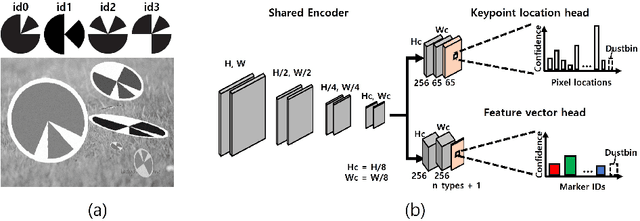
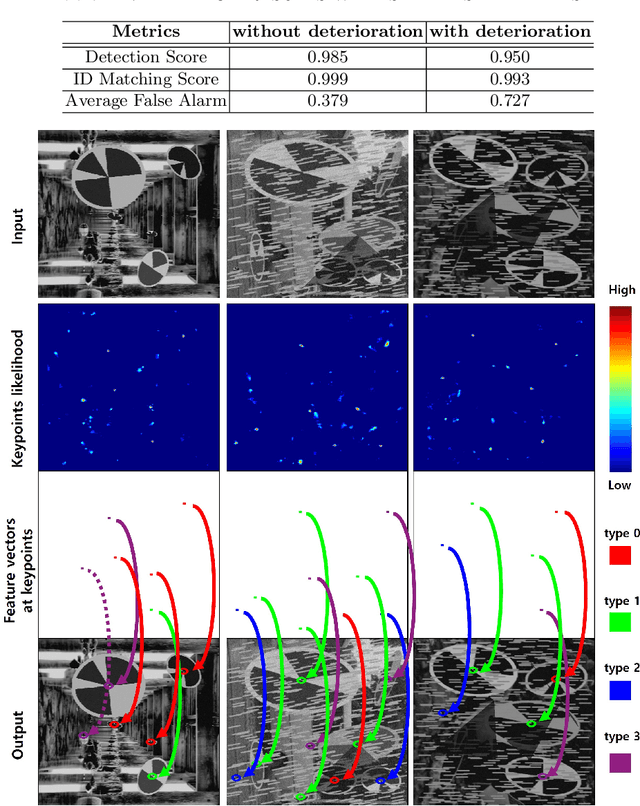
Reliable perception of targets is crucial for the stable operation of autonomous robots. A widely preferred method is keypoint identification in an image, as it allows direct mapping from raw images to 2D coordinates, facilitating integration with other algorithms like localization and path planning. In this study, we closely examine the design and identification of keypoint patches in cluttered environments, where factors such as blur and shadows can hinder detection. We propose four simple yet distinct designs that consider various scale, rotation and camera projection using a limited number of pixels. Additionally, we customize the Superpoint network to ensure robust detection under various types of image degradation. The effectiveness of our approach is demonstrated through real-world video tests, highlighting potential for vision-based autonomous systems.
Beta-Sigma VAE: Separating beta and decoder variance in Gaussian variational autoencoder
Sep 14, 2024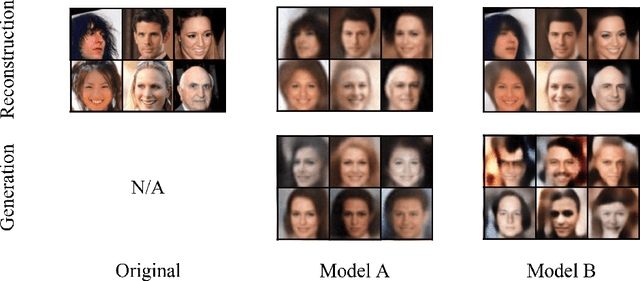
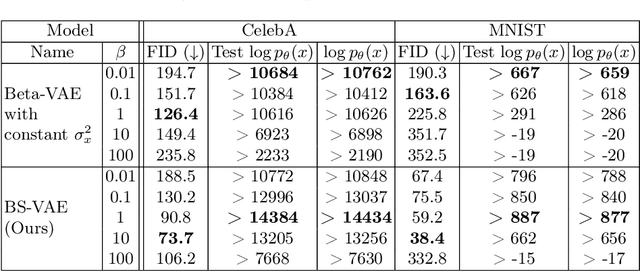
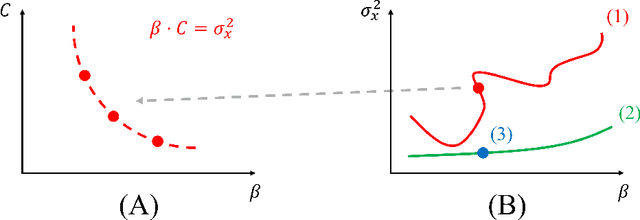
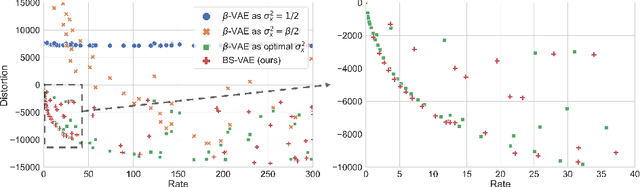
Variational autoencoder (VAE) is an established generative model but is notorious for its blurriness. In this work, we investigate the blurry output problem of VAE and resolve it, exploiting the variance of Gaussian decoder and $\beta$ of beta-VAE. Specifically, we reveal that the indistinguishability of decoder variance and $\beta$ hinders appropriate analysis of the model by random likelihood value, and limits performance improvement by omitting the gain from $\beta$. To address the problem, we propose Beta-Sigma VAE (BS-VAE) that explicitly separates $\beta$ and decoder variance $\sigma^2_x$ in the model. Our method demonstrates not only superior performance in natural image synthesis but also controllable parameters and predictable analysis compared to conventional VAE. In our experimental evaluation, we employ the analysis of rate-distortion curve and proxy metrics on computer vision datasets. The code is available on https://github.com/overnap/BS-VAE
Diversity and stylization of the contemporary user-generated visual arts in the complexity-entropy plane
Aug 21, 2024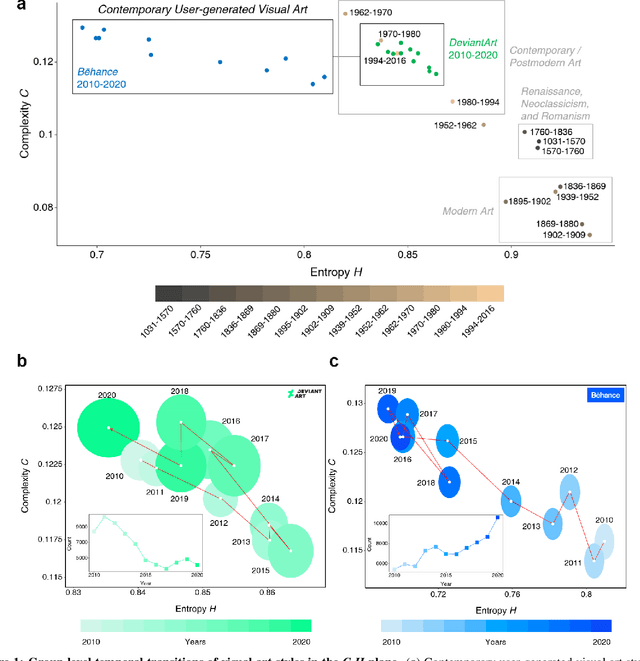
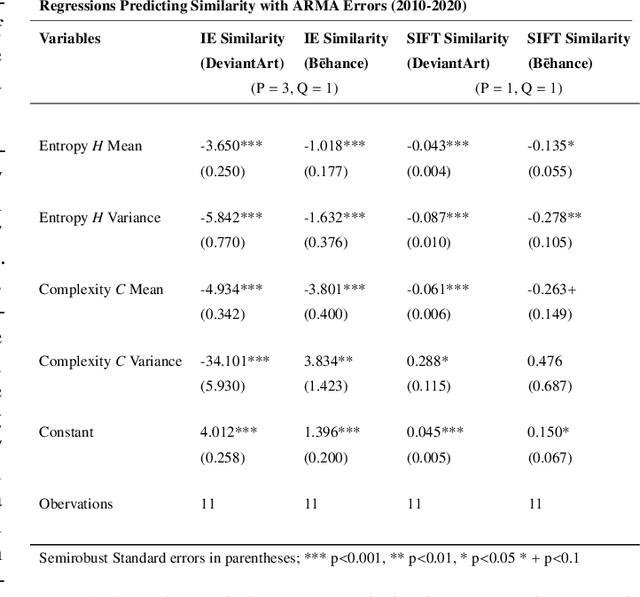
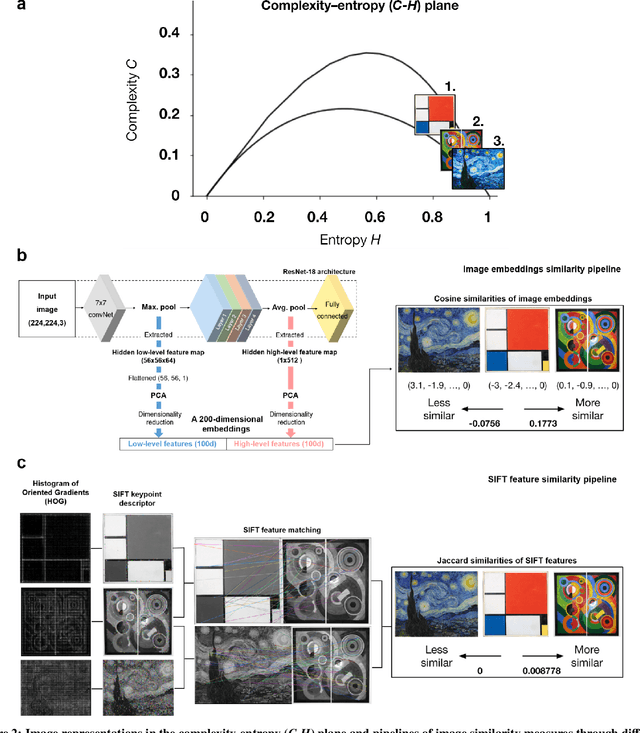
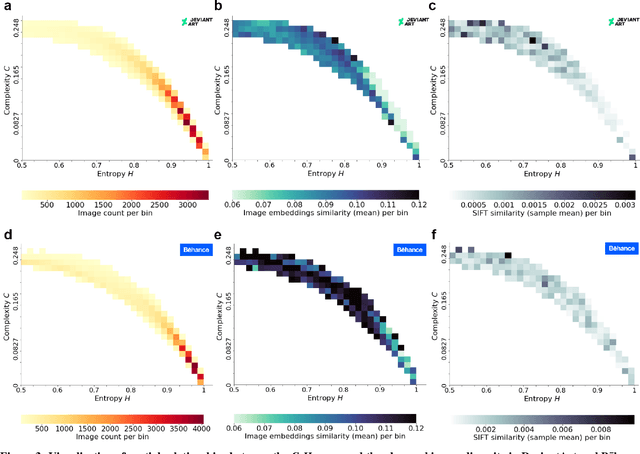
The advent of computational and numerical methods in recent times has provided new avenues for analyzing art historiographical narratives and tracing the evolution of art styles therein. Here, we investigate an evolutionary process underpinning the emergence and stylization of contemporary user-generated visual art styles using the complexity-entropy (C-H) plane, which quantifies local structures in paintings. Informatizing 149,780 images curated in DeviantArt and Behance platforms from 2010 to 2020, we analyze the relationship between local information of the C-H space and multi-level image features generated by a deep neural network and a feature extraction algorithm. The results reveal significant statistical relationships between the C-H information of visual artistic styles and the dissimilarities of the multi-level image features over time within groups of artworks. By disclosing a particular C-H region where the diversity of image representations is noticeably manifested, our analyses reveal an empirical condition of emerging styles that are both novel in the C-H plane and characterized by greater stylistic diversity. Our research shows that visual art analyses combined with physics-inspired methodologies and machine learning, can provide macroscopic insights into quantitatively mapping relevant characteristics of an evolutionary process underpinning the creative stylization of uncharted visual arts of given groups and time.
Autoregressive Language Models For Estimating the Entropy of Epic EHR Audit Logs
Nov 26, 2023


EHR audit logs are a highly granular stream of events that capture clinician activities, and is a significant area of interest for research in characterizing clinician workflow on the electronic health record (EHR). Existing techniques to measure the complexity of workflow through EHR audit logs (audit logs) involve time- or frequency-based cross-sectional aggregations that are unable to capture the full complexity of a EHR session. We briefly evaluate the usage of transformer-based tabular language model (tabular LM) in measuring the entropy or disorderedness of action sequences within workflow and release the evaluated models publicly.