 Add to Chrome
 Add to Firefox
 Add to Edge
Improving Methodologies for Agentic Evaluations Across Domains: Leakage of Sensitive Information, Fraud and Cybersecurity Threats
Jan 22, 2026
The rapid rise of autonomous AI systems and advancements in agent capabilities are introducing new risks due to reduced oversight of real-world interactions. Yet agent testing remains nascent and is still a developing science. As AI agents begin to be deployed globally, it is important that they handle different languages and cultures accurately and securely. To address this, participants from The International Network for Advanced AI Measurement, Evaluation and Science, including representatives from Singapore, Japan, Australia, Canada, the European Commission, France, Kenya, South Korea, and the United Kingdom have come together to align approaches to agentic evaluations. This is the third exercise, building on insights from two earlier joint testing exercises conducted by the Network in November 2024 and February 2025. The objective is to further refine best practices for testing advanced AI systems. The exercise was split into two strands: (1) common risks, including leakage of sensitive information and fraud, led by Singapore AISI; and (2) cybersecurity, led by UK AISI. A mix of open and closed-weight models were evaluated against tasks from various public agentic benchmarks. Given the nascency of agentic testing, our primary focus was on understanding methodological issues in conducting such tests, rather than examining test results or model capabilities. This collaboration marks an important step forward as participants work together to advance the science of agentic evaluations.

ThreatModeling-LLM: Automating Threat Modeling using Large Language Models for Banking System
Nov 26, 2024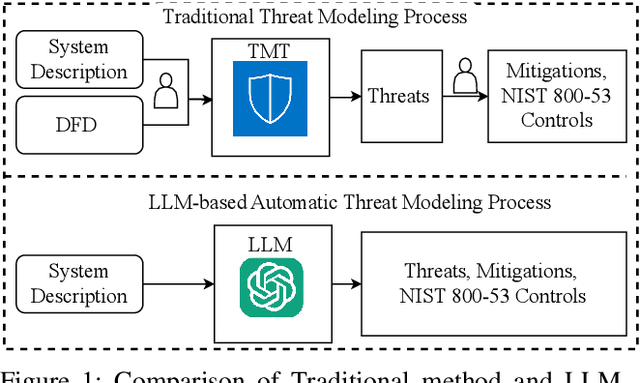
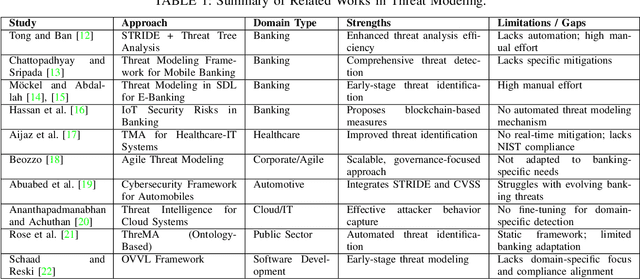
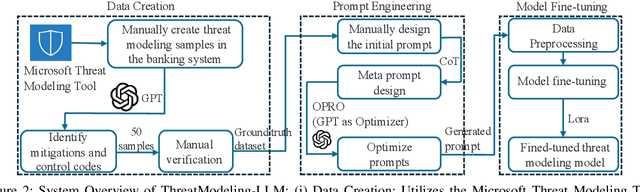
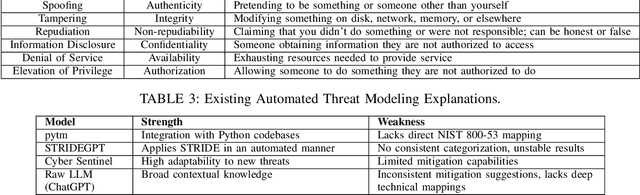
Threat modeling is a crucial component of cybersecurity, particularly for industries such as banking, where the security of financial data is paramount. Traditional threat modeling approaches require expert intervention and manual effort, often leading to inefficiencies and human error. The advent of Large Language Models (LLMs) offers a promising avenue for automating these processes, enhancing both efficiency and efficacy. However, this transition is not straightforward due to three main challenges: (1) the lack of publicly available, domain-specific datasets, (2) the need for tailored models to handle complex banking system architectures, and (3) the requirement for real-time, adaptive mitigation strategies that align with compliance standards like NIST 800-53. In this paper, we introduce ThreatModeling-LLM, a novel and adaptable framework that automates threat modeling for banking systems using LLMs. ThreatModeling-LLM operates in three stages: 1) dataset creation, 2) prompt engineering and 3) model fine-tuning. We first generate a benchmark dataset using Microsoft Threat Modeling Tool (TMT). Then, we apply Chain of Thought (CoT) and Optimization by PROmpting (OPRO) on the pre-trained LLMs to optimize the initial prompt. Lastly, we fine-tune the LLM using Low-Rank Adaptation (LoRA) based on the benchmark dataset and the optimized prompt to improve the threat identification and mitigation generation capabilities of pre-trained LLMs.