 Add to Chrome
 Add to Firefox
 Add to Edge
Can LLMs Reason About Attention? Towards Zero-Shot Analysis of Multimodal Classroom Behavior
Apr 03, 2026
Understanding student engagement usually requires time-consuming manual observation or invasive recording that raises privacy concerns. We present a privacy-preserving pipeline that analyzes classroom videos to extract insights about student attention, without storing any identifiable footage. Our system runs on a single GPU, using OpenPose for skeletal extraction and Gaze-LLE for visual attention estimation. Original video frames are deleted immediately after pose extraction, thus only geometric coordinates (stored as JSON) are retained, ensuring compliance with FERPA. The extracted pose and gaze data is processed by QwQ-32B-Reasoning, which performs zero-shot analysis of student behavior across lecture segments. Instructors access results through a web dashboard featuring attention heatmaps and behavioral summaries. Our preliminary findings suggest that LLMs may show promise for multimodal behavior understanding, although they still struggle with spatial reasoning about classroom layouts. We discuss these limitations and outline directions for improving LLM spatial comprehension in educational analytics contexts.

Crime Analysis using Open Source Information
Feb 15, 2019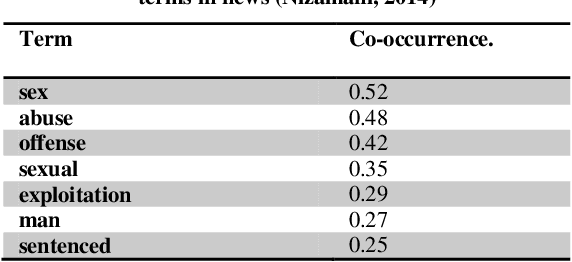
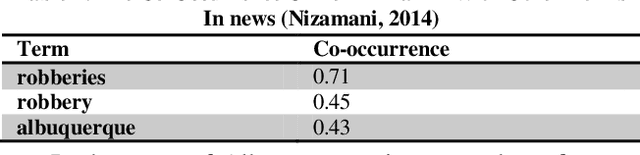
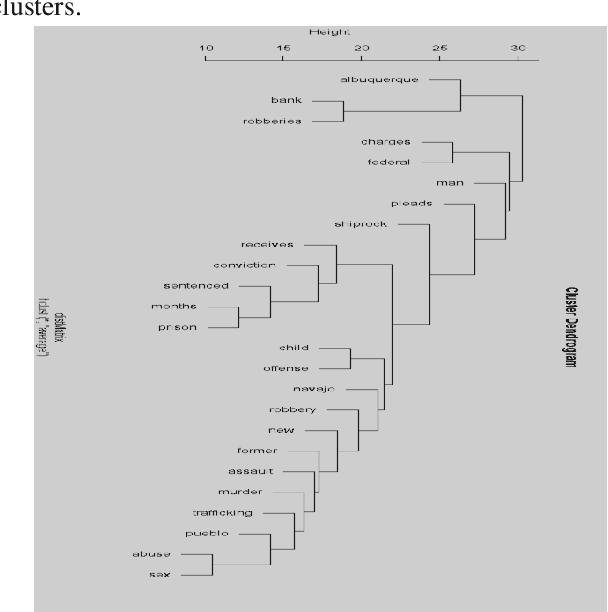
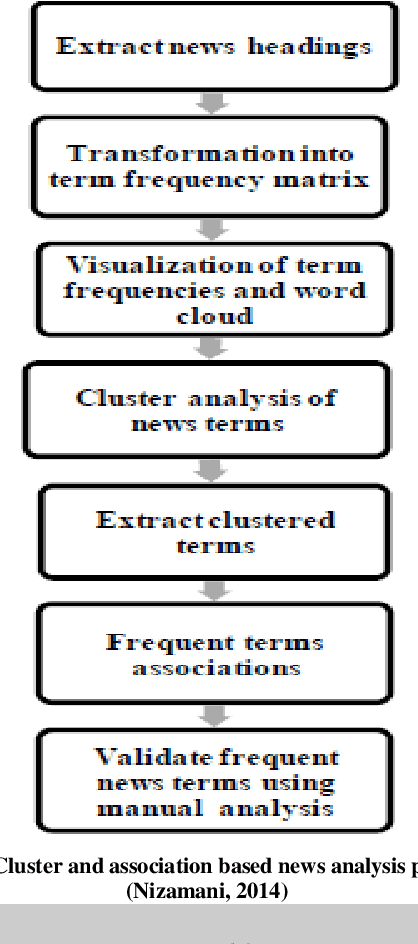
In this paper, we present a method of crime analysis from open source information. We employed un-supervised methods of data mining to explore the facts regarding the crimes of an area of interest. The analysis is based on well known clustering and association techniques. The results show that the proposed method of crime analysis is efficient and gives a broad picture of the crimes of an area to analyst without much effort. The analysis is evaluated using manual approach, which reveals that the results produced by the proposed approach are comparable to the manual analysis, while a great amount of time is saved.