 Add to Chrome
 Add to Firefox
 Add to Edge
GPT-NL Public Corpus: A Permissively Licensed, Dutch-First Dataset for LLM Pre-training
Apr 01, 2026
We present the GPT-NL Public Corpus, the biggest permissively licensed corpus of Dutch language resources. The GPT-NL Public Corpus contains 21 Dutch-only collections totalling 36B preprocessed Dutch tokens not present in any other LLM pretraining corpus. Additionally, the corpus includes roughly 207B English, 232B Code, and 48B German/Danish tokens taken from existing sets which we further curated for compliance. This corpus includes curated data from large existing corpora like Common Corpus and Common Crawl, as well as newly created Dutch-specific collections. Most newly created Dutch collections consist of content collected in collaboration with organisations or synthetically augmented content. All data is collected and evaluated with the aim of facilitating the creation of (commercial) language models that are lawful, useful and non-harmful. All data included in the GPT-NL Public Corpus is sourced from datasets with permissive licensing and is curated and redistributed under a CC-BY license. The full dataset is publicly available on the Hugging Face Hub.

Everyone deserves their voice to be heard: Analyzing Predictive Gender Bias in ASR Models Applied to Dutch Speech Data
Nov 14, 2024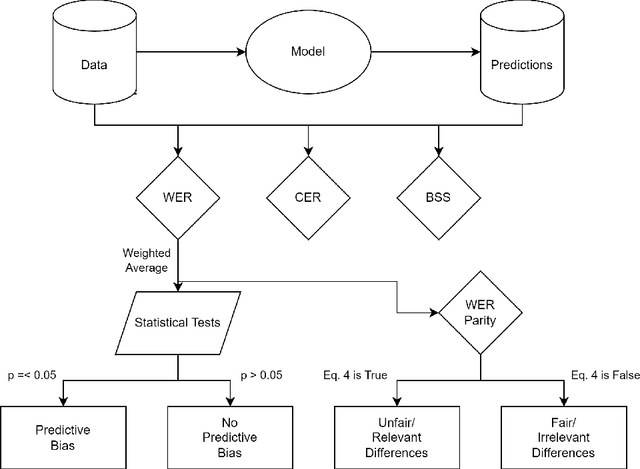
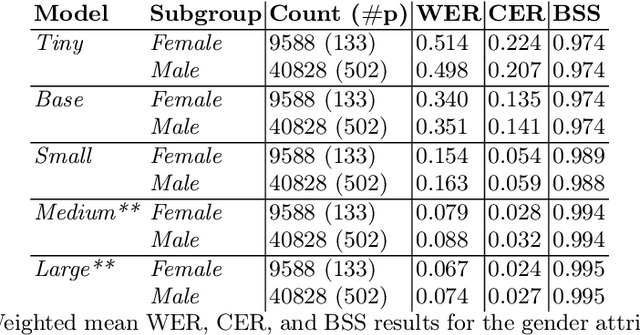
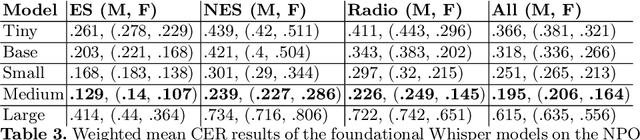
Recent research has shown that state-of-the-art (SotA) Automatic Speech Recognition (ASR) systems, such as Whisper, often exhibit predictive biases that disproportionately affect various demographic groups. This study focuses on identifying the performance disparities of Whisper models on Dutch speech data from the Common Voice dataset and the Dutch National Public Broadcasting organisation. We analyzed the word error rate, character error rate and a BERT-based semantic similarity across gender groups. We used the moral framework of Weerts et al. (2022) to assess quality of service harms and fairness, and to provide a nuanced discussion on the implications of these biases, particularly for automatic subtitling. Our findings reveal substantial disparities in word error rate (WER) among gender groups across all model sizes, with bias identified through statistical testing.