 Add to Chrome
 Add to Firefox
 Add to Edge
Spectral Gaps of Hit-and-Run and Coordinate Hit-and-Run
Aug 17, 2026
For any convex body $\mathcal{K}\subset\mathbb{R}^{n}$ containing a unit ball, the spectral gap of Hit-and-Run is $Ω(1/(n^2 C_{\mathsf{PI}}))$, where $C_{\mathsf{PI}}$ is the Poincaré constant of the uniform distribution $π$ over $\mathcal{K}$. This implies that Hit-and-Run converges to a distribution within $χ^2$-divergence $\varepsilon$ of the uniform distribution $π$ in $O(n^2 C_{\mathsf{PI}}\log(M/\varepsilon))$ steps from any starting distribution $π_0$ with $M=χ^2(π_{0}\,\|\,π)$, thus refining the known bound of $O(n^2 R^2 \log(M/\varepsilon))$ by Lovász and Vempala (2004) in terms of the outer radius $R$; for nearly isotropic bodies, together with progress on the KLS conjecture, the complexity is $O(n^2\log n\log(M/\varepsilon))$, improving the dimension dependence from cubic to nearly quadratic while maintaining logarithmic dependence on the initial distance. It was an open problem to connect the convergence of Hit-and-Run to Poincaré/KLS constants as was done for the Ball walk by Kannan, Lovász and Simonovits (1997). Unlike Hit-and-Run, the Ball walk has an unavoidable linear dependence on (a stronger notion) of the initial warmness. We directly bound the spectral gap of the Hit-and-Run Markov chain by connecting it to functional isoperimetric constants, inspired by the recent analysis of In-and-Out. Rewriting the spectral gap in terms of dual certificates leads to the Babuška--Aziz constant studied in the analysis of PDEs; it is asymptotically bounded by the improved Poincaré constant, which we show can be bounded in terms of the usual Poincaré constant. The proof is based on duality and calculus, unlike known proofs of convergence for Hit-and-Run which are based on bounding the conductance. The same technique can be applied to Coordinate Hit-and-Run, resulting in a much improved mixing time of $O(n^3C_{\mathsf{PI}}\log(M/\varepsilon))$.

A unified complexity bound for logconcave sampling
Jun 10, 2026We give a simple, unified, and nearly tight bound for sampling arbitrary logconcave distributions from a warm start using the In-and-Out algorithm along with exponential lifting. The main new ingredient in the analysis is an improved bound on the Poincaré constant of a lifted distribution. As a consequence, the resulting convergence rate is nearly tight for both constrained settings (e.g., Gaussian restricted to a convex body) and well-conditioned settings (e.g., strongly logconcave and smooth densities).
The Geometry of Efficient Nonconvex Sampling
Mar 26, 2026We present an efficient algorithm for uniformly sampling from an arbitrary compact body $\mathcal{X} \subset \mathbb{R}^n$ from a warm start under isoperimetry and a natural volume growth condition. Our result provides a substantial common generalization of known results for convex bodies and star-shaped bodies. The complexity of the algorithm is polynomial in the dimension, the Poincaré constant of the uniform distribution on $\mathcal{X}$ and the volume growth constant of the set $\mathcal{X}$.
Provable Long-Range Benefits of Next-Token Prediction
Dec 08, 2025Why do modern language models, trained to do well on next-word prediction, appear to generate coherent documents and capture long-range structure? Here we show that next-token prediction is provably powerful for learning longer-range structure, even with common neural network architectures. Specifically, we prove that optimizing next-token prediction over a Recurrent Neural Network (RNN) yields a model that closely approximates the training distribution: for held-out documents sampled from the training distribution, no algorithm of bounded description length limited to examining the next $k$ tokens, for any $k$, can distinguish between $k$ consecutive tokens of such documents and $k$ tokens generated by the learned language model following the same prefix. We provide polynomial bounds (in $k$, independent of the document length) on the model size needed to achieve such $k$-token indistinguishability, offering a complexity-theoretic explanation for the long-range coherence observed in practice.
Why Language Models Hallucinate
Sep 04, 2025
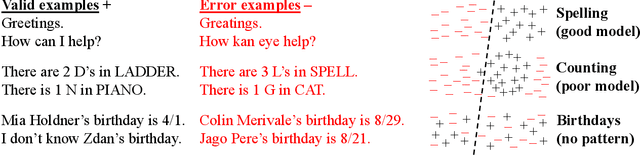
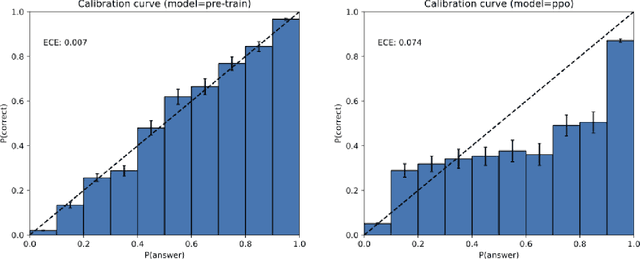
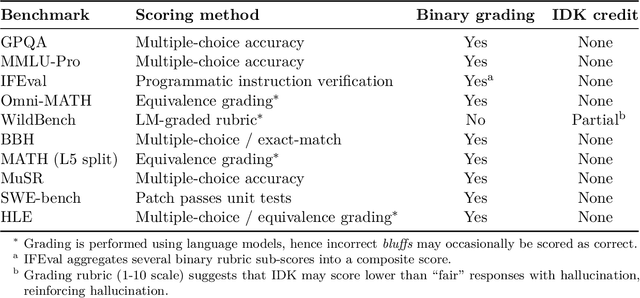
Like students facing hard exam questions, large language models sometimes guess when uncertain, producing plausible yet incorrect statements instead of admitting uncertainty. Such "hallucinations" persist even in state-of-the-art systems and undermine trust. We argue that language models hallucinate because the training and evaluation procedures reward guessing over acknowledging uncertainty, and we analyze the statistical causes of hallucinations in the modern training pipeline. Hallucinations need not be mysterious -- they originate simply as errors in binary classification. If incorrect statements cannot be distinguished from facts, then hallucinations in pretrained language models will arise through natural statistical pressures. We then argue that hallucinations persist due to the way most evaluations are graded -- language models are optimized to be good test-takers, and guessing when uncertain improves test performance. This "epidemic" of penalizing uncertain responses can only be addressed through a socio-technical mitigation: modifying the scoring of existing benchmarks that are misaligned but dominate leaderboards, rather than introducing additional hallucination evaluations. This change may steer the field toward more trustworthy AI systems.
Faster logconcave sampling from a cold start in high dimension
May 03, 2025We present a faster algorithm to generate a warm start for sampling an arbitrary logconcave density specified by an evaluation oracle, leading to the first sub-cubic sampling algorithms for inputs in (near-)isotropic position. A long line of prior work incurred a warm-start penalty of at least linear in the dimension, hitting a cubic barrier, even for the special case of uniform sampling from convex bodies. Our improvement relies on two key ingredients of independent interest. (1) We show how to sample given a warm start in weaker notions of distance, in particular $q$-R\'enyi divergence for $q=\widetilde{\mathcal{O}}(1)$, whereas previous analyses required stringent $\infty$-R\'enyi divergence (with the exception of Hit-and-Run, whose known mixing time is higher). This marks the first improvement in the required warmness since Lov\'asz and Simonovits (1991). (2) We refine and generalize the log-Sobolev inequality of Lee and Vempala (2018), originally established for isotropic logconcave distributions in terms of the diameter of the support, to logconcave distributions in terms of a geometric average of the support diameter and the largest eigenvalue of the covariance matrix.
Sampling and Integration of Logconcave Functions by Algorithmic Diffusion
Nov 20, 2024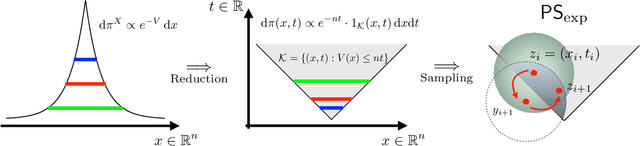
We study the complexity of sampling, rounding, and integrating arbitrary logconcave functions. Our new approach provides the first complexity improvements in nearly two decades for general logconcave functions for all three problems, and matches the best-known complexities for the special case of uniform distributions on convex bodies. For the sampling problem, our output guarantees are significantly stronger than previously known, and lead to a streamlined analysis of statistical estimation based on dependent random samples.
Does GPT Really Get It? A Hierarchical Scale to Quantify Human vs AI's Understanding of Algorithms
Jun 20, 2024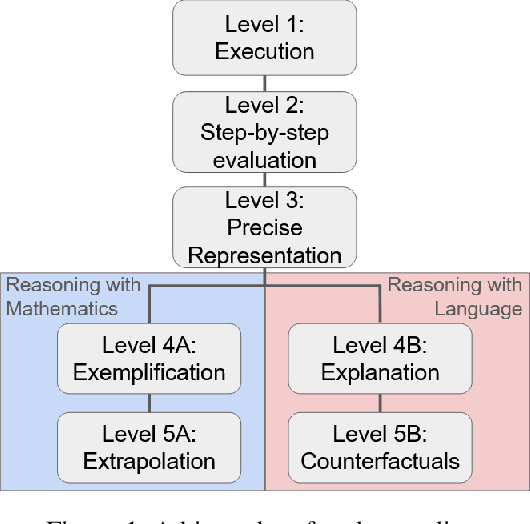
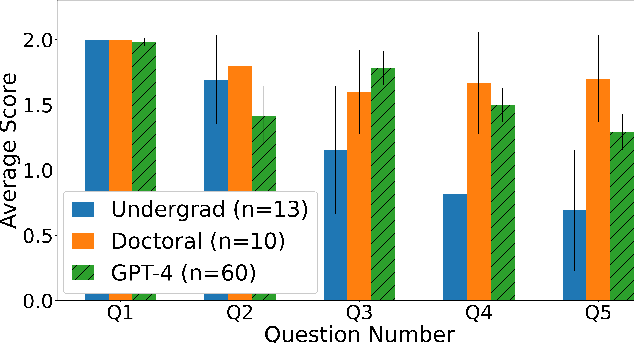
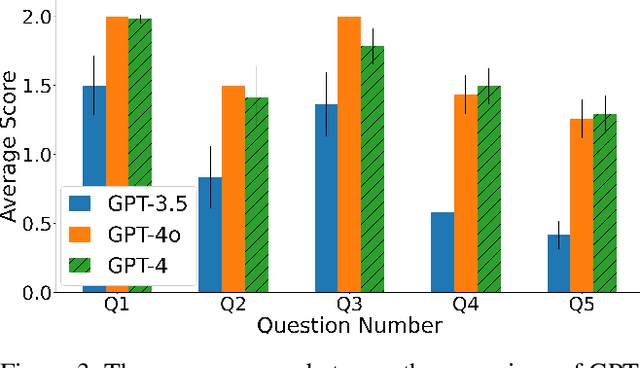
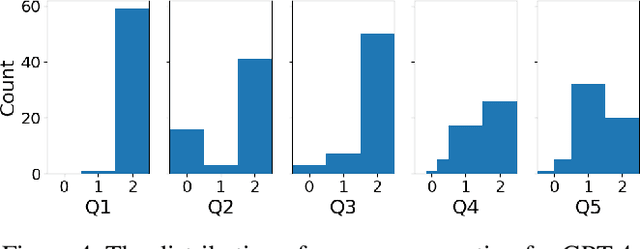
As Large Language Models (LLMs) perform (and sometimes excel at) more and more complex cognitive tasks, a natural question is whether AI really understands. The study of understanding in LLMs is in its infancy, and the community has yet to incorporate well-trodden research in philosophy, psychology, and education. We initiate this, specifically focusing on understanding algorithms, and propose a hierarchy of levels of understanding. We use the hierarchy to design and conduct a study with human subjects (undergraduate and graduate students) as well as large language models (generations of GPT), revealing interesting similarities and differences. We expect that our rigorous criteria will be useful to keep track of AI's progress in such cognitive domains.
Coin-Flipping In The Brain: Statistical Learning with Neuronal Assemblies
Jun 11, 2024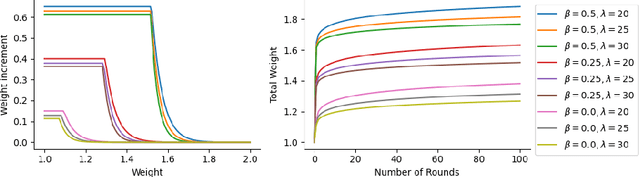
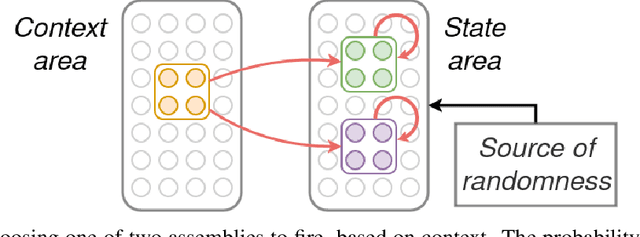
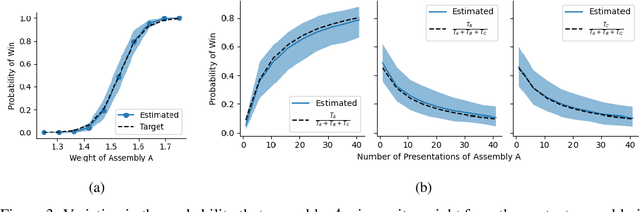

How intelligence arises from the brain is a central problem in science. A crucial aspect of intelligence is dealing with uncertainty -- developing good predictions about one's environment, and converting these predictions into decisions. The brain itself seems to be noisy at many levels, from chemical processes which drive development and neuronal activity to trial variability of responses to stimuli. One hypothesis is that the noise inherent to the brain's mechanisms is used to sample from a model of the world and generate predictions. To test this hypothesis, we study the emergence of statistical learning in NEMO, a biologically plausible computational model of the brain based on stylized neurons and synapses, plasticity, and inhibition, and giving rise to assemblies -- a group of neurons whose coordinated firing is tantamount to recalling a location, concept, memory, or other primitive item of cognition. We show in theory and simulation that connections between assemblies record statistics, and ambient noise can be harnessed to make probabilistic choices between assemblies. This allows NEMO to create internal models such as Markov chains entirely from the presentation of sequences of stimuli. Our results provide a foundation for biologically plausible probabilistic computation, and add theoretical support to the hypothesis that noise is a useful component of the brain's mechanism for cognition.
In-and-Out: Algorithmic Diffusion for Sampling Convex Bodies
May 02, 2024

We present a new random walk for uniformly sampling high-dimensional convex bodies. It achieves state-of-the-art runtime complexity with stronger guarantees on the output than previously known, namely in R\'enyi divergence (which implies TV, $\mathcal{W}_2$, KL, $\chi^2$). The proof departs from known approaches for polytime algorithms for the problem -- we utilize a stochastic diffusion perspective to show contraction to the target distribution with the rate of convergence determined by functional isoperimetric constants of the stationary density.