 Add to Chrome
 Add to Firefox
 Add to Edge
Multi$^2$: Hierarchical Multi-Agent Decision-Making with LLM-Based Agents in Interactive Environments
Jun 02, 2026
A central goal of large language model (LLM) research is to build agentic systems that can plan, act, and adapt through sustained interaction with dynamic environments. While recent LLM-based agents exhibit impressive contextual reasoning, their long-horizon decision-making remains fragile, often suffering from objective drift, where goals and plans drift over extended interactions. We introduce Multi$^2$, a hierarchical multi-agent decision-making framework that explicitly decomposes agent behavior into complementary roles. A high-level agent (System 1) focuses on context-aware sub-goal generation using supervised fine-tuning (SFT), while a low-level agent (System 2) executes atomic actions through offline-to-online reinforcement learning (RL) in interactive environments. This separation enables stable long-horizon control, mitigates objective drift, and allows efficient adaptation. Across diverse interactive environments, Multi$^2$ consistently outperforms strong agentic baselines, demonstrating improved robustness and coordination in multi-turn interaction. Beyond performance, we introduce and release three hierarchical benchmark datasets, filling a long-standing gap in training and evaluating hierarchical decision-making for LLM-based agents.

AI Augmented Digital Metal Component
Jan 18, 2022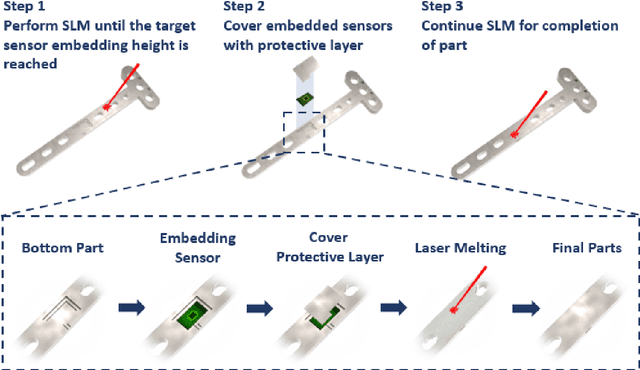
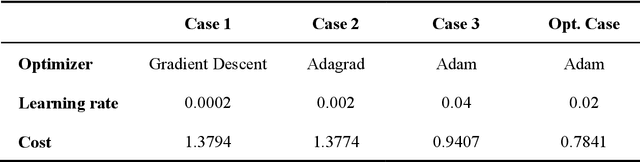
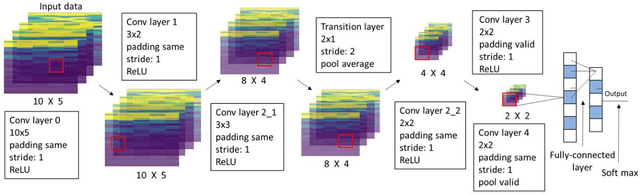
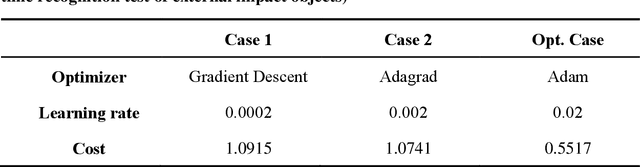
The aim of this work is to propose a new paradigm that imparts intelligence to metal parts with the fusion of metal additive manufacturing and artificial intelligence (AI). Our digital metal part classifies the status with real time data processing with convolutional neural network (CNN). The training data for the CNN is collected from a strain gauge embedded in metal parts by laser powder bed fusion process. We implement this approach using additive manufacturing, demonstrate a self-cognitive metal part recognizing partial screw loosening, malfunctioning, and external impacting object. The results indicate that metal part can recognize subtle change of multiple fixation state under repetitive compression with 89.1% accuracy with test sets. The proposed strategy showed promising potential in contributing to the hyper-connectivity for next generation of digital metal based mechanical systems