 Add to Chrome
 Add to Firefox
 Add to Edge
GenSeg-R1: RL-Driven Vision-Language Grounding for Fine-Grained Referring Segmentation
Feb 10, 2026
We study fine-grained referring image segmentation via a decoupled reason-then-segment pipeline. A vision-language model (VLM) receives an image and a natural-language query, reasons about the scene, and emits structured spatial prompts: a bounding box plus two interior keypoints for every referred instance. A frozen promptable segmenter (SAM 2) converts these prompts into high-quality masks. Within our GenSeg-R1 framework we finetune Qwen3-VL models (4B and 8B parameters) using Group Relative Policy Optimization (GRPO), requiring no supervised reasoning-chain annotations. On RefCOCOg validation our best model (GenSeg-R1-8B) achieves 0.7127 cIoU and 0.7382 mIoU, substantially outperforming the corresponding Qwen3-VL Instruct baselines (+15.3 and +21.9 points, respectively) and surpassing Seg-Zero-7B [3] by +3.3 cIoU under identical evaluation. We further introduce GenSeg-R1-G, a variant trained on GRefCOCO [9] with a SAM 2 in-the-loop reward that directly optimizes mask quality. On GRefCOCO validation GenSeg-R1-G achieves 76.69% target mIoU with 82.40% accuracy on negative (no-target) prompts, substantially outperforming Seg-R1-7B and Seg-Zero-7B, which lack no-target detection capability. On ReasonSeg test, GenSeg-R1-4B reaches 68.40% mIoU, surpassing Seg-Zero-7B by +7.0 and Seg-R1-7B by +10.7 points.

Design of the Propulsion System of Nano satellite: StudSat2
Jul 23, 2021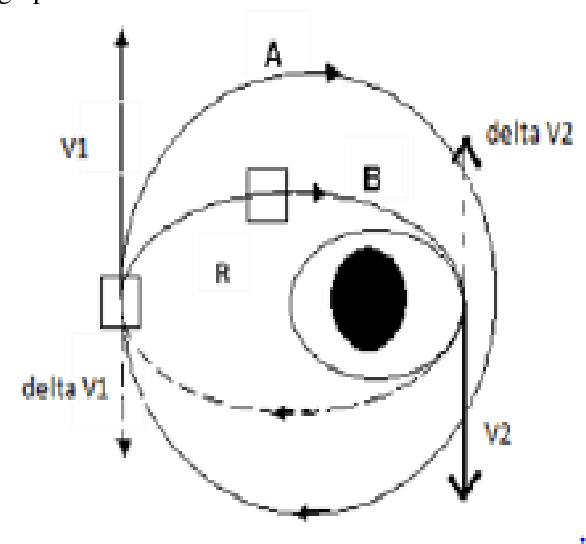
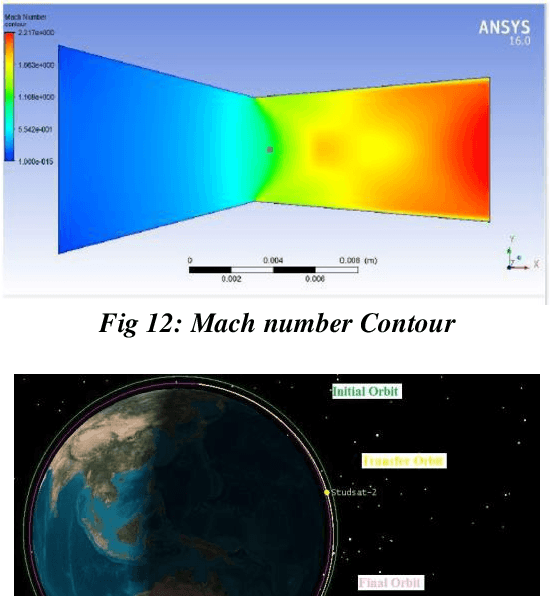
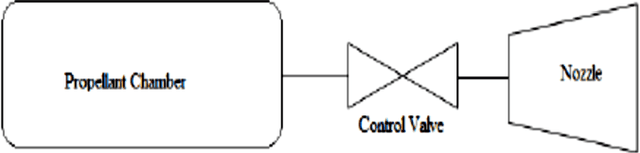
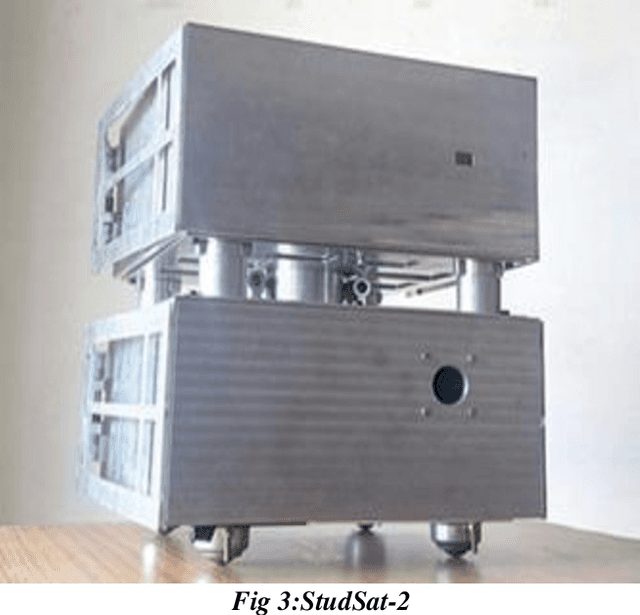
The increase in the application of the satellite has skyrocketed the number of satellites, especially in the low earth orbit. The major concern today is after the end of life, these satellites become debris which negatively affects the space environment. As per the international guidelines of the European Space Agency, it is mandatory to deorbit the satellite within 25 years of the end of life. StudSat1, which was successfully launched on 12th July 2010, is the first Pico satellite developed in India by undergraduate students from seven different engineering colleges across South India. Now, the team is developing StudSat2, which is India's first twin satellite mission having two nanosatellites whose overall mass is less than 10kg. This paper is aimed to design the propulsion system, cold gas thruster, to deorbit StudSat2 from its original orbit i.e. 600 km to lower orbit i.e. 400km. The propulsion system mainly consists of a storage tank, pipes, Convergent Divergent nozzle, and electronic actuators. The paper also gives information about the components of cold gas thruster, which have been designed in the CATIA V5, and the structural and flow analysis of the same has been done in ANSYS. The concept of Hohmann transfer has been used to deorbit the satellite and STK has been used to simulate it.