 Add to Chrome
 Add to Firefox
 Add to Edge
Leveraging IoT and Weather Conditions to Estimate the Riders Waiting for the Bus Transit on Campus
Feb 02, 2021
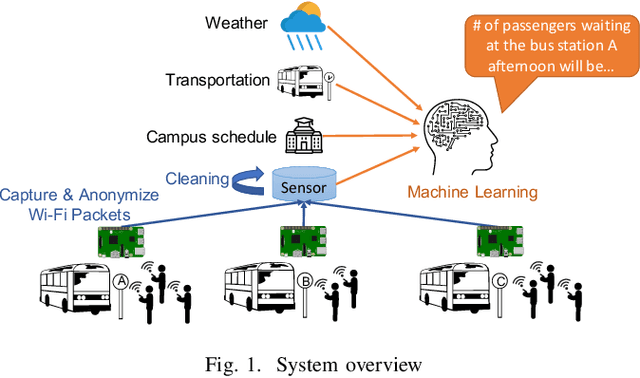
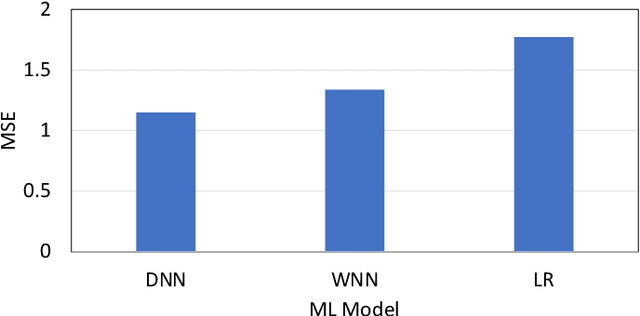
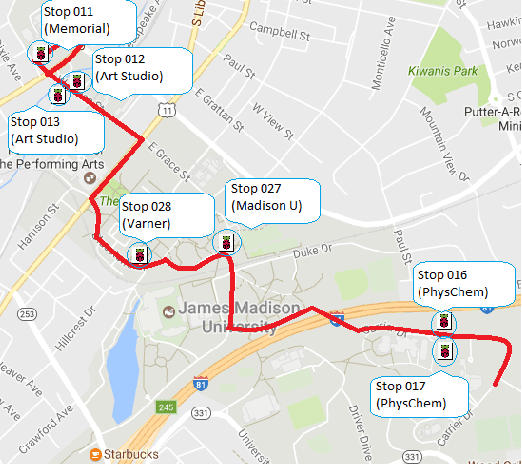
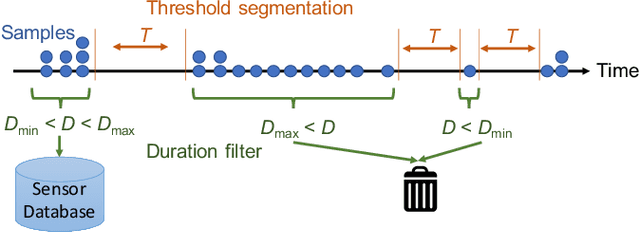
The communication technology revolution in this era has increased the use of smartphones in the world of transportation. In this paper, we propose to leverage IoT device data, capturing passengers' smartphones' Wi-Fi data in conjunction with weather conditions to predict the expected number of passengers waiting at a bus stop at a specific time using deep learning models. Our study collected data from the transit bus system at James Madison University (JMU) in Virginia, USA. This paper studies the correlation between the number of passengers waiting at bus stops and weather conditions. Empirically, an experiment with several bus stops in JMU, was utilized to confirm a high precision level. We compared our Deep Neural Network (DNN) model against two baseline models: Linear Regression (LR) and a Wide Neural Network (WNN). The gap between the baseline models and DNN was 35% and 14% better Mean Squared Error (MSE) scores for predictions in favor of the DNN compared to LR and WNN, respectively.

DataLoc+: A Data Augmentation Technique for Machine Learning in Room-Level Indoor Localization
Jan 21, 2021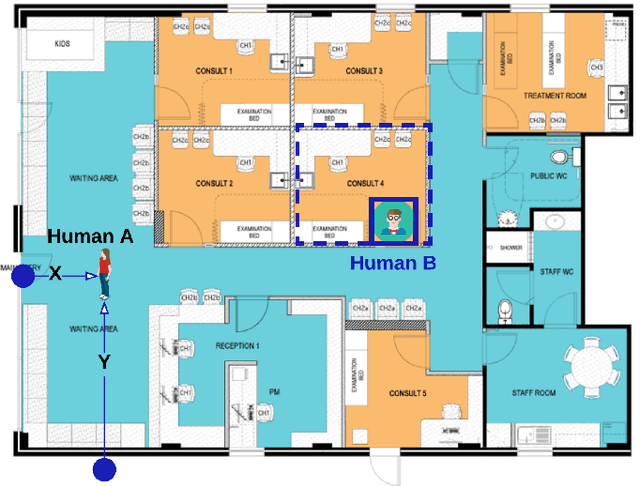
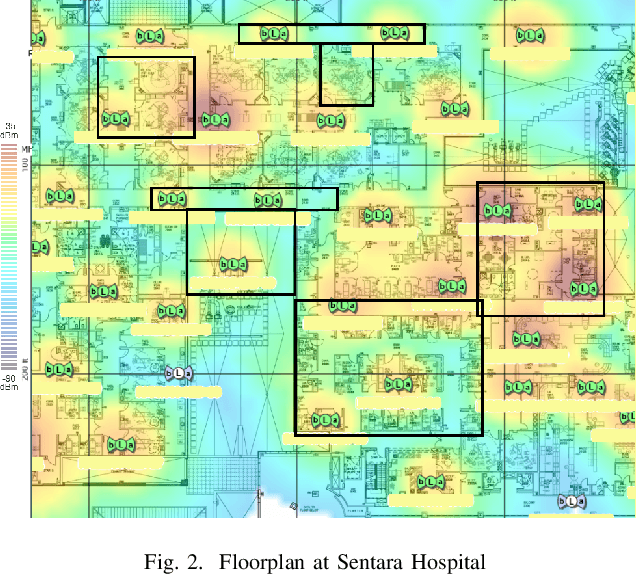
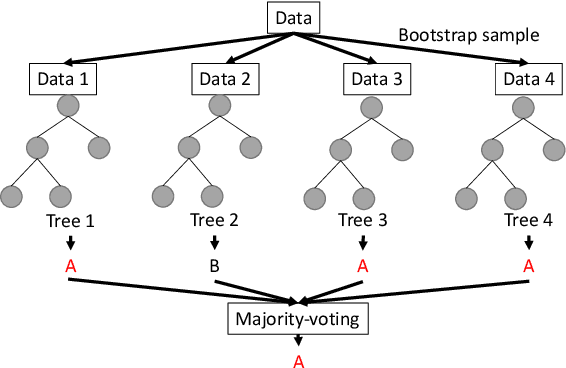
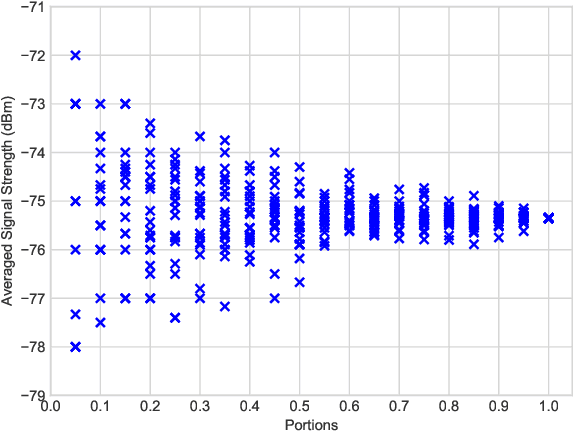
Indoor localization has been a hot area of research over the past two decades. Since its advent, it has been steadily utilizing the emerging technologies to improve accuracy, and machine learning has been at the heart of that. Machine learning has been increasingly used in fingerprint-based indoor localization to replace or emulate the radio map that is used to predict locations given a location signature. The prediction quality of a machine learning model primarily depends on how well the model was trained, which relies on the amount and quality of data used to train it. Data augmentation has been used to improve quality of the trained models by synthetically producing more training data, and several approaches were used in the literature that tackles the problem of lack of training data from different angles. In this paper, we propose DataLoc+, a data augmentation technique for room-level indoor localization that combines different approaches in a simple algorithm. We evaluate the technique by comparing it to the typical direct snapshot approach using data collected from a field experiment conducted in a hospital. Our evaluation shows that the model trained using the proposed technique achieves higher accuracy. We also show that the technique adapts to larger problems using a limited dataset while maintaining high accuracy.