 Add to Chrome
 Add to Firefox
 Add to Edge
The "Small World of Words" German Free-Association Norms
Apr 21, 2026
Free-association norms provide essential empirical data for investigating linguistic, semantic, and cultural phenomena in the cognitive sciences. Although large-scale norms exist for languages such as English, Dutch, Spanish, and Mandarin Chinese, no comparable resource has been available for German. To address this gap, we present free-association norms for 5,877 German cue words as part of the German version of the multilingual Small World of Words (SWOW) project. We describe the data collection procedures, participant characteristics, and our comprehensive preprocessing pipeline before introducing the resulting SWOW-DE data set. Using data from three established psycholinguistic paradigms, we show that SWOW-DE norms robustly predict performance in lexical decision tasks, relatedness judgments, and psycholinguistic word ratings. Furthermore, we demonstrate that SWOW-DE responses compare favorably with existing German resources and provide a preliminary cross-linguistic comparison revealing both shared and language-specific association patterns, highlighting promising directions for future research. Overall, SWOW-DE represents the largest collection of German free associations to date and offers a unique resource for linguistic, psychological, and cross-cultural research.

Measuring individual semantic networks: A simulation study
Oct 23, 2024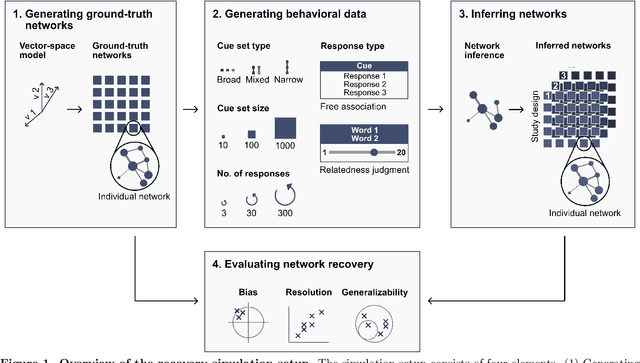
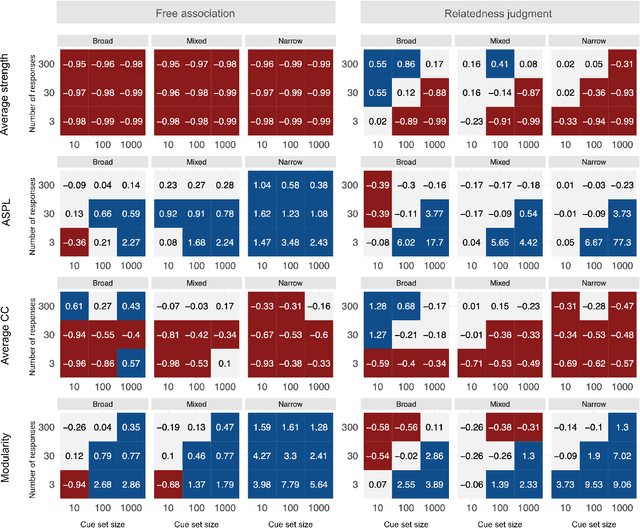
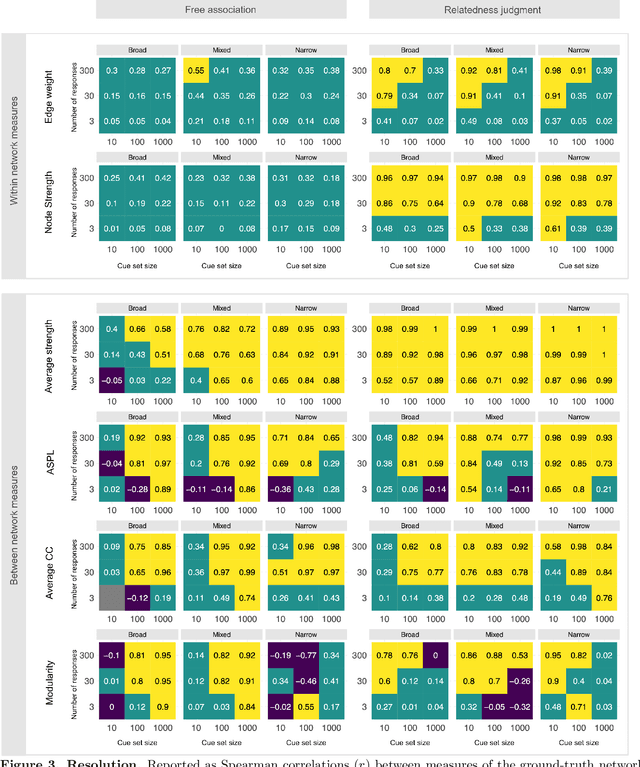
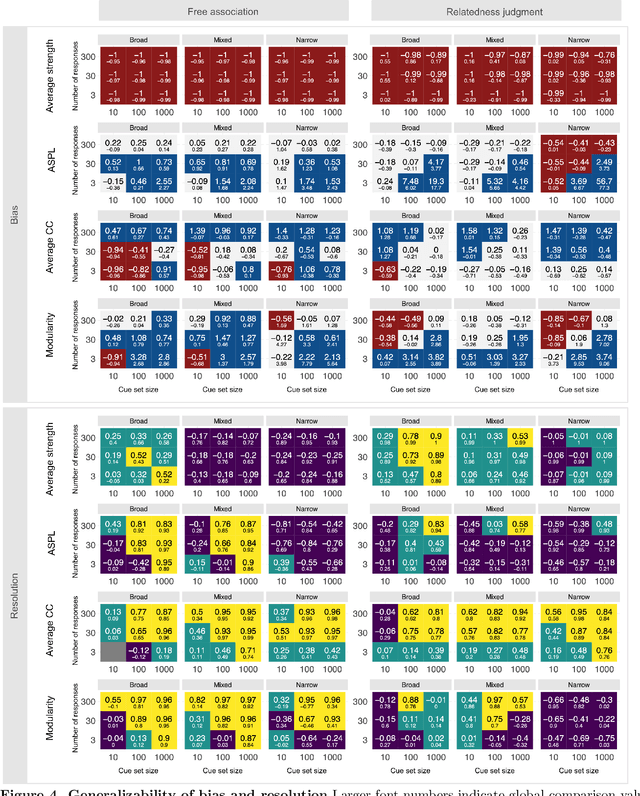
Accurately capturing individual differences in semantic networks is fundamental to advancing our mechanistic understanding of semantic memory. Past empirical attempts to construct individual-level semantic networks from behavioral paradigms may be limited by data constraints. To assess these limitations and propose improved designs for the measurement of individual semantic networks, we conducted a recovery simulation investigating the psychometric properties underlying estimates of individual semantic networks obtained from two different behavioral paradigms: free associations and relatedness judgment tasks. Our results show that successful inference of semantic networks is achievable, but they also highlight critical challenges. Estimates of absolute network characteristics are severely biased, such that comparisons between behavioral paradigms and different design configurations are often not meaningful. However, comparisons within a given paradigm and design configuration can be accurate and generalizable when based on designs with moderate numbers of cues, moderate numbers of responses, and cue sets including diverse words. Ultimately, our results provide insights that help evaluate past findings on the structure of semantic networks and design new studies capable of more reliably revealing individual differences in semantic networks.