 Add to Chrome
 Add to Firefox
 Add to Edge
Magnetic SAW RFID Sensor Based on Love Wave for Detection of Magnetic Field and Temperature
Oct 02, 2023
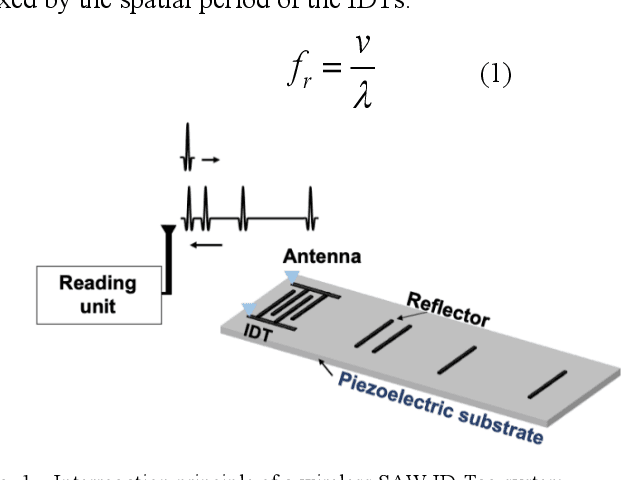
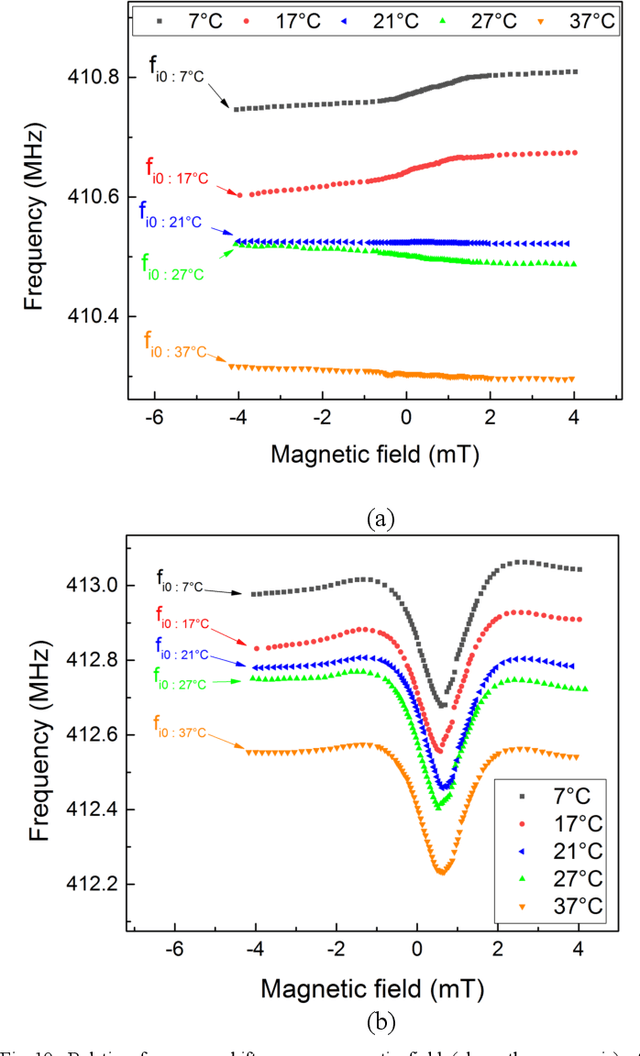
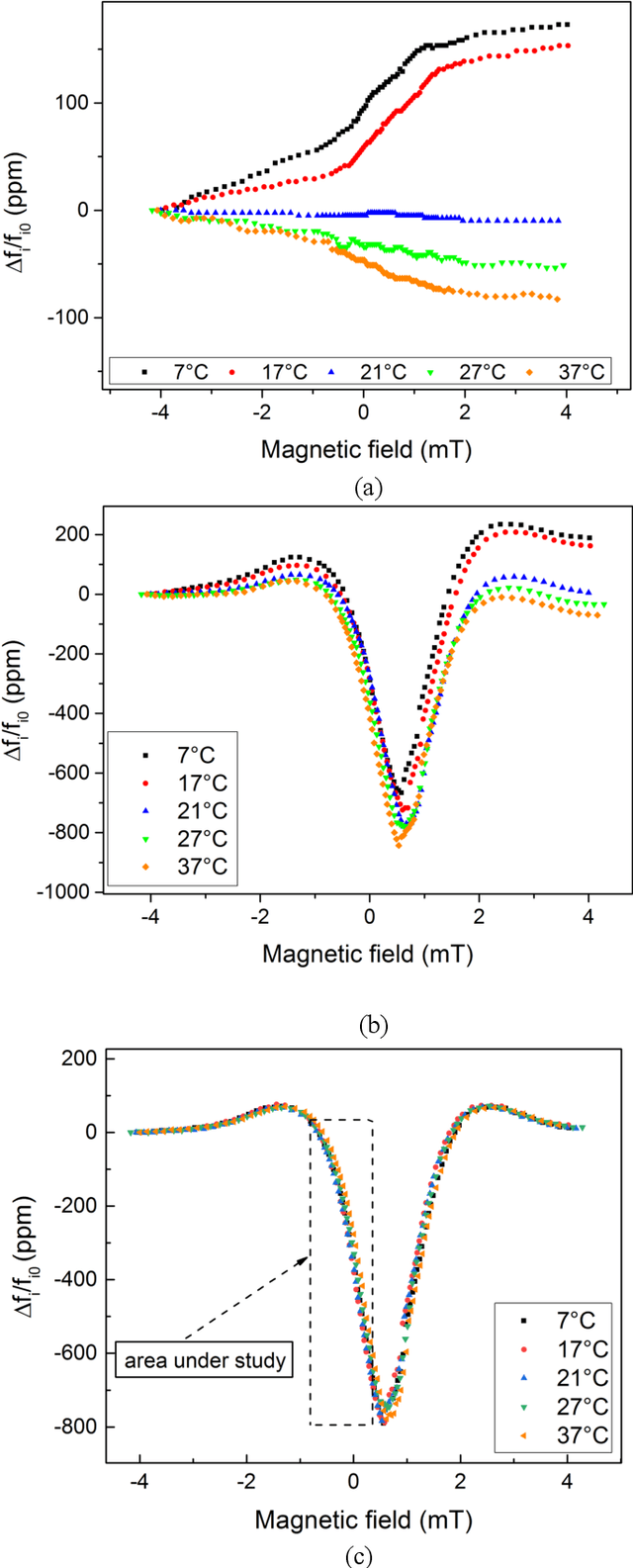

Magnetic field measurement including a temperature compensation is essential for a magnetic field sensor. This study investigates a magnetic surface acoustic wave (MSAW) sensor in a reflective delay line configuration with two acoustic propagation paths with and without magnetic field sensitive layer. The delay in path with sensitive layer leads to magnetic field detection and the one without enable temperature measurement and thus compensation for the first path. The developed sensor is based on a ZnO/LiNbO$_3$ Ycut (X-direction) layered structure as Love wave platform. Love wave as a shear wave being more favorable for magnetic detection. Co-Fe-B is considered as sensitive layer to detect magnetic field changes and is deposited on the top of ZnO, but only on one of the two paths. We combined an original configuration of connected IDTs with a high electromechanical coupling coefficient (K$^2$) mode to improve the signal amplitude. The achieved sensor exhibits a high temperature and magnetic field sensitivity of -63 ppm/$^\circ$C and -781 ppm/mT, respectively. The temperature compensation method for magnetic field measurement is demonstrated using a differential measurement by subtracting the delay times obtained for the two paths with and without the sensitive layer. Finally, The sensor exhibited good repeatability at various temperatures. Moreover, the device developed allows in addition to the multisensor functionality, the radio frequency identification (RFID) which is necessary for the deployment of sensor networks.

Wireless strain and temperature monitoring in reinforced concrete using Surface Acoustic Wave (SAW) sensors
Oct 02, 2023Monitoring the health of civil engineering structures using implanted deformation, temperature and corrosion sensors would further improve maintenance and extend the service life of those structures. However, sensor integration poses a number of problems, due to the presence of cables and on-board electronics. Passive, wireless SAW sensors offer a very promising solution, here. We used commercial SAW devices mounted on steel rebars to carry out an initial feasibility study. Without cables or embedded electronics, we were able to measure the deformation of a concrete beam subjected to bending load. We were also able to measure the temperature continuously over a three-week period.