 Add to Chrome
 Add to Firefox
 Add to Edge
A Cost-Efficient Routing Pipeline for Multilingual Short-Text Classification Using Small Language Models
Aug 11, 2026
Multilingual short-text classification supports operational systems such as content moderation, customer support routing, and intent recognition, yet aggregate evaluation often hides large differences between high-resource and low-resource languages. Uniform inference policies are simple to deploy, but they assume that all languages are equally well served. In this work, we evaluate a fixed-list routing strategy that keeps stronger languages on a direct multilingual path and selectively sends weaker languages through translation into English before zero-shot classification. The pipeline is fully self-hosted, uses pretrained compact sentence encoders, and requires no task-specific fine-tuning. We test the approach on two benchmarks chosen to differ in scale and label granularity: a 15-language subset of SIB-200 for seven-way topic classification and a 15-locale subset of MASSIVE for intent classification over an official 60-intent inventory. On SIB-200, the best overall configuration is R1, which translates only the low-resource tier: high-tier and mid-tier Macro-F1 remain unchanged, while low-tier Macro-F1 rises from 0.4632 to 0.6828. On the MASSIVE subset, the same low-tier intervention raises low-tier Macro-F1 from 0.2143 to 0.4417, but the best overall result is obtained by full translation, R3, at Macro-F1 0.4647. Across these two benchmarks, selective translation is a reliable intervention for weaker languages, whereas the optimal routing boundary depends on the task. We therefore report routing through tier-level quality gains and tier-level latency rather than a single global efficiency score.

An Assessment of GANs for Identity-related Applications
Dec 18, 2020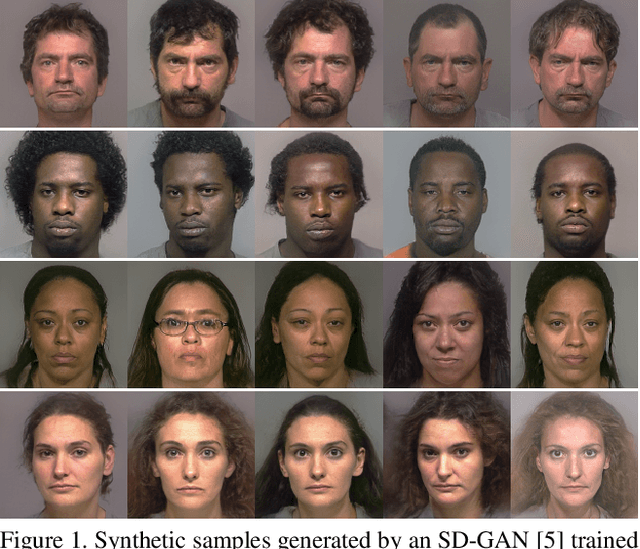
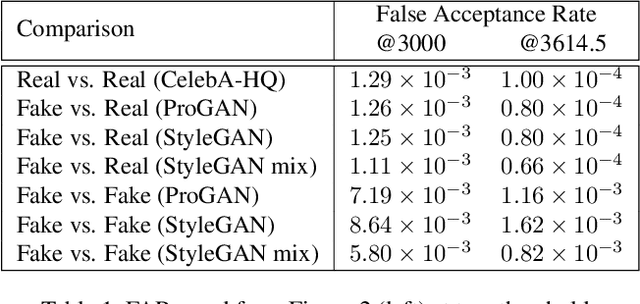
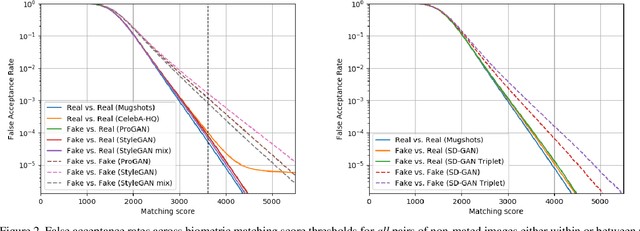
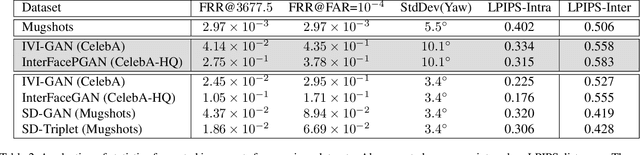
Generative Adversarial Networks (GANs) are now capable of producing synthetic face images of exceptionally high visual quality. In parallel to the development of GANs themselves, efforts have been made to develop metrics to objectively assess the characteristics of the synthetic images, mainly focusing on visual quality and the variety of images. Little work has been done, however, to assess overfitting of GANs and their ability to generate new identities. In this paper we apply a state of the art biometric network to various datasets of synthetic images and perform a thorough assessment of their identity-related characteristics. We conclude that GANs can indeed be used to generate new, imagined identities meaning that applications such as anonymisation of image sets and augmentation of training datasets with distractor images are viable applications. We also assess the ability of GANs to disentangle identity from other image characteristics and propose a novel GAN triplet loss that we show to improve this disentanglement.