 Add to Chrome
 Add to Firefox
 Add to Edge
Study of Neural Network Algorithm for Straight-Line Drawings of Planar Graphs
Jan 21, 2014

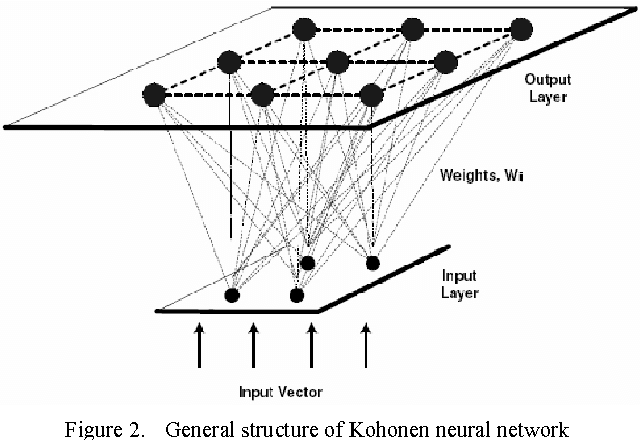

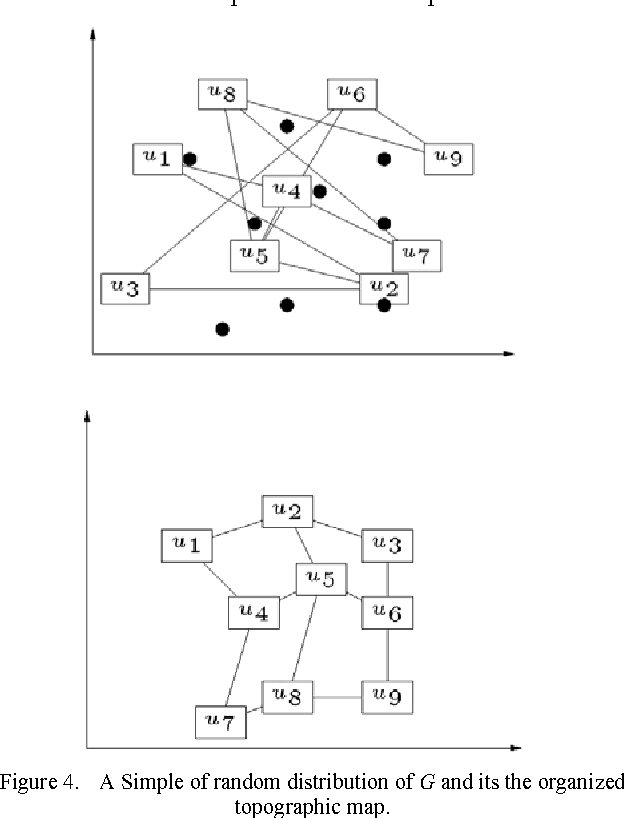
Graph drawing addresses the problem of finding a layout of a graph that satisfies given aesthetic and understandability objectives. The most important objective in graph drawing is minimization of the number of crossings in the drawing, as the aesthetics and readability of graph drawings depend on the number of edge crossings. VLSI layouts with fewer crossings are more easily realizable and consequently cheaper. A straight-line drawing of a planar graph G of n vertices is a drawing of G such that each edge is drawn as a straight-line segment without edge crossings. However, a problem with current graph layout methods which are capable of producing satisfactory results for a wide range of graphs is that they often put an extremely high demand on computational resources. This paper introduces a new layout method, which nicely draws internally convex of planar graph that consumes only little computational resources and does not need any heavy duty preprocessing. Here, we use two methods: The first is self organizing map known from unsupervised neural networks which is known as (SOM) and the second method is Inverse Self Organized Map (ISOM).

Study of Efficient Technique Based On 2D Tsallis Entropy For Image Thresholding
Jan 20, 2014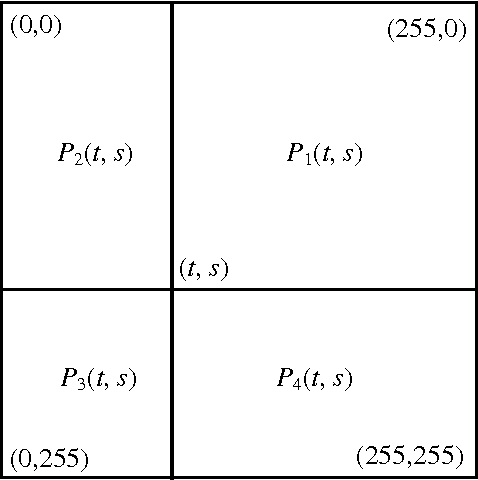
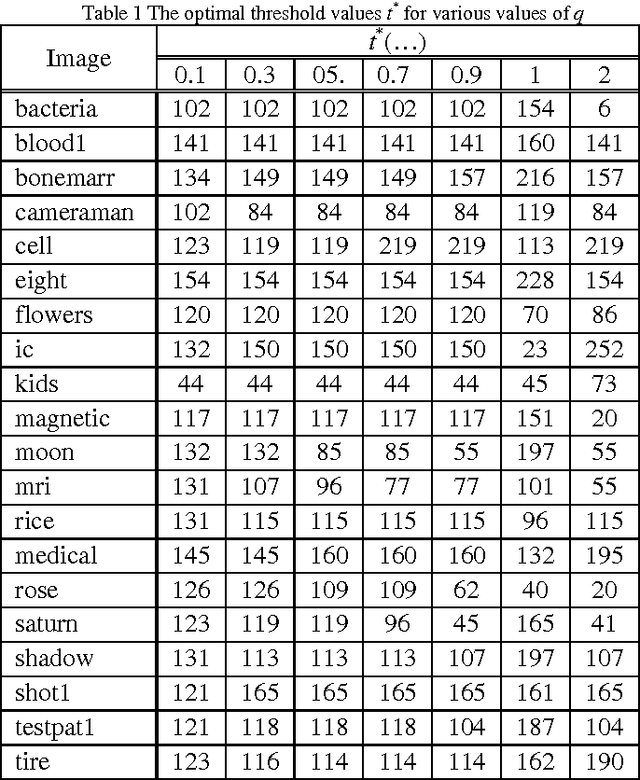
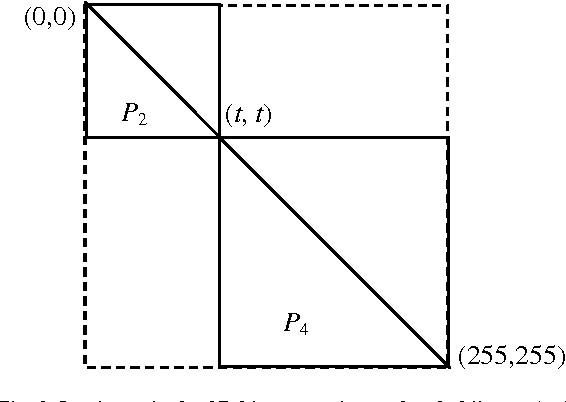
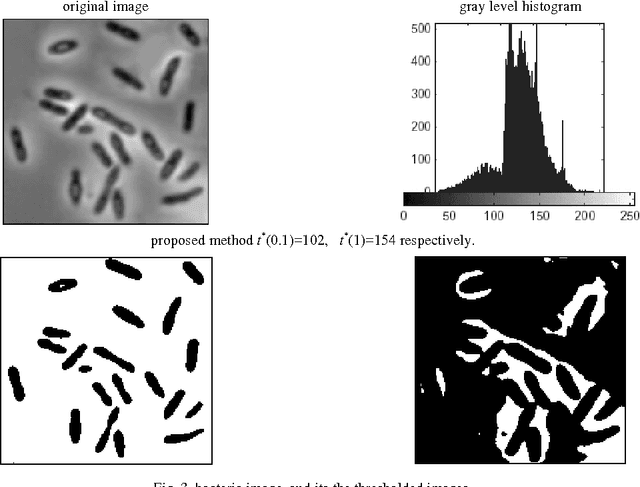
Thresholding is an important task in image processing. It is a main tool in pattern recognition, image segmentation, edge detection and scene analysis. In this paper, we present a new thresholding technique based on two-dimensional Tsallis entropy. The two-dimensional Tsallis entropy was obtained from the twodimensional histogram which was determined by using the gray value of the pixels and the local average gray value of the pixels, the work it was applied a generalized entropy formalism that represents a recent development in statistical mechanics. The effectiveness of the proposed method is demonstrated by using examples from the real-world and synthetic images. The performance evaluation of the proposed technique in terms of the quality of the thresholded images are presented. Experimental results demonstrate that the proposed method achieve better result than the Shannon method.