 Add to Chrome
 Add to Firefox
 Add to Edge
Is Vibe Coding the Future? An Empirical Assessment of LLM Generated Codes for Construction Safety
Apr 14, 2026
The emergence of vibe coding, a paradigm where non-technical users instruct Large Language Models (LLMs) to generate executable codes via natural language, presents both significant opportunities and severe risks for the construction industry. While empowering construction personnel such as the safety managers, foremen, and workers to develop tools and software, the probabilistic nature of LLMs introduces the threat of silent failures, wherein generated code compiles perfectly but executes flawed mathematical safety logic. This study empirically evaluates the reliability, software architecture, and domain-specific safety fidelity of 450 vibe-coded Python scripts generated by three frontier models, Claude 3.5 Haiku, GPT-4o-Mini, and Gemini 2.5 Flash. Utilizing a persona-driven prompt dataset (n=150) and a bifurcated evaluation pipeline comprising isolated dynamic sandboxing and an LLM-as-a-Judge, the research quantifies the severe limits of zero-shot vibe codes for construction safety. The findings reveal a highly significant relationship between user persona and data hallucination, demonstrating that less formal prompts drastically increase the AI's propensity to invent missing safety variables. Furthermore, while the models demonstrated high foundational execution viability (~85%), this syntactic reliability actively masked logic deficits and a severe lack of defensive programming. Among successfully executed scripts, the study identified an alarming ~45% overall Silent Failure Rate, with GPT-4o-Mini generating mathematically inaccurate outputs in ~56% of its functional code. The results demonstrate that current LLMs lack the deterministic rigor required for standalone safety engineering, necessitating the adoption of deterministic AI wrappers and strict governance for cyber-physical deployments.

Prompt to Protection: A Comparative Study of Multimodal LLMs in Construction Hazard Recognition
Jun 09, 2025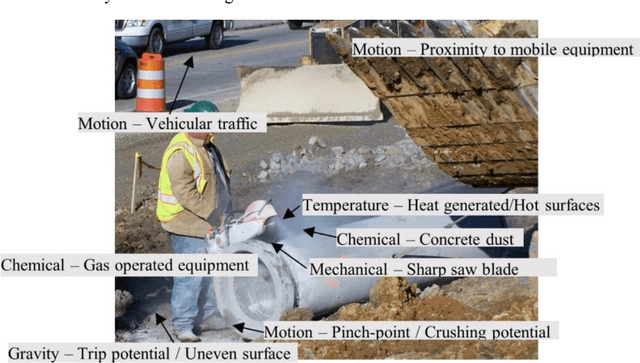
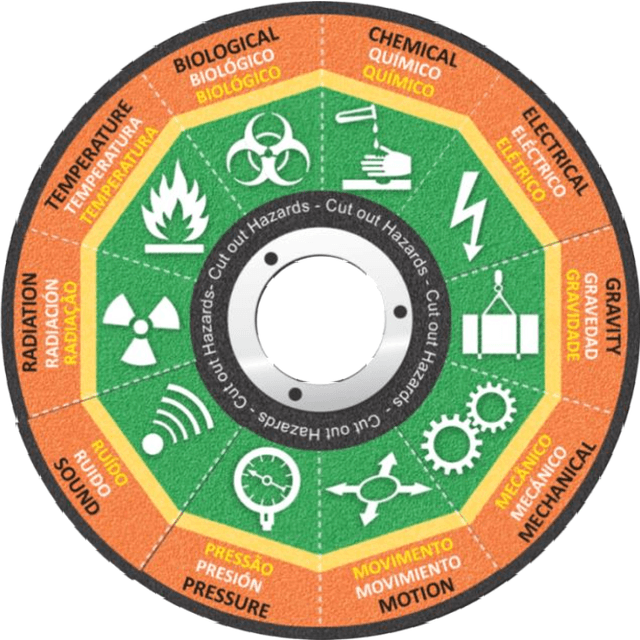
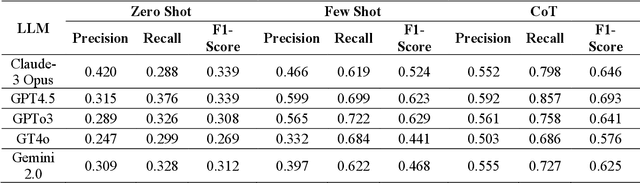

The recent emergence of multimodal large language models (LLMs) has introduced new opportunities for improving visual hazard recognition on construction sites. Unlike traditional computer vision models that rely on domain-specific training and extensive datasets, modern LLMs can interpret and describe complex visual scenes using simple natural language prompts. However, despite growing interest in their applications, there has been limited investigation into how different LLMs perform in safety-critical visual tasks within the construction domain. To address this gap, this study conducts a comparative evaluation of five state-of-the-art LLMs: Claude-3 Opus, GPT-4.5, GPT-4o, GPT-o3, and Gemini 2.0 Pro, to assess their ability to identify potential hazards from real-world construction images. Each model was tested under three prompting strategies: zero-shot, few-shot, and chain-of-thought (CoT). Zero-shot prompting involved minimal instruction, few-shot incorporated basic safety context and a hazard source mnemonic, and CoT provided step-by-step reasoning examples to scaffold model thinking. Quantitative analysis was performed using precision, recall, and F1-score metrics across all conditions. Results reveal that prompting strategy significantly influenced performance, with CoT prompting consistently producing higher accuracy across models. Additionally, LLM performance varied under different conditions, with GPT-4.5 and GPT-o3 outperforming others in most settings. The findings also demonstrate the critical role of prompt design in enhancing the accuracy and consistency of multimodal LLMs for construction safety applications. This study offers actionable insights into the integration of prompt engineering and LLMs for practical hazard recognition, contributing to the development of more reliable AI-assisted safety systems.