 Add to Chrome
 Add to Firefox
 Add to Edge
Characterizing Human Feedback-Based Control in Naturalistic Driving Interactions via Gaussian Process Regression with Linear Feedback
Dec 09, 2025
Understanding driver interactions is critical to designing autonomous vehicles to interoperate safely with human-driven cars. We consider the impact of these interactions on the policies drivers employ when navigating unsigned intersections in a driving simulator. The simulator allows the collection of naturalistic decision-making and behavior data in a controlled environment. Using these data, we model the human driver responses as state-based feedback controllers learned via Gaussian Process regression methods. We compute the feedback gain of the controller using a weighted combination of linear and nonlinear priors. We then analyze how the individual gains are reflected in driver behavior. We also assess differences in these controllers across populations of drivers. Our work in data-driven analyses of how drivers determine their policies can facilitate future work in the design of socially responsive autonomy for vehicles.

SAVER: A Toolbox for Sampling-Based, Probabilistic Verification of Neural Networks
Dec 04, 2024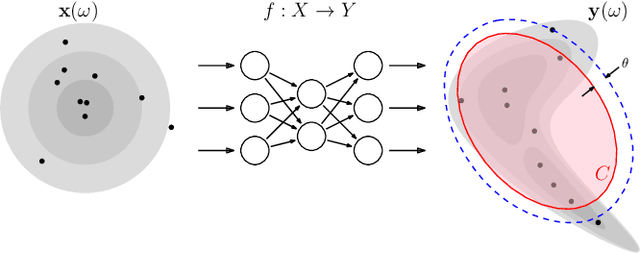
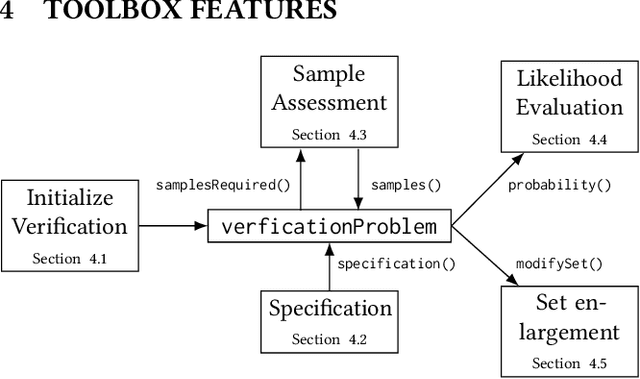
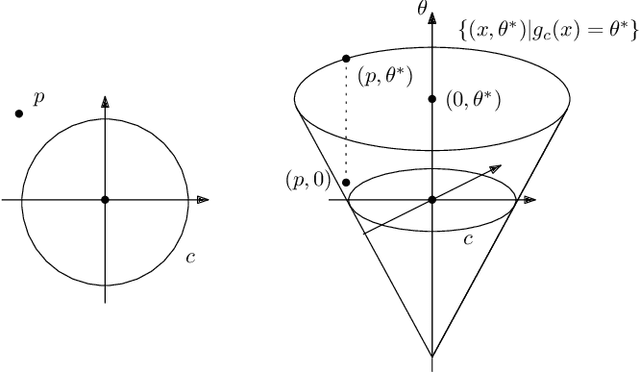
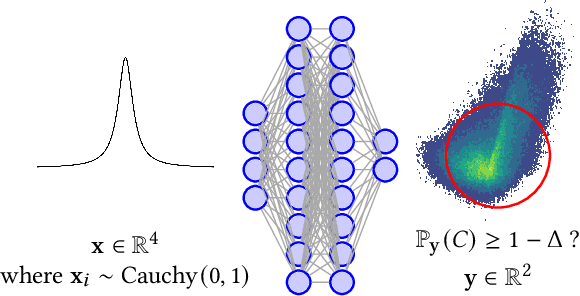
We present a neural network verification toolbox to 1) assess the probability of satisfaction of a constraint, and 2) synthesize a set expansion factor to achieve the probability of satisfaction. Specifically, the tool box establishes with a user-specified level of confidence whether the output of the neural network for a given input distribution is likely to be contained within a given set. Should the tool determine that the given set cannot satisfy the likelihood constraint, the tool also implements an approach outlined in this paper to alter the constraint set to ensure that the user-defined satisfaction probability is achieved. The toolbox is comprised of sampling-based approaches which exploit the properties of signed distance function to define set containment.