 Add to Chrome
 Add to Firefox
 Add to Edge
Optimal Scheduling in a Question-Answering Forum of Knowledge Workers
Jun 18, 2026
As individuals turn to the Internet to find answers to questions they may have, several Question Answering (QA) forums have evolved, where users knowledgeable in certain topics can contribute their expertise to answering these requests for information. While these are currently volunteer based, we consider a future version employing knowledge workers who are experts in certain topics. In such a system, the request-answer processes forming the queuing system may utilize schedulers that assign requests in different topics to the experts in the forum, who may be able to answer them according to their expertise levels in different topics. With this model, we calculate the capacity of the system for handling the requests while keeping the system stable, and design schedulers that achieve capacity. We also investigate how collaboration between experts in answering requests can potentially increase capacity.

An Optimization Framework for Certain Separable Problems using Neural Networks
Jun 18, 2026This paper studies a class of parametric constrained optimization problems that are motivated by applications in real time applications. Under a parameter-separable problem structure that naturally arises in these applications, the paper proposes a two phase strategy, based on offline learning and online processing, to address these optimization problems on resource limited devices. Specifically, by exploiting the separable structure, an iterative Alternating Direction Method of Multipliers (ADMM) based solution procedure is developed that enables the use of certain learning based function representations (learned offline but readily computable online) to reduce the overall online on-device implementation complexity. By carefully crafting the ADMM procedure, it is shown that even as the parameters vary, the corresponding instances of the parametric optimization problem may be solved by lightweight online computations in the device with the assistance of a neural network co-processor.
Security Orchestration, Automation, and Response Engine for Deployment of Behavioural Honeypots
Jan 14, 2022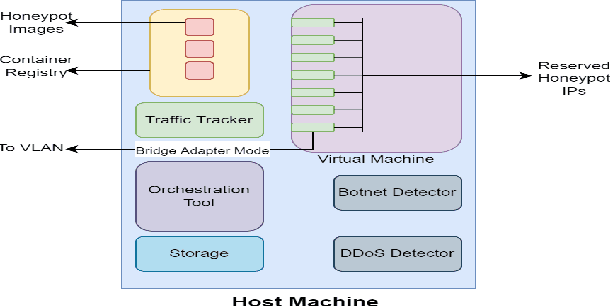
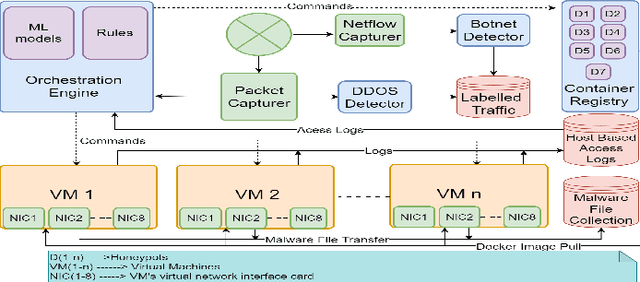
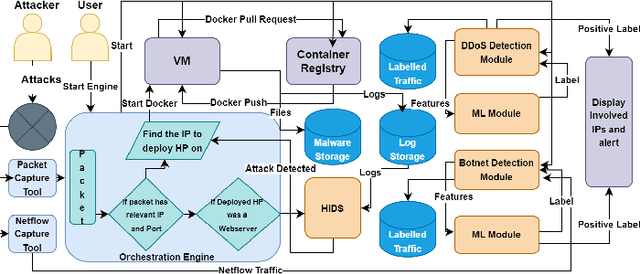
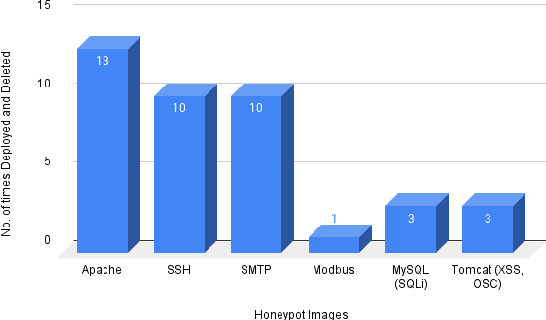
Cyber Security is a critical topic for organizations with IT/OT networks as they are always susceptible to attack, whether insider or outsider. Since the cyber landscape is an ever-evolving scenario, one must keep upgrading its security systems to enhance the security of the infrastructure. Tools like Security Information and Event Management (SIEM), Endpoint Detection and Response (EDR), Threat Intelligence Platform (TIP), Information Technology Service Management (ITSM), along with other defensive techniques like Intrusion Detection System (IDS), Intrusion Protection System (IPS), and many others enhance the cyber security posture of the infrastructure. However, the proposed protection mechanisms have their limitations, they are insufficient to ensure security, and the attacker penetrates the network. Deception technology, along with Honeypots, provides a false sense of vulnerability in the target systems to the attackers. The attacker deceived reveals threat intel about their modus operandi. We have developed a Security Orchestration, Automation, and Response (SOAR) Engine that dynamically deploys custom honeypots inside the internal network infrastructure based on the attacker's behavior. The architecture is robust enough to support multiple VLANs connected to the system and used for orchestration. The presence of botnet traffic and DDOS attacks on the honeypots in the network is detected, along with a malware collection system. After being exposed to live traffic for four days, our engine dynamically orchestrated the honeypots 40 times, detected 7823 attacks, 965 DDOS attack packets, and three malicious samples. While our experiments with static honeypots show an average attacker engagement time of 102 seconds per instance, our SOAR Engine-based dynamic honeypots engage attackers on average 3148 seconds.
A Theoretical Framework for Online Information Search
Aug 20, 2021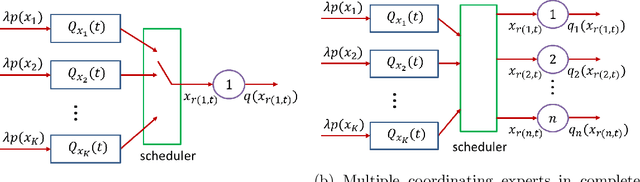
A significant part of human activity today consists of searching for a piece of information online, utilizing knowledge repositories. This endeavor may be time-consuming if the individual searching for the information is unfamiliar with the subject matter of that information. However, experts can aid individuals find relevant information by searching online. This paper describes a theoretical framework to model the dynamic process by which requests for information come to a system of experts, who then answer the requests by searching for those pieces of information.