 Add to Chrome
 Add to Firefox
 Add to Edge
Traceable LLM-Generated Hazard Scenarios for Operational Safety Analysis of Aviation Systems Using ASRS Reports
Aug 05, 2026
Operational hazard analysis of aviation system operations must consider interactions among weather, ATC actions, airspace constraints, aircraft operations, and human factors - distinct from the functional hazard assessment applied at the aircraft-system level. We present an AI-assisted approach that generates candidate hazard scenarios from NASA's Aviation Safety Reporting System (ASRS). Given a target adverse outcome, it produces a structured hypothesis as categorical factors and a narrative scenario describing an operational event sequence consistent with the structure. Each scenario includes by a plausibility score from historical co-occurrence evidence and traceability to the most similar held-out ASRS reports. We then propose a hybrid variant, conditioning narrative generation on a structured hypothesis produced via evolutionary abduction, improving correctness and reducing variability. We evaluate multiple large language models, zero-shot versus few-shot prompting, and optional fine-tuning, measuring how prompting and model choice affect the validity and realism of the generated structures and narratives.

Schema-Constrained Document-Level Event Argument Extraction with Lightweight LLM Fine-Tuning
Jul 18, 2026Event Argument Extraction (EAE) converts documents into structured event records by identifying argument spans and assigning them schema-defined roles. Document-level EAE is challenging due to long-range dependencies between triggers and arguments, cross-sentence context, and strict role constraints, which often lead to boundary errors, uncertainty in roles, and inconsistencies with restricted schemas. In this paper, we study whether mid-sized open LLMs can perform schema-constrained EAE reliably at the document level on MAVEN-ARG. Our approach combines (i) role-set injection in prompts for schema compliance, (ii) parameter-efficient supervised fine-tuning (LoRA) using the same JSON-only interface used at inference, and (iii) deterministic decoding with post-processing that validates JSON, filters invalid roles, de-duplicates arguments, and aligns spans to the document window. Under the official MAVEN-ARG evaluator, fine-tuned mid-sized open models outperform previously reported GPT baselines across mention, entity-coreference, and event-coreference evaluations; our best model (Phi-4, 14B) reaches 42.39\% F1 at the event-coreference level. Code to reproduce experiments is publicly available at https://github.com/dessertlab/EAE/.
Reasoning Beyond Prediction: From Data-Driven to Causal Software Engineering
Jun 26, 2026Software engineering is an intellectually demanding, creative discipline that juggles a web of interdependent tasks to design, build, and assure the quality of increasingly complex systems. As our expectations from software soar - with demands spanning AI-driven products, pervasively distributed and cloud-native architectures, and deeply embedded cyber-physical environments - its complexity steadily increases. In response, a new wave of co-engineering methods and tools, fueled by deep learning, has emerged to augment the process, enhancing automation and decision support. Yet, these advances remain far from delivering the kind of intelligent support that modern software development demands. We call for a new paradigm of human-machine cooperation: one where machines don't just automate routine tasks or predict from learned patterns, but actively amplify engineers' reasoning through the lens of causation. As software becomes smarter, a smarter support is needed.
Causal Software Engineering: A Vision and Roadmap
May 04, 2026Software engineering increasingly involves making high-stakes decisions under uncertainty, using signals from code, field data, and socio-technical processes. Recent AI-driven support (e.g., anomaly detection, predictive analytics, AIOps, as well as LLM-based agents) has amplified engineers' ability to detect patterns and synthesize content and recommendations, but many critical questions are interventional or counterfactual: What is the expected impact of changing a load-balancing strategy? Would an outage have been avoided under a different release plan? Correlational models answer "what tends to co-occur"; they struggle to answer "what would happen if we act." We propose Causal Software Engineering (CSE) as a future paradigm in which causal models and causal reasoning systematically inform activities across the software lifecycle, augmenting existing practices with explicit assumptions, uncertainty-aware effect estimates, and counterfactual diagnosis. We outline (i) a causal-first workflow view spanning development and operations, (ii) a staged roadmap for tools and organizational adoption, and (iii) an evaluation and benchmark agenda for measuring progress.
Sustainability Is Not Linear: Quantifying Performance, Energy, and Privacy Trade-offs in On-Device Intelligence
Mar 27, 2026The migration of Large Language Models (LLMs) from cloud clusters to edge devices promises enhanced privacy and offline accessibility, but this transition encounters a harsh reality: the physical constraints of mobile batteries, thermal limits, and, most importantly, memory constraints. To navigate this landscape, we constructed a reproducible experimental pipeline to profile the complex interplay between energy consumption, latency, and quality. Unlike theoretical studies, we captured granular power metrics across eight models ranging from 0.5B to 9B parameters without requiring root access, ensuring our findings reflect realistic user conditions. We harness this pipeline to conduct an empirical case study on a flagship Android device, the Samsung Galaxy S25 Ultra, establishing foundational hypotheses regarding the trade-offs between generation quality, performance, and resource consumption. Our investigation uncovered a counter-intuitive quantization-energy paradox. While modern importance-aware quantization successfully reduces memory footprints to fit larger models into RAM, we found it yields negligible energy savings compared to standard mixed-precision methods. This proves that for battery life, the architecture of the model, not its quantization scheme, is the decisive factor. We further identified that Mixture-of-Experts (MoE) architectures defy the standard size-energy trend, offering the storage capacity of a 7B model while maintaining the lower energy profile of a 1B to 2B model. Finally, an analysis of these multi-objective trade-offs reveals a pragmatic sweet spot of mid-sized models, such as Qwen2.5-3B, that effectively balance response quality with sustainable energy consumption.
Causal Reasoning in Software Quality Assurance: A Systematic Review
Aug 30, 2024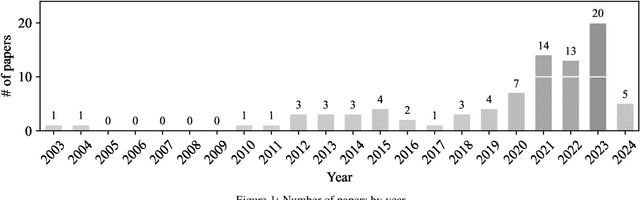
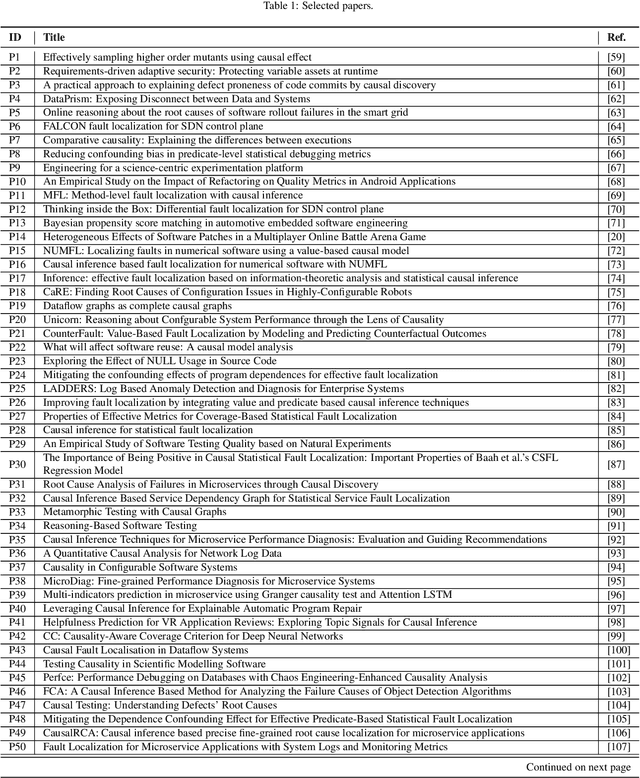
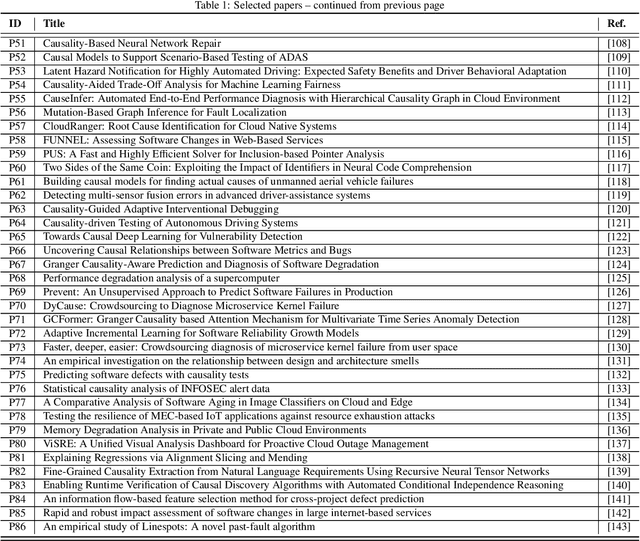
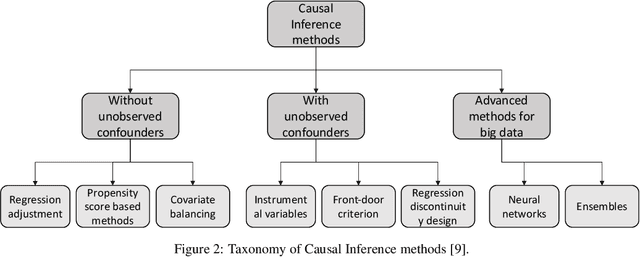
Context: Software Quality Assurance (SQA) is a fundamental part of software engineering to ensure stakeholders that software products work as expected after release in operation. Machine Learning (ML) has proven to be able to boost SQA activities and contribute to the development of quality software systems. In this context, Causal Reasoning is gaining increasing interest as a methodology to solve some of the current ML limitations. It aims to go beyond a purely data-driven approach by exploiting the use of causality for more effective SQA strategies. Objective: Provide a broad and detailed overview of the use of causal reasoning for SQA activities, in order to support researchers to access this research field, identifying room for application, main challenges and research opportunities. Methods: A systematic literature review of causal reasoning in the SQA research area. Scientific papers have been searched, classified, and analyzed according to established guidelines for software engineering secondary studies. Results: Results highlight the primary areas within SQA where causal reasoning has been applied, the predominant methodologies used, and the level of maturity of the proposed solutions. Fault localization is the activity where causal reasoning is more exploited, especially in the web services/microservices domain, but other tasks like testing are rapidly gaining popularity. Both causal inference and causal discovery are exploited, with the Pearl's graphical formulation of causality being preferred, likely due to its intuitiveness. Tools to favour their application are appearing at a fast pace - most of them after 2021. Conclusions: The findings show that causal reasoning is a valuable means for SQA tasks with respect to multiple quality attributes, especially during V&V, evolution and maintenance to ensure reliability, while it is not yet fully exploited for phases like ...
DeepSample: DNN sampling-based testing for operational accuracy assessment
Mar 28, 2024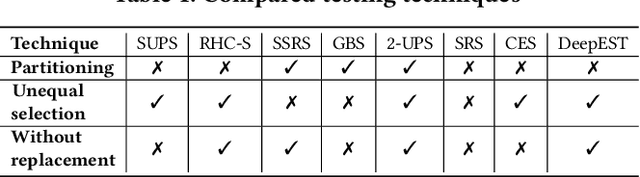
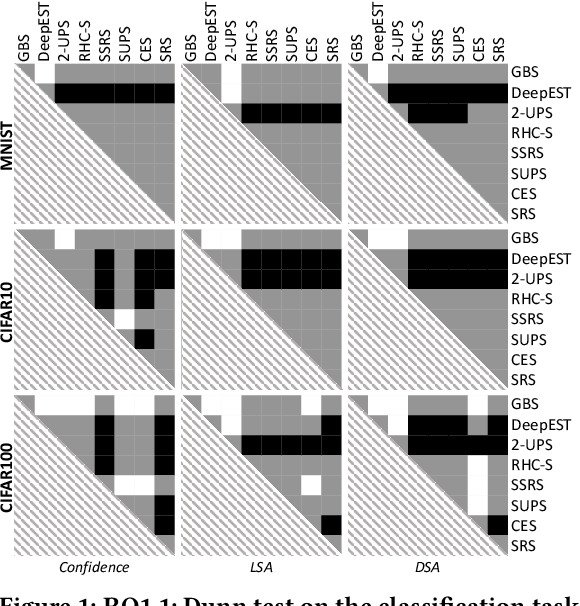
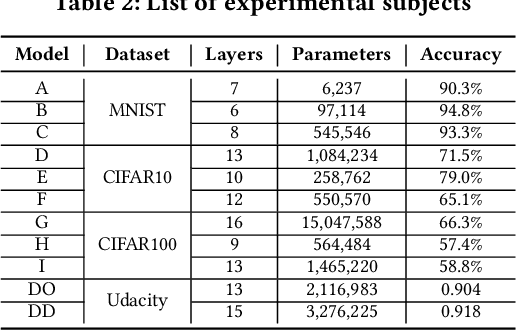
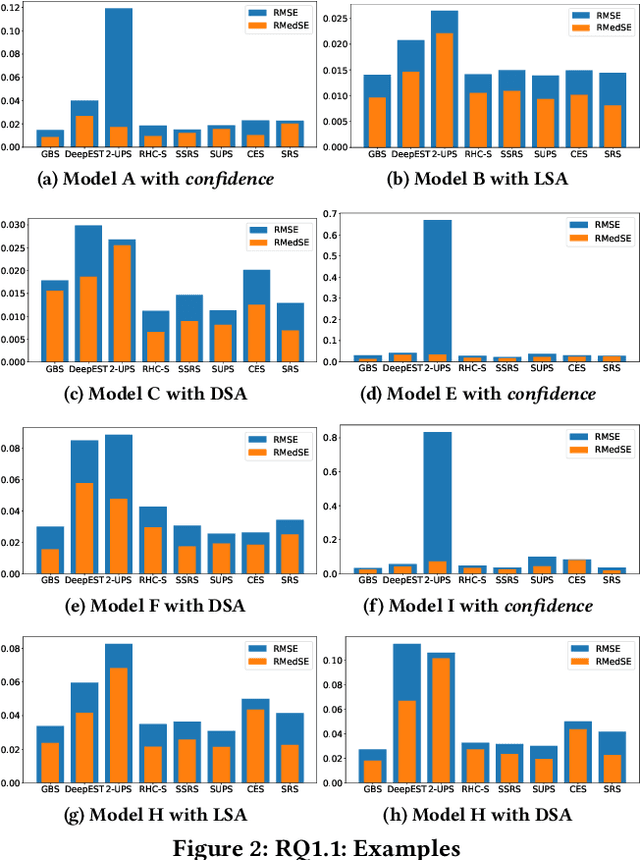
Deep Neural Networks (DNN) are core components for classification and regression tasks of many software systems. Companies incur in high costs for testing DNN with datasets representative of the inputs expected in operation, as these need to be manually labelled. The challenge is to select a representative set of test inputs as small as possible to reduce the labelling cost, while sufficing to yield unbiased high-confidence estimates of the expected DNN accuracy. At the same time, testers are interested in exposing as many DNN mispredictions as possible to improve the DNN, ending up in the need for techniques pursuing a threefold aim: small dataset size, trustworthy estimates, mispredictions exposure. This study presents DeepSample, a family of DNN testing techniques for cost-effective accuracy assessment based on probabilistic sampling. We investigate whether, to what extent, and under which conditions probabilistic sampling can help to tackle the outlined challenge. We implement five new sampling-based testing techniques, and perform a comprehensive comparison of such techniques and of three further state-of-the-art techniques for both DNN classification and regression tasks. Results serve as guidance for best use of sampling-based testing for faithful and high-confidence estimates of DNN accuracy in operation at low cost.
Reinforcement Learning for Online Testing of Autonomous Driving Systems: a Replication and Extension Study
Mar 20, 2024In a recent study, Reinforcement Learning (RL) used in combination with many-objective search, has been shown to outperform alternative techniques (random search and many-objective search) for online testing of Deep Neural Network-enabled systems. The empirical evaluation of these techniques was conducted on a state-of-the-art Autonomous Driving System (ADS). This work is a replication and extension of that empirical study. Our replication shows that RL does not outperform pure random test generation in a comparison conducted under the same settings of the original study, but with no confounding factor coming from the way collisions are measured. Our extension aims at eliminating some of the possible reasons for the poor performance of RL observed in our replication: (1) the presence of reward components providing contrasting or useless feedback to the RL agent; (2) the usage of an RL algorithm (Q-learning) which requires discretization of an intrinsically continuous state space. Results show that our new RL agent is able to converge to an effective policy that outperforms random testing. Results also highlight other possible improvements, which open to further investigations on how to best leverage RL for online ADS testing.
Iterative Assessment and Improvement of DNN Operational Accuracy
Mar 02, 2023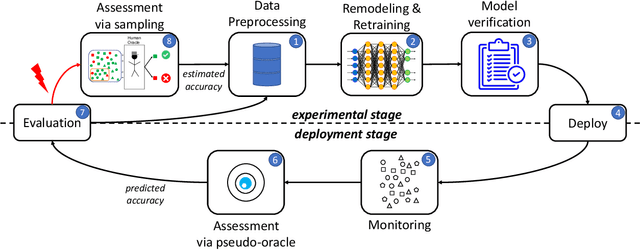
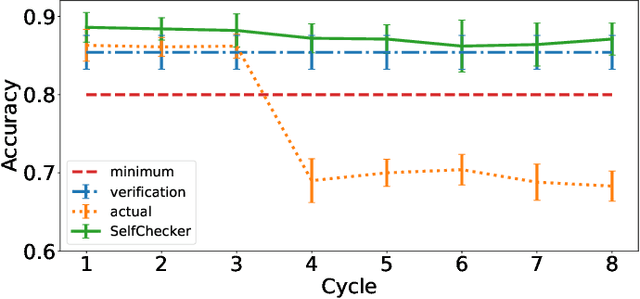
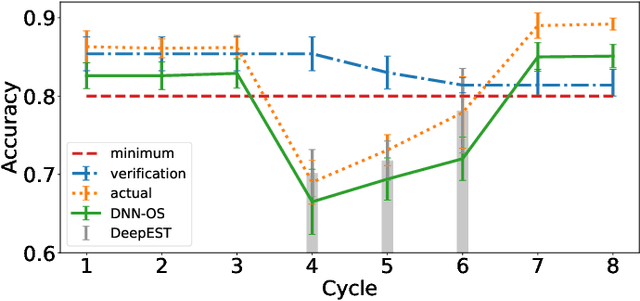
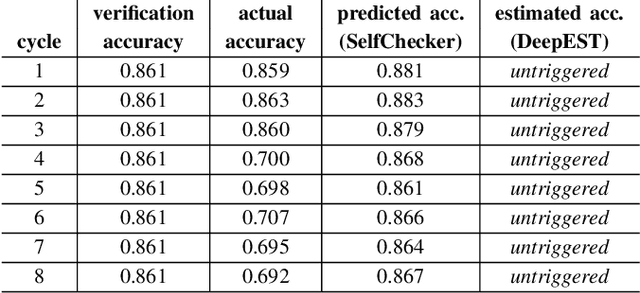
Deep Neural Networks (DNN) are nowadays largely adopted in many application domains thanks to their human-like, or even superhuman, performance in specific tasks. However, due to unpredictable/unconsidered operating conditions, unexpected failures show up on field, making the performance of a DNN in operation very different from the one estimated prior to release. In the life cycle of DNN systems, the assessment of accuracy is typically addressed in two ways: offline, via sampling of operational inputs, or online, via pseudo-oracles. The former is considered more expensive due to the need for manual labeling of the sampled inputs. The latter is automatic but less accurate. We believe that emerging iterative industrial-strength life cycle models for Machine Learning systems, like MLOps, offer the possibility to leverage inputs observed in operation not only to provide faithful estimates of a DNN accuracy, but also to improve it through remodeling/retraining actions. We propose DAIC (DNN Assessment and Improvement Cycle), an approach which combines ''low-cost'' online pseudo-oracles and ''high-cost'' offline sampling techniques to estimate and improve the operational accuracy of a DNN in the iterations of its life cycle. Preliminary results show the benefits of combining the two approaches and integrating them in the DNN life cycle.
Reasoning-Based Software Testing
Mar 02, 2023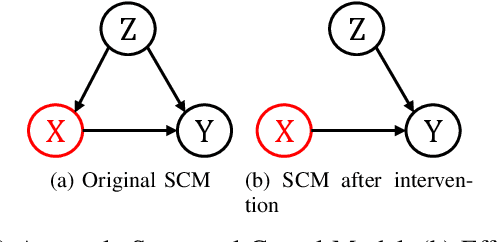
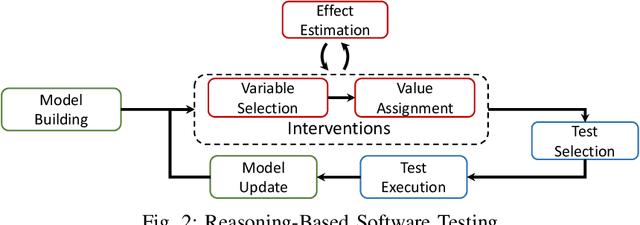
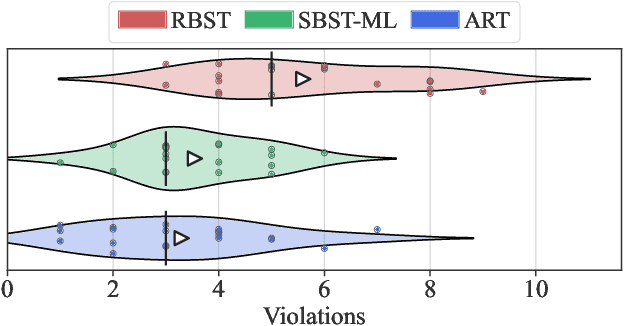
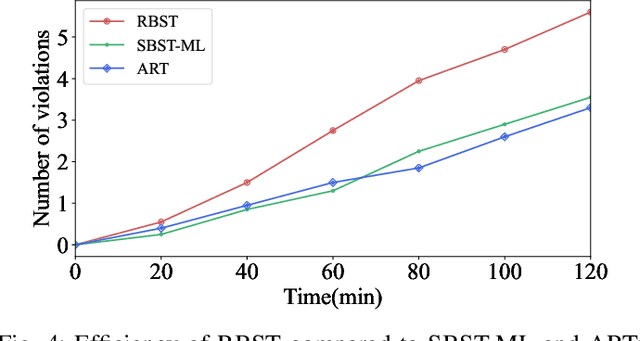
With software systems becoming increasingly pervasive and autonomous, our ability to test for their quality is severely challenged. Many systems are called to operate in uncertain and highly-changing environment, not rarely required to make intelligent decisions by themselves. This easily results in an intractable state space to explore at testing time. The state-of-the-art techniques try to keep the pace, e.g., by augmenting the tester's intuition with some form of (explicit or implicit) learning from observations to search this space efficiently. For instance, they exploit historical data to drive the search (e.g., ML-driven testing) or the tests execution data itself (e.g., adaptive or search-based testing). Despite the indubitable advances, the need for smartening the search in such a huge space keeps to be pressing. We introduce Reasoning-Based Software Testing (RBST), a new way of thinking at the testing problem as a causal reasoning task. Compared to mere intuition-based or state-of-the-art learning-based strategies, we claim that causal reasoning more naturally emulates the process that a human would do to ''smartly" search the space. RBST aims to mimic and amplify, with the power of computation, this ability. The conceptual leap can pave the ground to a new trend of techniques, which can be variously instantiated from the proposed framework, by exploiting the numerous tools for causal discovery and inference. Preliminary results reported in this paper are promising.