 Add to Chrome
 Add to Firefox
 Add to Edge
NeuroTrain: Surveying Local Learning Rules for Spiking Neural Networks with an Open Benchmarking Framework
May 14, 2026
The rapid expansion of spiking neural networks (SNNs) has led to a proliferation of training algorithms that differ widely in biological inspiration, computational structure, and hardware suitability. Despite this progress, the field lacks a unified, fine-grained taxonomy that systematically organizes these approaches and clarifies their conceptual relationships. This survey provides a comprehensive taxonomy of SNN training algorithms, spanning surrogate-gradient backpropagation, local and three-factor learning rules, biologically inspired plasticity mechanisms, ANN-to-SNN conversion pipelines, and non-standard optimization strategies. We analyze each class in terms of its computational principles, learning signals, and locality properties. To support reproducible research, we release NeuroTrain, an open-source snnTorch-based framework that implements a representative set of these algorithms within a unified, modular, and extendable framework, enabling consistent benchmarking across datasets, architectures, and training regimes. By consolidating fragmented literature and providing a reusable benchmarking framework, this survey identifies common patterns, highlights open challenges, and outlines promising directions for future work on scalable, efficient SNN training.

Security layers and related services within the Horizon Europe NEUROPULS project
Dec 14, 2023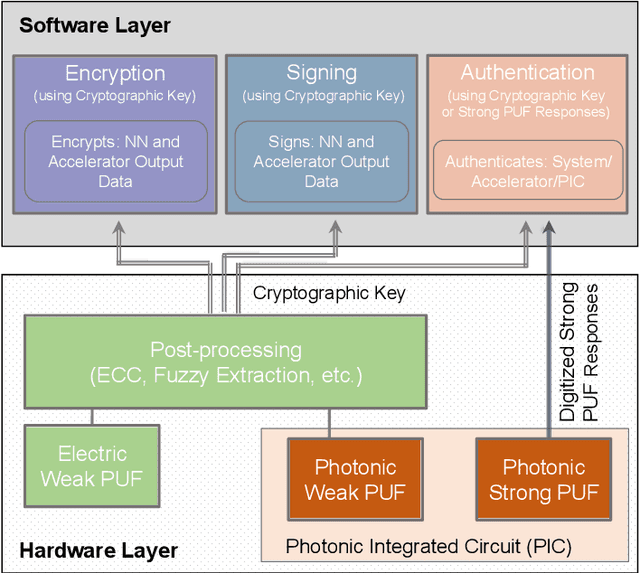
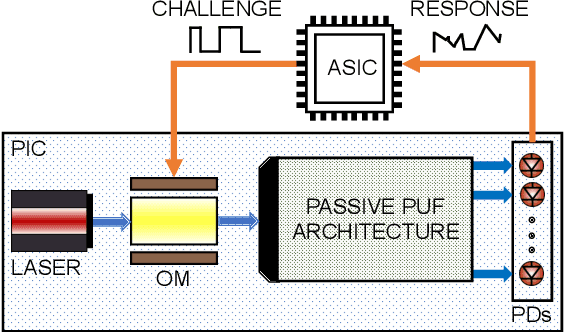
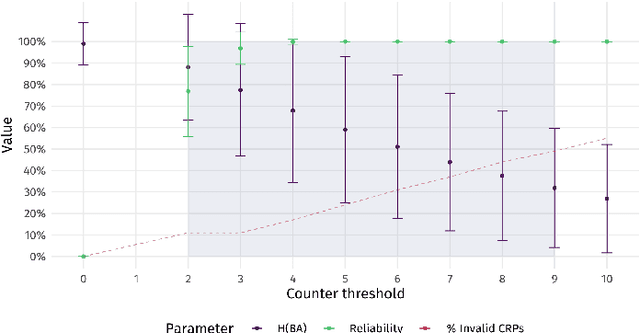
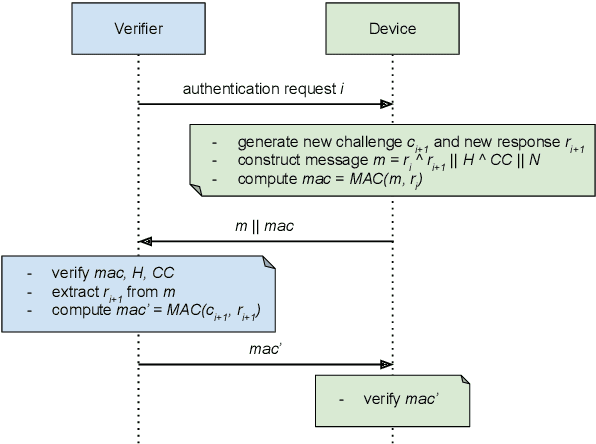
In the contemporary security landscape, the incorporation of photonics has emerged as a transformative force, unlocking a spectrum of possibilities to enhance the resilience and effectiveness of security primitives. This integration represents more than a mere technological augmentation; it signifies a paradigm shift towards innovative approaches capable of delivering security primitives with key properties for low-power systems. This not only augments the robustness of security frameworks, but also paves the way for novel strategies that adapt to the evolving challenges of the digital age. This paper discusses the security layers and related services that will be developed, modeled, and evaluated within the Horizon Europe NEUROPULS project. These layers will exploit novel implementations for security primitives based on physical unclonable functions (PUFs) using integrated photonics technology. Their objective is to provide a series of services to support the secure operation of a neuromorphic photonic accelerator for edge computing applications.