 Add to Chrome
 Add to Firefox
 Add to Edge
Epistemoverse: Toward an AI-Driven Knowledge Metaverse for Intellectual Heritage Preservation
Dec 13, 2025
Large language models (LLMs) have often been characterized as "stochastic parrots" that merely reproduce fragments of their training data. This study challenges that assumption by demonstrating that, when placed in an appropriate dialogical context, LLMs can develop emergent conceptual structures and exhibit interaction-driven (re-)structuring of cognitive interfaces and reflective question-asking. Drawing on the biological principle of cloning and Socrates' maieutic method, we analyze authentic philosophical debates generated among AI-reincarnated philosophers within the interactive art installations of the Syntropic Counterpoints project. By engaging digital counterparts of Aristotle, Nietzsche, Machiavelli, and Sun Tzu in iterative discourse, the study reveals how machine dialogue can give rise to inferential coherence, reflective questioning, and creative synthesis. Based on these findings, we propose the concept of the Epistemoverse--a metaverse of knowledge where human and machine cognition intersect to preserve, reinterpret, and extend intellectual heritage through AI-driven interaction. This framework positions virtual and immersive environments as new spaces for epistemic exchange, digital heritage, and collaborative creativity.

Attracting Sets in Perceptual Networks
Sep 17, 2020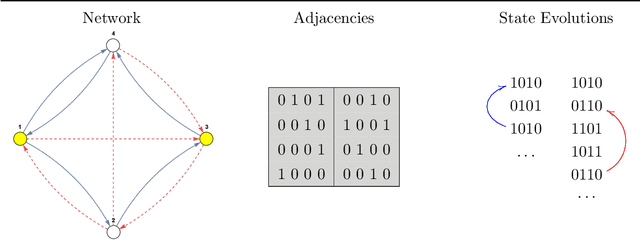
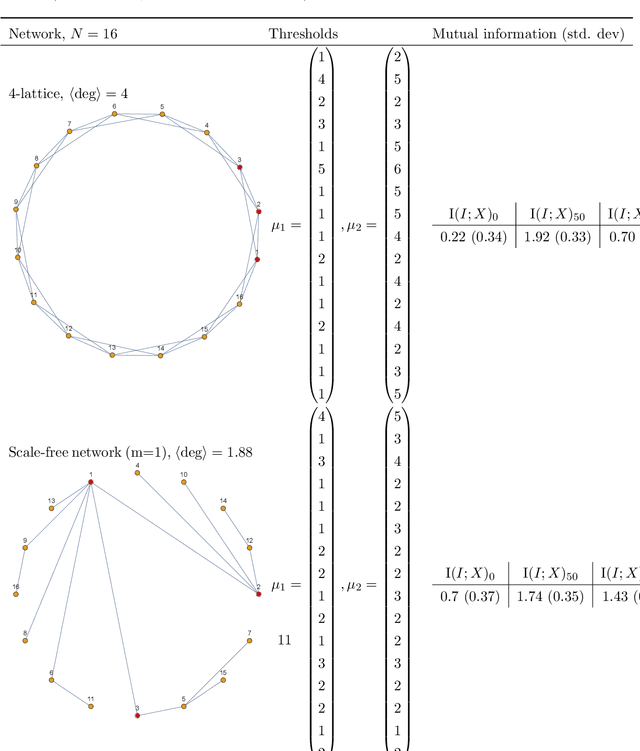
This document gives a specification for the model used in [1]. It presents a simple way of optimizing mutual information between some input and the attractors of a (noisy) network, using a genetic algorithm. The nodes of this network are modeled as simplified versions of the structures described in the "interface theory of perception" [2]. Accordingly, the system is referred to as a "perceptual network". The present paper is an edited version of technical parts of [1] and serves as accompanying text for the Python implementation PerceptualNetworks, freely available under [3]. 1. Prentner, R., and Fields, C.. Using AI methods to Evaluate a Minimal Model for Perception. OpenPhilosophy 2019, 2, 503-524. 2. Hoffman, D. D., Prakash, C., and Singh, M.. The Interface Theory of Perception. Psychonomic Bulletin and Review 2015, 22, 1480-1506. 3. Prentner, R.. PerceptualNetworks. https://github.com/RobertPrentner/PerceptualNetworks. (accessed September 17 2020)