 Add to Chrome
 Add to Firefox
 Add to Edge
Model Confidence Under Answer-Preserving Attacks: An Informativeness-Manipulability Frontier
Aug 06, 2026
Deployed vision-language systems often gate their answers on confidence, making confidence robustness relevant to oversight. We study confidence readouts under white-box, image-only attacks constrained to preserve the generated answer byte-identically. Under a reachability assumption, an unmovable readout cannot outperform the answer-string accuracy prior, whose pooled value is 0.617. Independently of that assumption, a uniform amplitude certificate below a measurable threshold guarantees adversarial discrimination above the same floor. Across four vision-language models, three visual question answering benchmarks, five deployed confidence channels and two defense estimators, direct or surrogate-aimed attacks produce itemwise feasible perturbations that refute this uniform certificate in all 84 estimator-by-cell combinations. Coordinated correctness-label-aware attacks drive adversarial discrimination to or below the answer-string floor in all sixty deployed-channel cells, including all fifty-nine that begin above it. Hidden-state interventions and an open-ended text-model activation-space replication show that comparable confidence movement can be induced at the representation level rather than only through adversarial images. None of four tested defense families establishes a robust alternative under the specific evaluation applied to it. In a confidence-gated simulation, a coordinated token-probability attack transferred to a hidden-state gate causes up to 84.8% of previously rejected wrong answers to become accepted. After reweighting to each benchmark's natural correctness prevalence, accepted accuracy falls below the no-gate baseline in eight of twelve cells under transfer and all twelve under a direct gate-aimed attack. Under the studied threat model and budget, confidence is therefore an integrity-sensitive rather than intrinsically robust oversight signal.

Confidence Estimation for Financial Vision-Language Models in Chart and Document Understanding
Aug 06, 2026LVLMs are increasingly used to read financial charts, tables, and documents, where a single misread figure can move a decision and the most authoritative-looking answer is sometimes one the model produced without reading the exhibit. The operational question is therefore trust, not accuracy: which answers can be acted on, and which escalated to a reviewer. We evaluate seven confidence estimators, three inference-only and four trained internal probes, across five open-weight LVLMs and four conditions from three financial visual question-answering benchmarks, one bilingual; every probe is trained only on natural images and applied to finance without adaptation, so the results measure out-of-distribution transfer. Three findings hold. First, the scarce property is calibration, not ranking: the inference baselines rank correct above incorrect answers competitively but are badly overconfident, calibration error far above what a threshold can tolerate, and only the trained probes produce a thresholdable score. Second, reliability is structured rather than global, along two axes a practitioner can read directly: the best estimator shifts with both model and task, none leading more than eight of twenty (model, condition) cells, and a controlled bilingual contrast exposes an apparent language robustness as a composition artifact that dissolves once models are read one at a time. Third, cast as deferral under an error budget, how much can be safely automated is set first by the model's competence and only narrowed by its confidence, so deferral clears a real share of the easiest condition and almost none of the hardest, near zero at a strict 5% budget. Two trained probes carry the calibration a deferral policy needs, and among them only the grounding-aware one lowers its confidence on answers a model gives without using the figure, separating detected non-grounding from a fluent guess.
Calibrated Triage, Not Autonomy: Confidence Estimation for Medical Vision-Language Models
Jun 14, 2026A vision-language model can answer a question about a medical image fluently and confidently while barely using the image, leaning instead on language priors. In medicine this is the failure that matters most, because the answer looks trustworthy and is not, and the only protection is a confidence score reliable enough to tell the system when to abstain. We ask a deployment question rather than an accuracy one: how much imaging work a model can safely handle alone, and which confidence signal makes that possible. We evaluate seven confidence estimators across five open-weight LVLMs and three medical visual-question-answering datasets spanning broad clinical imaging, radiology, and pathology, with every probe trained only on natural images and applied without adaptation. Recast as bounded selective prediction (automate a case only when confidence clears a threshold, defer the rest), the comparison is cautionary. The standard metrics are poor guides: discrimination barely separates the methods, and the weak calibration of a cheap self-report is cheaply removed by off-domain temperature scaling without changing deployable yield. What distinguishes a usable estimator is the high-confidence region a clinician acts on: the weakest baselines are confidently wrong on 41 to 45 percent of their errors against 1 to 4 percent for the best probe, and no estimator is reliably best across domains or models. Safe handoff is governed at two levels: base-model competence sets a ceiling, so a well-calibrated score recovers roughly a third of radiology cases at a 20 percent error tolerance but almost none of pathology; the confidence layer then decides how much of that ceiling is reachable. The usable role today is calibrated triage, not autonomy: automate the cases a calibrated score marks safe, route the rest to a clinician. We release all outputs, correctness judgments, and confidence scores, with code.
Grounded or Guessing? LVLM Confidence Estimation via Blind-Image Contrastive Ranking
May 11, 2026Large vision-language models suffer from visual ungroundedness: they can produce a fluent, confident, and even correct response driven entirely by language priors, with the image contributing nothing to the prediction. Existing confidence estimation methods cannot detect this, as they observe model behavior under normal inference with no mechanism to determine whether a prediction was shaped by the image or by text alone. We introduce BICR (Blind-Image Contrastive Ranking), a model-agnostic confidence estimation framework that makes this contrast explicit during training by extracting hidden states from a frozen LVLM twice: once with the real image-question pair, and once with the image blacked out while the question is held fixed. A lightweight probe is trained on the real-image hidden state and regularized by a ranking loss that penalizes higher confidence on the blacked-out view, teaching it to treat visual grounding as a signal of reliability at zero additional inference cost. Evaluated across five modern LVLMs and seven baselines on a benchmark covering visual question answering, object hallucination detection, medical imaging, and financial document understanding, BICR achieves the best cross-LVLM average on both calibration and discrimination simultaneously, with statistically significant discrimination gains robust to cluster-aware analysis at 4-18x fewer parameters than the strongest probing baseline.
How Reliable are Confidence Estimators for Large Reasoning Models? A Systematic Benchmark on High-Stakes Domains
Jan 13, 2026The miscalibration of Large Reasoning Models (LRMs) undermines their reliability in high-stakes domains, necessitating methods to accurately estimate the confidence of their long-form, multi-step outputs. To address this gap, we introduce the Reasoning Model Confidence estimation Benchmark (RMCB), a public resource of 347,496 reasoning traces from six popular LRMs across different architectural families. The benchmark is constructed from a diverse suite of datasets spanning high-stakes domains, including clinical, financial, legal, and mathematical reasoning, alongside complex general reasoning benchmarks, with correctness annotations provided for all samples. Using RMCB, we conduct a large-scale empirical evaluation of over ten distinct representation-based methods, spanning sequential, graph-based, and text-based architectures. Our central finding is a persistent trade-off between discrimination (AUROC) and calibration (ECE): text-based encoders achieve the best AUROC (0.672), while structurally-aware models yield the best ECE (0.148), with no single method dominating both. Furthermore, we find that increased architectural complexity does not reliably outperform simpler sequential baselines, suggesting a performance ceiling for methods relying solely on chunk-level hidden states. This work provides the most comprehensive benchmark for this task to date, establishing rigorous baselines and demonstrating the limitations of current representation-based paradigms.
Calibrating LLM Confidence by Probing Perturbed Representation Stability
May 27, 2025Miscalibration in Large Language Models (LLMs) undermines their reliability, highlighting the need for accurate confidence estimation. We introduce CCPS (Calibrating LLM Confidence by Probing Perturbed Representation Stability), a novel method analyzing internal representational stability in LLMs. CCPS applies targeted adversarial perturbations to final hidden states, extracts features reflecting the model's response to these perturbations, and uses a lightweight classifier to predict answer correctness. CCPS was evaluated on LLMs from 8B to 32B parameters (covering Llama, Qwen, and Mistral architectures) using MMLU and MMLU-Pro benchmarks in both multiple-choice and open-ended formats. Our results show that CCPS significantly outperforms current approaches. Across four LLMs and three MMLU variants, CCPS reduces Expected Calibration Error by approximately 55% and Brier score by 21%, while increasing accuracy by 5 percentage points, Area Under the Precision-Recall Curve by 4 percentage points, and Area Under the Receiver Operating Characteristic Curve by 6 percentage points, all relative to the strongest prior method. CCPS delivers an efficient, broadly applicable, and more accurate solution for estimating LLM confidence, thereby improving their trustworthiness.
Hybrid Student-Teacher Large Language Model Refinement for Cancer Toxicity Symptom Extraction
Aug 08, 2024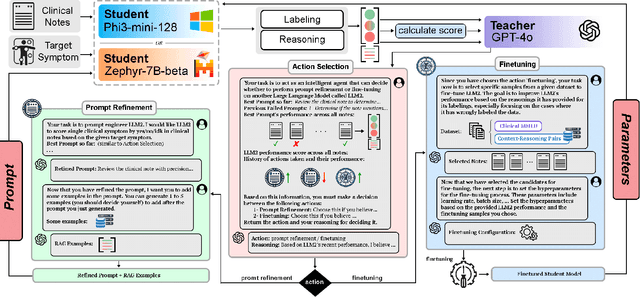
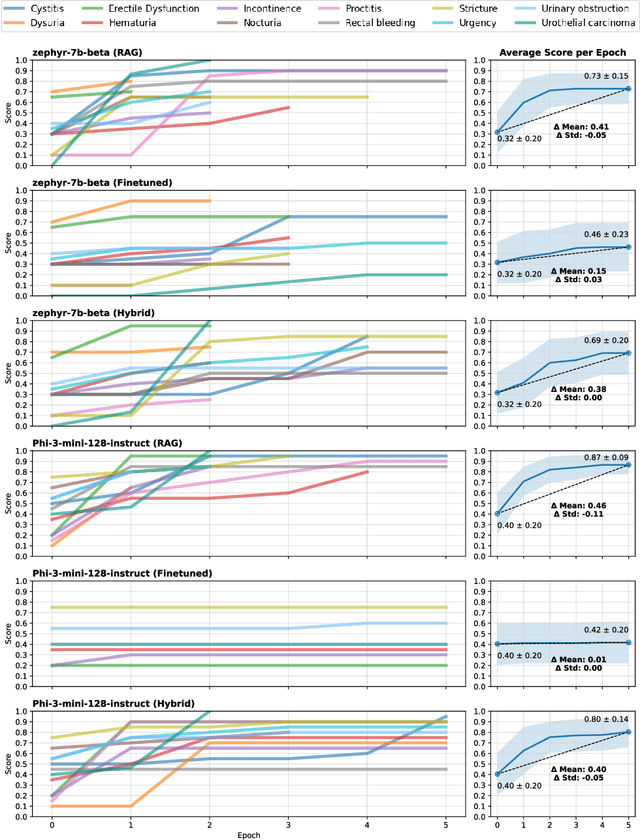
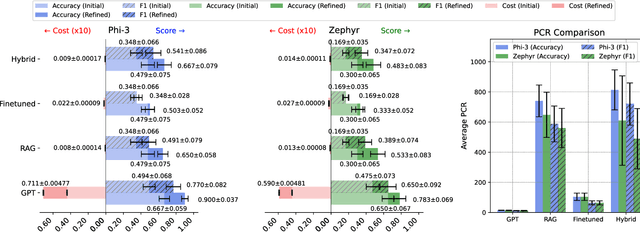
Large Language Models (LLMs) offer significant potential for clinical symptom extraction, but their deployment in healthcare settings is constrained by privacy concerns, computational limitations, and operational costs. This study investigates the optimization of compact LLMs for cancer toxicity symptom extraction using a novel iterative refinement approach. We employ a student-teacher architecture, utilizing Zephyr-7b-beta and Phi3-mini-128 as student models and GPT-4o as the teacher, to dynamically select between prompt refinement, Retrieval-Augmented Generation (RAG), and fine-tuning strategies. Our experiments on 294 clinical notes covering 12 post-radiotherapy toxicity symptoms demonstrate the effectiveness of this approach. The RAG method proved most efficient, improving average accuracy scores from 0.32 to 0.73 for Zephyr-7b-beta and from 0.40 to 0.87 for Phi3-mini-128 during refinement. In the test set, both models showed an approximate 0.20 increase in accuracy across symptoms. Notably, this improvement was achieved at a cost 45 times lower than GPT-4o for Zephyr and 79 times lower for Phi-3. These results highlight the potential of iterative refinement techniques in enhancing the capabilities of compact LLMs for clinical applications, offering a balance between performance, cost-effectiveness, and privacy preservation in healthcare settings.
Iterative Prompt Refinement for Radiation Oncology Symptom Extraction Using Teacher-Student Large Language Models
Feb 06, 2024This study introduces a novel teacher-student architecture utilizing Large Language Models (LLMs) to improve prostate cancer radiotherapy symptom extraction from clinical notes. Mixtral, the student model, initially extracts symptoms, followed by GPT-4, the teacher model, which refines prompts based on Mixtral's performance. This iterative process involved 294 single symptom clinical notes across 12 symptoms, with up to 16 rounds of refinement per epoch. Results showed significant improvements in extracting symptoms from both single and multi-symptom notes. For 59 single symptom notes, accuracy increased from 0.51 to 0.71, precision from 0.52 to 0.82, recall from 0.52 to 0.72, and F1 score from 0.49 to 0.73. In 375 multi-symptom notes, accuracy rose from 0.24 to 0.43, precision from 0.6 to 0.76, recall from 0.24 to 0.43, and F1 score from 0.20 to 0.44. These results demonstrate the effectiveness of advanced prompt engineering in LLMs for radiation oncology use.
An Introduction to Natural Language Processing Techniques and Framework for Clinical Implementation in Radiation Oncology
Nov 08, 2023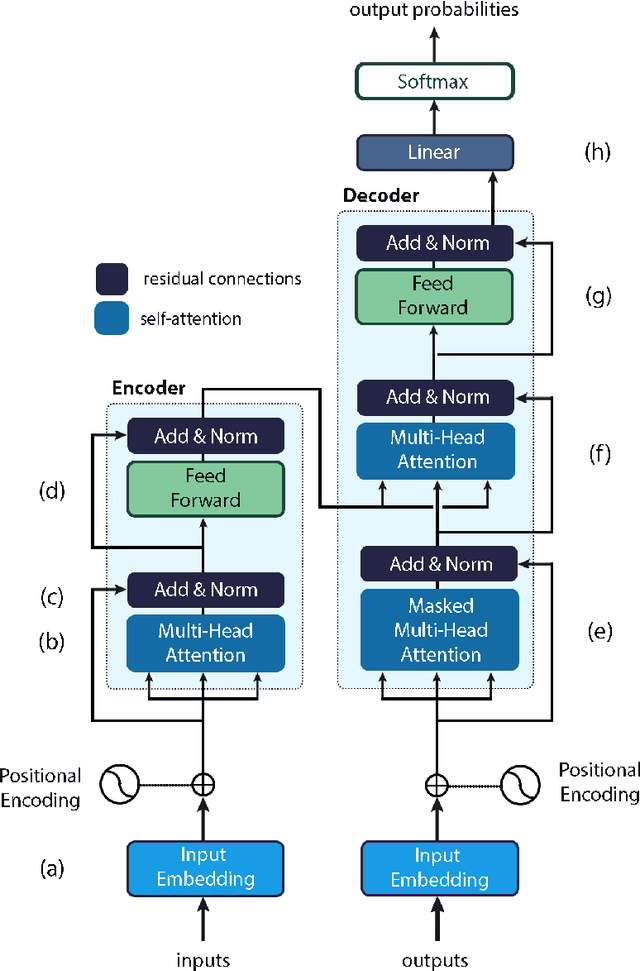
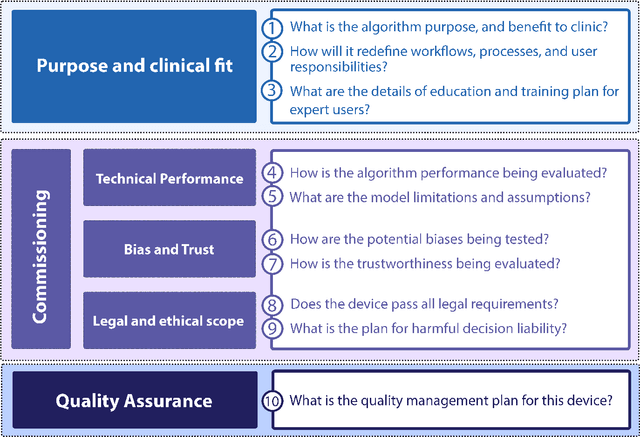
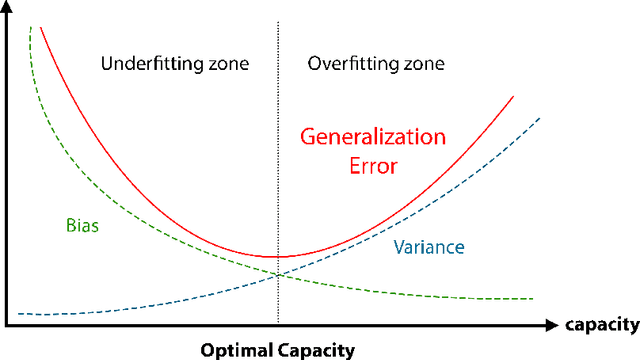
Natural Language Processing (NLP) is a key technique for developing Medical Artificial Intelligence (AI) systems that leverage Electronic Health Record (EHR) data to build diagnostic and prognostic models. NLP enables the conversion of unstructured clinical text into structured data that can be fed into AI algorithms. The emergence of the transformer architecture and large language models (LLMs) has led to remarkable advances in NLP for various healthcare tasks, such as entity recognition, relation extraction, sentence similarity, text summarization, and question answering. In this article, we review the major technical innovations that underpin modern NLP models and present state-of-the-art NLP applications that employ LLMs in radiation oncology research. However, these LLMs are prone to many errors such as hallucinations, biases, and ethical violations, which necessitate rigorous evaluation and validation before clinical deployment. As such, we propose a comprehensive framework for assessing the NLP models based on their purpose and clinical fit, technical performance, bias and trust, legal and ethical implications, and quality assurance, prior to implementation in clinical radiation oncology. Our article aims to provide guidance and insights for researchers and clinicians who are interested in developing and using NLP models in clinical radiation oncology.
The Broad Impact of Feature Imitation: Neural Enhancements Across Financial, Speech, and Physiological Domains
Sep 21, 2023
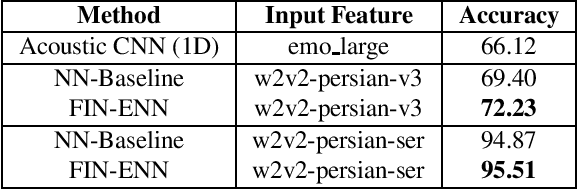

Initialization of neural network weights plays a pivotal role in determining their performance. Feature Imitating Networks (FINs) offer a novel strategy by initializing weights to approximate specific closed-form statistical features, setting a promising foundation for deep learning architectures. While the applicability of FINs has been chiefly tested in biomedical domains, this study extends its exploration into other time series datasets. Three different experiments are conducted in this study to test the applicability of imitating Tsallis entropy for performance enhancement: Bitcoin price prediction, speech emotion recognition, and chronic neck pain detection. For the Bitcoin price prediction, models embedded with FINs reduced the root mean square error by around 1000 compared to the baseline. In the speech emotion recognition task, the FIN-augmented model increased classification accuracy by over 3 percent. Lastly, in the CNP detection experiment, an improvement of about 7 percent was observed compared to established classifiers. These findings validate the broad utility and potency of FINs in diverse applications.