 Add to Chrome
 Add to Firefox
 Add to Edge
Human and AI Trust: Trust Attitude Measurement Instrument
Oct 24, 2025
With the current progress of Artificial Intelligence (AI) technology and its increasingly broader applications, trust is seen as a required criterion for AI usage, acceptance, and deployment. A robust measurement instrument is essential to correctly evaluate trust from a human-centered perspective. This paper describes the development and validation process of a trust measure instrument, which follows psychometric principles, and consists of a 16-items trust scale. The instrument was built explicitly for research in human-AI interaction to measure trust attitudes towards AI systems from layperson (non-expert) perspective. The use-case we used to develop the scale was in the context of AI medical support systems (specifically cancer/health prediction). The scale development (Measurement Item Development) and validation (Measurement Item Evaluation) involved six research stages: item development, item evaluation, survey administration, test of dimensionality, test of reliability, and test of validity. The results of the six-stages evaluation show that the proposed trust measurement instrument is empirically reliable and valid for systematically measuring and comparing non-experts' trust in AI Medical Support Systems.

Inclusivity of AI Speech in Healthcare: A Decade Look Back
May 15, 2025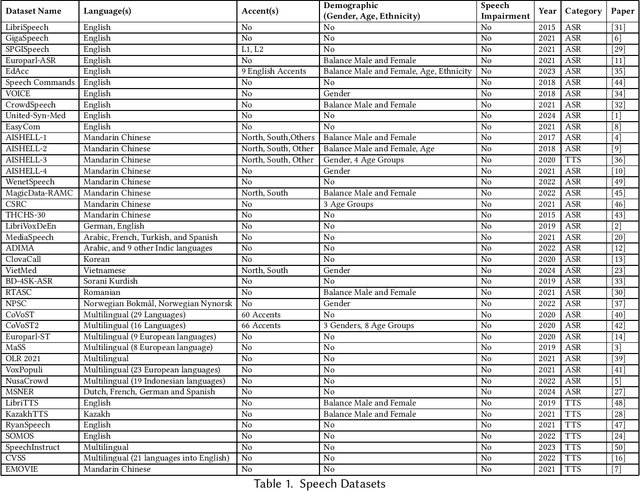
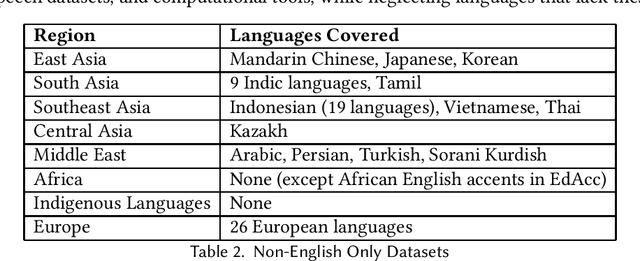
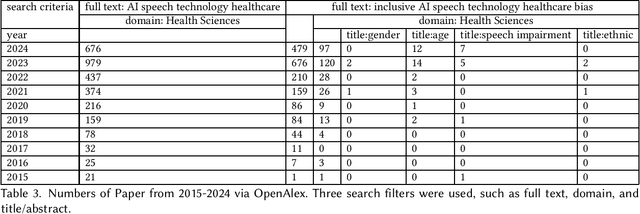
The integration of AI speech recognition technologies into healthcare has the potential to revolutionize clinical workflows and patient-provider communication. However, this study reveals significant gaps in inclusivity, with datasets and research disproportionately favouring high-resource languages, standardized accents, and narrow demographic groups. These biases risk perpetuating healthcare disparities, as AI systems may misinterpret speech from marginalized groups. This paper highlights the urgent need for inclusive dataset design, bias mitigation research, and policy frameworks to ensure equitable access to AI speech technologies in healthcare.