 Add to Chrome
 Add to Firefox
 Add to Edge
Improving Asset Allocation in a Fast Moving Consumer Goods B2B Company: An Interpretable Machine Learning Framework for Commercial Cooler Assignment Based on Multi-Tier Growth Targets
Nov 10, 2025
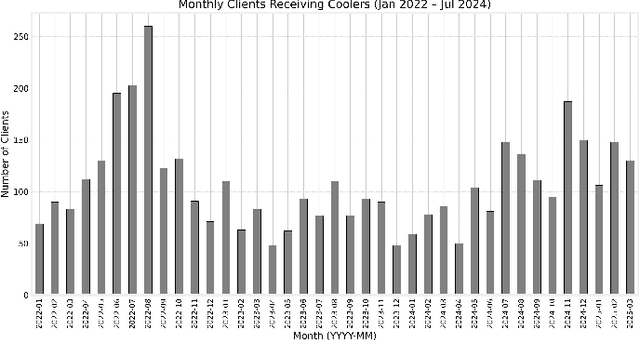
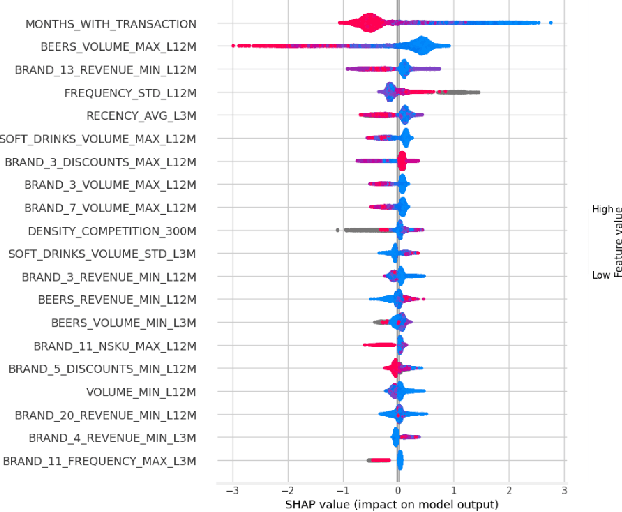
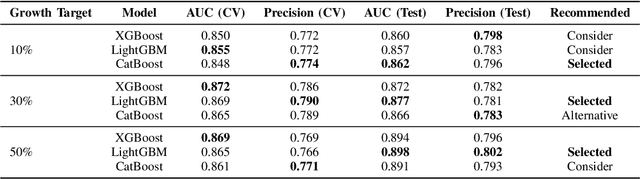

In the fast-moving consumer goods (FMCG) industry, deciding where to place physical assets, such as commercial beverage coolers, can directly impact revenue growth and execution efficiency. Although churn prediction and demand forecasting have been widely studied in B2B contexts, the use of machine learning to guide asset allocation remains relatively unexplored. This paper presents a framework focused on predicting which beverage clients are most likely to deliver strong returns in volume after receiving a cooler. Using a private dataset from a well-known Central American brewing and beverage company of 3,119 B2B traditional trade channel clients that received a cooler from 2022-01 to 2024-07, and tracking 12 months of sales transactions before and after cooler installation, three growth thresholds were defined: 10%, 30% and 50% growth in sales volume year over year. The analysis compares results of machine learning models such as XGBoost, LightGBM, and CatBoost combined with SHAP for interpretable feature analysis in order to have insights into improving business operations related to cooler allocation; the results show that the best model has AUC scores of 0.857, 0.877, and 0.898 across the thresholds on the validation set. Simulations suggest that this approach can improve ROI because it better selects potential clients to grow at the expected level and increases cost savings by not assigning clients that will not grow, compared to traditional volume-based approaches with substantial business management recommendations

Car Monitoring System in Apartment Garages by Small Autonomous Car using Deep Learning
Sep 29, 2018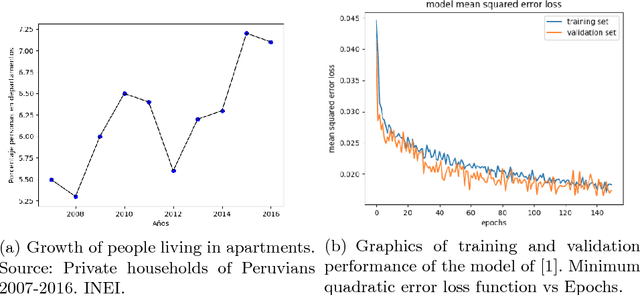
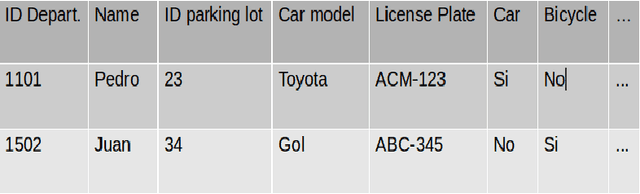
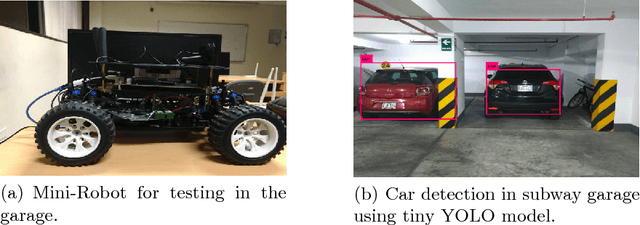
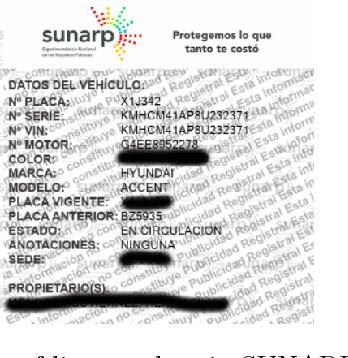
Currently, there is an increase in the number of Peruvian families living in apartments instead of houses for the lots of advantage; however, in some cases there are troubles such as robberies of goods that are usually left at the parking lots or the entrance of strangers that use the tenants parking lots (this last trouble sometimes is related to kidnappings or robberies in building apartments). Due to these problems, the use of a self-driving mini-car is proposed to implement a monitoring system of license plates in an underground garage inside a building using a deep learning model with the aim of recording the vehicles and identifying their owners if they were tenants or not. In addition, the small robot has its own location system using beacons that allow us to identify the position of the parking lot corresponding to each tenant of the building while the mini-car is on its way. Finally, one of the objectives of this work is to build a low cost mini-robot that would replace expensive cameras or work together in order to keep safe the goods of tenants.