 Add to Chrome
 Add to Firefox
 Add to Edge
Tracking Phenological Status and Ecological Interactions in a Hawaiian Cloud Forest Understory using Low-Cost Camera Traps and Visual Foundation Models
Mar 08, 2026
Plant phenology, the study of cyclical events such as leafing out, flowering, or fruiting, has wide ecological impacts but is broadly understudied, especially in the tropics. Image analysis has greatly enhanced remote phenological monitoring, yet capturing phenology at the individual level remains challenging. In this project, we deployed low-cost, animal-triggered camera traps at the Pu'u Maka'ala Natural Area Reserve in Hawaii to simultaneously document shifts in plant phenology and flora-faunal interactions. Using a combination of foundation vision models and traditional computer vision methods, we measure phenological trends from images comparable to on-the-ground observations without relying on supervised learning techniques. These temporally fine-grained phenology measurements from camera-trap images uncover trends that coarser traditional sampling fails to detect. When combined with detailed visitation data detected from images, these trends can begin to elucidate drivers of both plant phenology and animal ecology.

Understanding Important Features of Deep Learning Models for Transmission Electron Microscopy Image Segmentation
Dec 12, 2019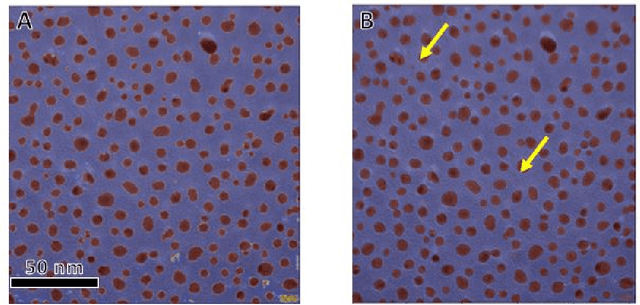


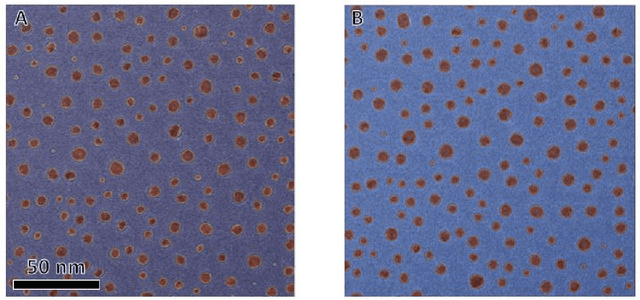
Cutting edge deep learning techniques allow for image segmentation with great speed and accuracy. However, application to problems in materials science is often difficult since these complex models may have difficultly learning physical parameters. In situ electron microscopy provides a clear platform for utilizing automated image analysis. In this work we consider the case of studying coarsening dynamics in supported nanoparticles, which is important for understanding e.g. the degradation of industrial catalysts. By systematically studying dataset preparation, neural network architecture, and accuracy evaluation, we describe important considerations in applying deep learning to physical applications, where generalizable and convincing models are required.