 Add to Chrome
 Add to Firefox
 Add to Edge
Studying Accuracy of Machine Learning Models Trained on Lab Lifting Data in Solving Real-World Problems Using Wearable Sensors for Workplace Safety
Sep 11, 2023
Porting ML models trained on lab data to real-world situations has long been a challenge. This paper discusses porting a lab-trained lifting identification model to the real-world. With performance much lower than on training data, we explored causes of the failure and proposed four potential solutions to increase model performance

A Compact Gated-Synapse Model for Neuromorphic Circuits
Jun 29, 2020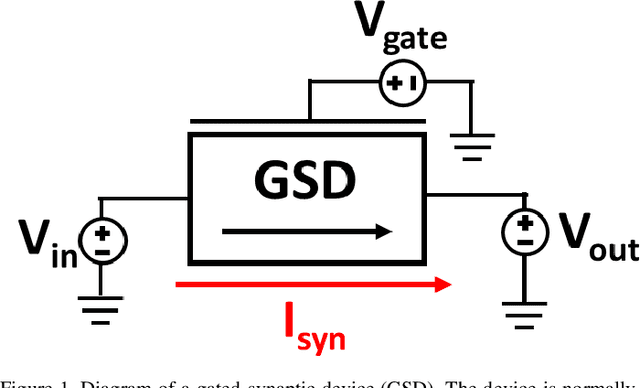
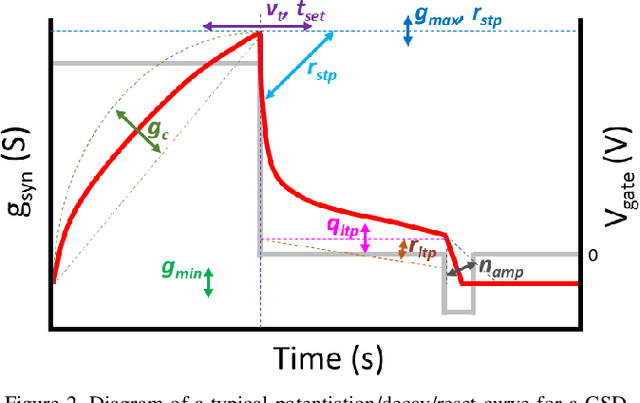
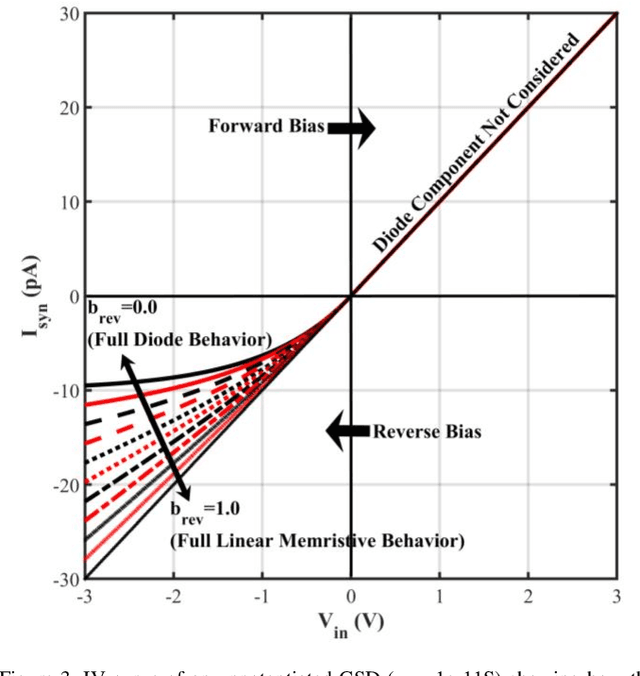
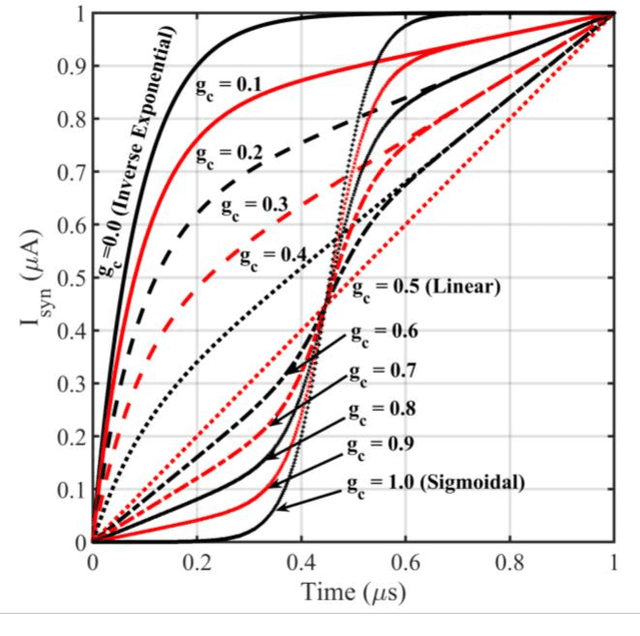
This work reports a compact behavioral model for gated-synaptic memory. The model is developed in Verilog-A for easy integration into computer-aided design of neuromorphic circuits using emerging memory. The model encompasses various forms of gated synapses within a single framework and is not restricted to only a single type. The behavioral theory of the model is described in detail along with a full list of the default parameter settings. The model includes parameters such as a device's ideal set time, threshold voltage, general evolution of the conductance with respect to time, decay of the device's state, etc. Finally, the model's validity is shown via extensive simulation and fitting to experimentally reported data on published gated-synapses.
A deep learning approach for lower back-pain risk prediction during manual lifting
Mar 20, 2020


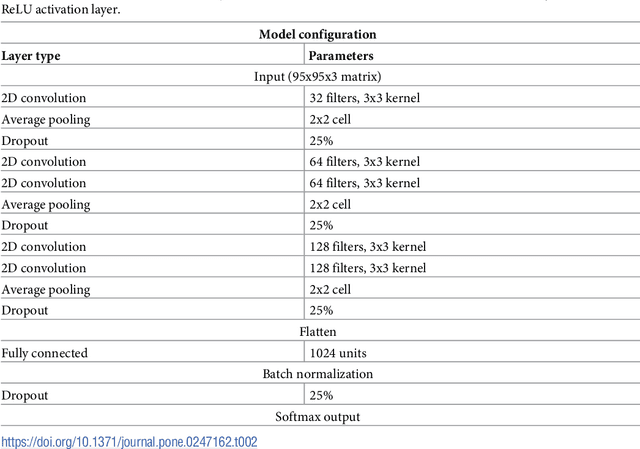
Occupationally-induced back pain is a leading cause of reduced productivity in industry. Detecting when a worker is lifting incorrectly and at increased risk of back injury presents significant possible benefits. These include increased quality of life for the worker due to lower rates of back injury and fewer workers' compensation claims and missed time for the employer. However, recognizing lifting risk provides a challenge due to typically small datasets and subtle underlying features in accelerometer and gyroscope data. A novel method to classify a lifting dataset using a 2D convolutional neural network (CNN) and no manual feature extraction is proposed in this paper; the dataset consisted of 10 subjects lifting at various relative distances from the body with 720 total trials. The proposed deep CNN displayed greater accuracy (90.6%) compared to an alternative CNN and multilayer perceptron (MLP). A deep CNN could be adapted to classify many other activities that traditionally pose greater challenges in industrial environments due to their size and complexity.